When Things Go Wrong in the Sky: Lessons from the F-15E Rescue Mission
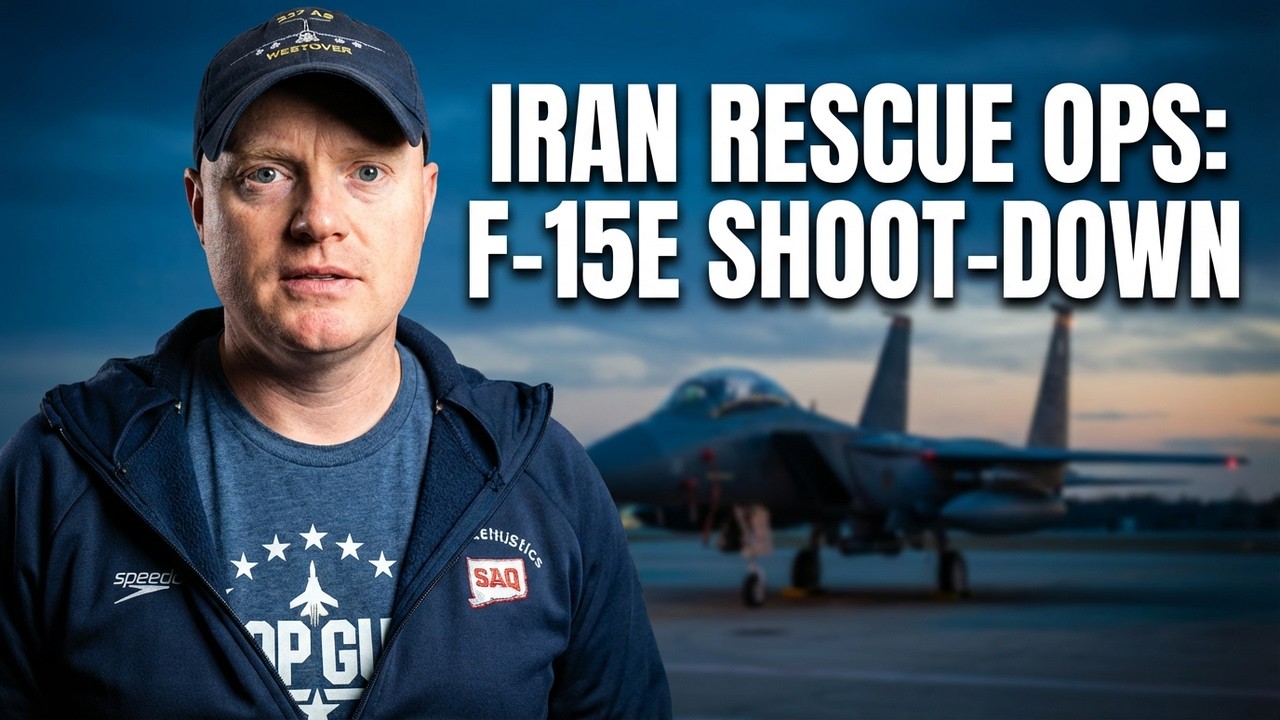
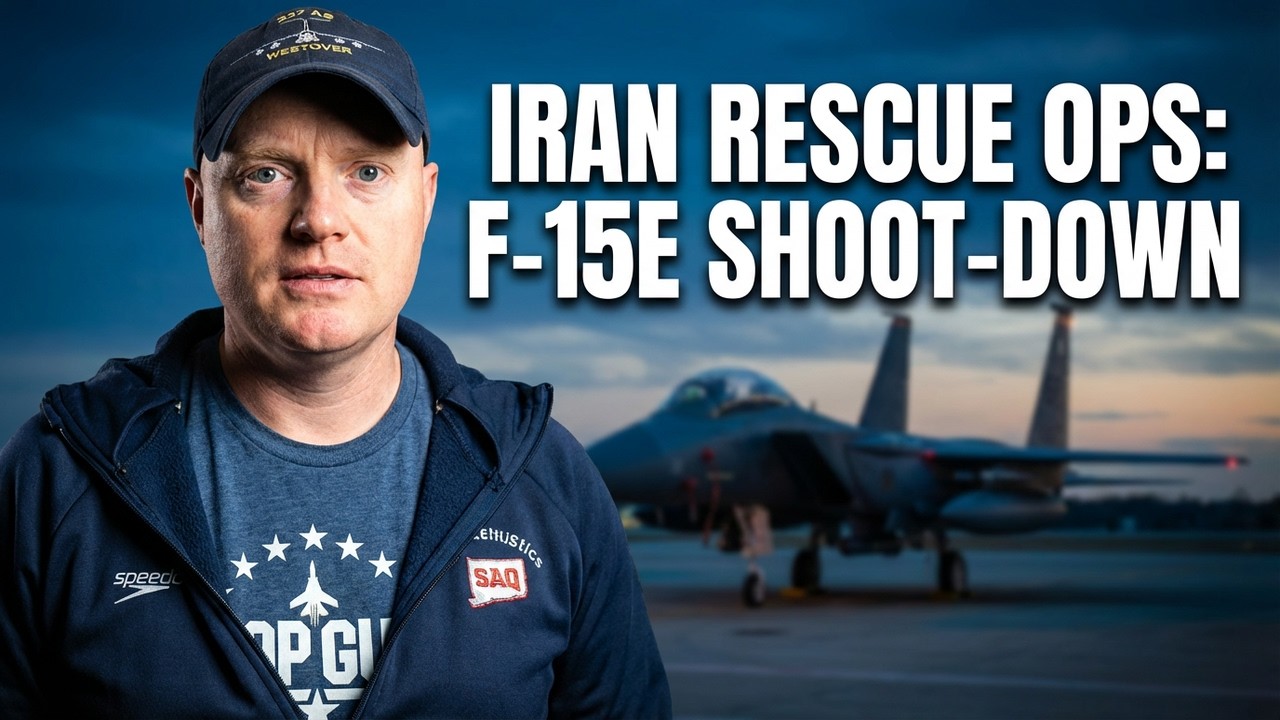
Welcome back to The Black Box Aviation Podcast blog! In our latest episode, we delve into a scenario that every pilot, aviator, and aviation enthusiast hopes never to encounter: a downed aircraft in hostile territory. The recent incident involving an F-15E Strike Eagle that went down in Iran served as a stark reminder of the incredible risks involved in aerial operations and the sophisticated, high-stakes rescue missions that can follow. This blog post will expand on the critical elements of Combat Search and Rescue (CSAR), drawing parallels between this real-world event and the broader themes we discussed in the episode, including the challenges of spaceflight and the vital importance of pilot communication skills. You can listen to the full episode here: Iran Rescue Ops: F-15E Down, Artemis Moon Mission & Pilot Radio Skills.
The Anatomy of a Combat Search and Rescue (CSAR) Mission
The word "rescue" might conjure images of swift, decisive actions, but in a combat zone, a successful Combat Search and Rescue (CSAR) operation is a meticulously planned and executed ballet of incredible complexity. When an aircraft goes down behind enemy lines, it’s not just about retrieving the pilot; it’s about doing so without becoming another casualty. This involves a layered defense, a deep understanding of the operational environment, and the flawless integration of numerous assets. The initial moments after an aircraft is downed are critical. The pilot's training, particularly Survival, Evasion, Resistance, and Escape (SERE) training, kicks in immediately. This rigorous program prepares aircrew for the worst-case scenarios, teaching them how to survive, evade capture, and resist interrogation if they find themselves behind enemy lines. The "isolate" phase, as we discussed in the episode, is where the pilot’s ability to remain undetected and to signal for help becomes paramount. This often involves finding a secure location, minimizing their signature, and preparing for extraction. The response to a downed aircraft isn't a spontaneous event. It's the result of pre-planned procedures and established doctrines. Intelligence gathering is continuous, and the moment an aircraft is lost, the decision-making process for initiating a rescue operation begins. This involves weighing the risks versus the potential rewards, considering the enemy’s capabilities, and the availability of friendly assets. The goal is always to minimize risk to the rescue forces while maximizing the chances of a successful recovery.
Assets in Play: How MC-130s, Reapers, and Bombers Coordinate
A CSAR mission is rarely a single-ship operation. It’s a symphony of specialized aircraft, each with a distinct role. In the context of the F-15E incident, we can infer the types of assets that would have been involved. First, there are the **search and rescue aircraft** themselves. In many scenarios, specialized aircraft like the MC-130 Combat Talon or Commando are crucial. These heavily modified C-130 Hercules variants are designed for low-level penetration, infiltration, and exfiltration of special operations forces and, critically, for CSAR. They possess advanced navigation, electronic warfare, and communications systems, enabling them to operate in contested airspace and at night. They can provide direct support to the downed pilot, dropping essential supplies or even acting as a temporary safe haven. Then, there are the **intelligence, surveillance, and reconnaissance (ISR) platforms**. Drones like the MQ-9 Reaper, as mentioned in the episode, play an invaluable role. These unmanned aerial vehicles can loiter over an area for extended periods, providing real-time video feeds and electronic intelligence. They can help locate the downed pilot, monitor enemy movements, and provide crucial situational awareness to the rescue forces. The Reaper’s ability to carry precision-guided munitions also means it can act as a direct force multiplier, engaging hostile elements to protect the rescue team. The involvement of **bombers**, such as the B-1 Lancer, also highlights the multi-faceted nature of these operations. Bombers are often employed to establish a "kill box" or a defensive perimeter around the search area. By conducting strike missions against enemy forces or known enemy positions, they can suppress enemy fire and create a safer environment for the rescue aircraft and the downed pilot. This act of "show of force" or direct kinetic action is designed to deter enemy engagement and clear the path for the recovery. Finally, **fighter aircraft** would have been crucial for air-to-air defense, escorting the rescue helicopters or fixed-wing aircraft, and engaging any immediate threats. The coordination between all these disparate assets, operating under immense pressure and in a dynamic, hostile environment, is a testament to the incredible training and professionalism of military aviators and support personnel.
The Pilot's Perspective: SERE Training and the 'Isolate' Phase
The experience of a downed pilot is one of extreme isolation and intense pressure. SERE training, though arduous, is designed to equip individuals with the mental fortitude and practical skills to survive such an ordeal. The "isolate" phase is particularly challenging. It requires the pilot to disappear, to blend into the environment, and to avoid detection for as long as possible. This means shedding any equipment that could betray their position, moving stealthily, and utilizing camouflage and natural cover. The psychological toll of being alone behind enemy lines cannot be overstated. The constant threat of capture, the uncertainty of rescue, and the sheer physical demands of survival can be overwhelming. This is where the mental conditioning from SERE training becomes vital. Pilots are taught to manage their fear, to maintain a positive mental attitude, and to focus on the immediate tasks at hand. Communication, even in the "isolate" phase, is a nuanced art. While the pilot's primary goal is to remain undetected, there are specific protocols for signaling for help when the opportunity arises. This could involve coded signals, emergency beacons, or visually signaling rescue aircraft when they are in range. The ability to discern the right moment to reveal oneself, to communicate effectively without compromising the mission, is a critical skill honed through training.
Beyond the Desert: Lessons from the Artemis Mission and Spaceflight Challenges
While the F-15E rescue mission conjures images of desert landscapes and hostile ground forces, the principles of operating in extreme, unforgiving environments resonate across all domains of aviation and spaceflight. Our discussion in the podcast about the Artemis mission and its challenges offers a fascinating counterpoint. The Artemis program, aiming to return humans to the Moon, presents an entirely different set of obstacles. Instead of hostile ground troops, astronauts face the vacuum of space, extreme temperature fluctuations, radiation, and the physiological effects of microgravity. The recent Artemis I mission, while an uncrewed test flight, provided invaluable data on the Orion capsule's performance and the challenges of long-duration spaceflight. One of the more relatable, albeit less life-threatening, challenges discussed was the absence of a functioning lavatory in the early stages of the mission. This highlights the ingenuity and adaptability required for space exploration. Just as a downed pilot must adapt to surviving with limited resources, astronauts must contend with the practical realities of living in an environment that is inherently hostile to human life. The "honey bucket" era of early spaceflight, while perhaps humorous in retrospect, underscores the evolution of life support systems and the continuous effort to make space travel more sustainable and comfortable. The core lesson here is that whether you’re navigating the skies above a warzone or the vast emptiness of space, success hinges on meticulous planning, robust technology, and a deep understanding of the operational environment. The challenges are different, but the underlying principles of resilience, resourcefulness, and problem-solving remain universal.
The Human Element: Mastering Aviation Radio Communication
One of the most fundamental, yet often overlooked, aspects of aviation safety is effective communication. This is particularly true when discussing pilot-controller interactions. As we explored in the podcast, the learning curve for aviation radio communication is steep, and even experienced pilots can have moments of embarrassment or confusion. The sheer volume of information that needs to be conveyed and received on a radio frequency can be overwhelming, especially for student pilots. The pressure to be brief, clear, and accurate in congested airspace is immense. The concept of "radio fright" is a real phenomenon, where the fear of making a mistake can lead to hesitation or fumbled transmissions. Mastering aviation radio communication is about more than just speaking into a microphone. It involves understanding phonetic alphabet, standard phraseology, and the unwritten rules of radio etiquette. It's about active listening, anticipating controller instructions, and providing timely readbacks. A clear and concise transmission can prevent misunderstandings, which in turn can avert dangerous situations. Conversely, a garbled or incomplete transmission can lead to confusion, delays, and potentially unsafe outcomes.
When Things Go Wrong: Stuck Microphones and High-Stress Malfunctions
The human element of communication becomes even more critical when things go wrong. The podcast touched upon the nightmare scenario of a "stuck microphone." This is when a microphone fails to disengage, broadcasting a continuous stream of sound on a radio frequency. The consequences can be severe. A stuck microphone can drown out legitimate communications, making it impossible for air traffic control to communicate with other aircraft, and for pilots to communicate with each other. This can disrupt an entire Terminal Radar Approach Control (TRACON) frequency, creating a cascade of potential safety issues. Such malfunctions, especially during critical phases of flight or in high-stress situations, demand immediate and decisive action. The pilot's training, including emergency procedures and checklist execution, becomes paramount. The ability to remain calm under pressure, to diagnose the problem, and to execute the appropriate corrective actions is what separates a minor inconvenience from a catastrophic event. We also discussed the dramatic visuals of engine surges and failures at night, often referred to as "night rockets." These are visually stunning but incredibly stressful events for the flight crew. The reliance on textbook checklist execution in these moments is crucial. Deviating from established procedures, even slightly, can introduce new risks. This emphasizes the importance of rigorous training and a disciplined approach to emergency management in aviation.
Conclusion: Training, Communication, and Redundancy as Pillars of Aviation Safety
The F-15E rescue mission, the challenges of space exploration, and the everyday intricacies of pilot-controller communication all point to a fundamental truth in aviation: safety is built on a foundation of rigorous training, clear communication, and robust redundancy. The ability to mount a successful CSAR operation, to navigate the unforgiving environment of space, or to simply guide an aircraft safely through a busy airspace, all depend on the meticulous preparation of the individuals involved. SERE training, flight school, and continuous professional development are not optional extras; they are the bedrock upon which aviation safety is built. Effective communication, whether it’s a precise radio transmission to air traffic control or a clear handoff between crew members, is the glue that holds operations together. When communication breaks down, the risks multiply. The lessons learned from incidents like a stuck microphone underscore the importance of not just speaking, but of being heard and understood. Finally, redundancy is key. This applies to aircraft systems, where backup components and multiple engines provide a safety net. It also applies to procedures, where checklists and standardized protocols ensure that even in the most stressful situations, there is a proven path to safety. As we continue to push the boundaries of what’s possible in the sky and beyond, remembering these core pillars—training, communication, and redundancy—will be essential to ensuring that when things go wrong, we have the best possible chance of bringing them right. Join us for future episodes as we continue to explore the fascinating world of aviation.