

Iran Rescue Ops: F-15E Down, Artemis Moon Mission & Pilot Radio Skills
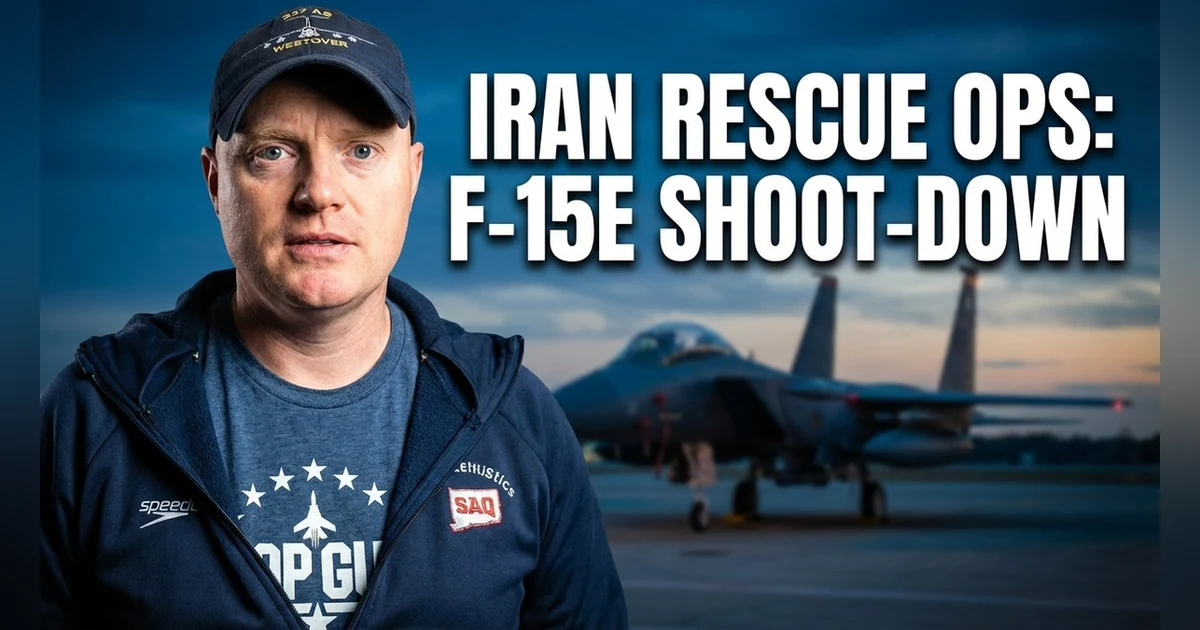


In this episode of the Black Box Aviation Podcast, Tom and Mike break down the high-stakes military rescue operation following a recent F-15E Strike Eagle shoot-down in Iran. We examine the complex coordination of search and rescue (SAR) assets, including the roles of the MC-130, MQ-9 Reaper, and B-1 bomber in a contested environment, while diving into the reality of SERE training and the "isolate" phase for downed aircrew.
Shifting from Earth to orbit, we track the latest Artemis mission updates as the Orion capsule completes a critical lunar flyby. We discuss the technical and "human" challenges of deep space travel, including the reality of life without a functioning lavatory in zero gravity. Plus, we share a series of "radio war stories" from the cockpit—explaining the steep learning curve of aviation communication, the chaos of a stuck microphone, and why the most embarrassing radio moments usually happen at the worst possible time.
Who Is This Podcast Episode For?This episode is for military and commercial pilots, flight students, aerospace engineers, and aviation history enthusiasts. It is essential listening for those interested in Combat Search and Rescue (CSAR) tactics, NASA’s Artemis program progression, and the technical nuances of pilot-controller communication and radio etiquette.
Key Takeaways● F-15E Strike Eagle Shoot-down in Iran: A technical look at the multi-asset rescue mission and the integration of surveillance and strike platforms to protect downed pilots.● Combat Search and Rescue (CSAR) Tactics: Understanding the role of "Sandys," MC-130s, and the critical importance of the "Squawk 7700" emergency protocol in a combat zone.● Artemis Moon Mission 2026 Update: Analysis of the Orion capsule's lunar trajectory and the engineering hurdles of long-duration spaceflight.● Life in the Cockpit without a Lavatory: From the P-3 Orion's "honey bucket" to cargo ops in the Beech 1900 and DC-9, Tom and Mike share the unglamorous side of long-haul flights.● Aviation Radio Mastery: How student pilots overcome "radio fright" and the importance of professional brevity in congested Class Bravo airspace.● Stuck Microphone Incidents: Why a "stuck mic" is a pilot's worst nightmare and how it can disrupt an entire Terminal Radar Approach Control (TRACON) frequency.● Military SERE Training: Insights into the Survival, Evasion, Resistance, and Escape training that prepares aircrew for the reality of being behind enemy lines.● Delta A330 Engine Incident: A breakdown of a recent night-time engine failure and how the flight crew safely executed a heavy-weight landing, proving the reliability of modern widebody twins.● The "Night Rocket" Visuals: Why engine surges and failures look more dramatic at night and the importance of "textbook" checklist execution during high-stress malfunctions.
Episode ConclusionThis episode highlights the thin line between routine operations and high-stakes emergencies, whether on the lunar surface, in the Iranian desert, or on a standard departure out of a busy hub. Tom and Mike illustrate that whether it’s mastering the radio or surviving a shoot-down, the foundation of aviation safety remains rooted in training, communication, and technical redundancy. From the "fireworks" of a compressor stall to the silence of a lunar flyby, this episode covers the full spectrum of the modern pilot experience.
Related EpisodesBeyond the Tragedy: The Unbelievable Luxury of the Erebus Sightseeing Flighthttps://open.spotify.com/episode/062mxD7CZTj1s7p5SnmeBf?si=vJUOOKE-TmKTFAZ9bD_ZfgLGA Runway Collision: The Air Canada CRJ-900 & Fire Truck ATC Analysishttps://open.spotify.com/episode/68owxg7HaKAyiqNgpCX4TH?si=eAu4C508RiiqL1xOfvHOdADCA Mid-Air Collision: The 2025 Potomac River Tragedy & NTSB Reporthttps://open.spotify.com/episode/3Rc3pt3iiVuGUnwRcXtHbl?si=lBmpp8a2QbCgkkG2YAEVog
Connect with us:
🌐 Website: www.theblackboxaviationpodcast.com
📧 Email: theblackbox01@yahoo.com
TaxAct (0:00): TaxAct knows filing taxes can be confusing, so we have live experts on hand who can help answer any questions you may have. Questions like, can I claim my SUV is my home office if I answer work emails in my car? If I adopted 12 dogs this year, can I list them as dependents? And am I doing this right, or am I doing this very, very wrong? Our experts have the answers to those questions and many others.
Unknown Speaker (0:28): TaxAct. Let's get them over with.
Tom (0:30): Engines pulled. Checklist complete. Welcome to the Black Box Aviation Podcast, where the stories behind the headlines get unpacked by the people who actually fly the damn plane. Hosted by Tom, a former military pilot turned airline and cargo, and Mike, a lifelong civilian flyer now flying left seat as an airline captain. It's aviation news, insider insight, and real pilot perspective.
Unknown Speaker (0:55): Strap in.
Mike (0:57): Ladies and gentlemen, welcome back to another black box, aviation podcast episode. We have a great show for you today. Lots of things happening in Iran. We're gonna get updates with that. We'll tell you what's going on.
Mike (1:08): Look. It's all about aviation in Iran right now, so we'll break that down for you. Another moonshot's head now for the Artemis rocket. We'll talk about that a little bit. We're gonna talk about how we work the radios, how we learn to work the radios.
Mike (1:19): You know, kind of how I learned that, what I taught, Michael, you taught as well. We'll talk about stuck mics as well on the radio. The microphone getting stuck can always be embarrassing, And then maybe if we got time, we'll throw in a recap of the Delta a three thirty that had a little bit of an engine trouble. I'm one of your co host, Tom, joined by Mike. Mike, what's happening?
Unknown Speaker (1:34): What's up, Tom?
Mike (1:36): Hey. I think I hit it all there. I wanted to add one thing jumping in. I got an addition from Grace that Perry the Platypus is keeping an eye on us now. So I don't know if you're a big Phineas and Ferb fan, were you?
Unknown Speaker (1:48): Did you pay attention to that at all?
Unknown Speaker (1:50): No. Don't worry.
Mike (1:53): I'm surprised your kids ain't getting fit. It's a fun show. It's on I think they have a bunch of new episodes now. So, hey, if you are not watching us, you need to be doing that. And it's on the YouTube.
Mike (2:03): It's at the Black Box Aviation Podcast. Subscribe, leave a comment, tell us what we're doing good. And Mike always puts something on there too about the show, and it's usually a comment that has to do what we're talking about in the content. So go ahead and start a discussion there. We've had some great discussions in there in the past, and they keep getting better, honestly.
Mike (2:18): And then Mike kinda chops them up into shorts too, so there's shorts there and more comments to be had as well. Check this out. Always is always getting email us at theblackbox01@yahoo.com. It's theblackbox01@yahoo.com. We're getting lots of emails there.
Mike (2:34): We'll keep them coming. And we got the hotline, (203) 699-6792. Again, it's (203) 699-6792. Leave your name with her. We'll give you a shout out.
Unknown Speaker (2:44): If you don't know what I just told you about all that other stuff, hit us at the website, www.theblackboxaviationpodcast.com. Mike, what's going on? What's new? What have you been checking
Unknown Speaker (2:55): man. I'm just waiting for you to finish this all these plugs, man.
Unknown Speaker (2:58): I'm hitting the plugs. We gotta hit the plugs at the start so people get in on it and they can smash
Unknown Speaker (3:01): the plug. Turn off, man. Takes forever.
Unknown Speaker (3:04): Takes forever to do the plugs. It's thirty seconds. Alright.
Unknown Speaker (3:07): How are
Unknown Speaker (3:07): they gonna get a hold of us?
Unknown Speaker (3:09): Well, obviously, they got a hold of us if they're watching you do the plugs.
Mike (3:12): Probably not. Nobody watches the show. Dude, the war in Iran, how about this stuff going on with the the rescue operations? Have you been keeping close tabs on that?
Unknown Speaker (3:24): Hello, It's like a movie. It's like a movie. It
Mike (3:28): really has been. I mean, it's really like a Top Gun episode. That's why I got my shirt on today. Top Gun. I was not a Top Gun guy, so don't leave right in
Unknown Speaker (3:36): and say, Oh, you didn't go
Mike (3:37): to Top Gun. No, didn't. But that's alright. Really, Top Gun is like a weapon school kind of thing. They talk about that a lot of times, and you'll see like I know KC-one 130 Fads get, like, I'm a weapons school guy.
Mike (3:50): Like, Top Gun? Yeah, Top Gun. Okay. You're right. You're right, but it's not what everybody else thinks it is.
Mike (3:59): But anyways, yeah, so there was some serious stuff that went down with the rescue in Iran that was pretty wild. I think that, you know, from our layman's perspective or whatever, just watching the standby on the show that or, you know, watching from the newscasters or whatever, there was a lot of weird stuff happening with this with, oh, there's one guy that's down and now another plane got shot down and oh, this A-ten guy and there's, you know, a lot of misinformation and disinformation. Did you feel like you had a good idea what was going on in that mic or kind No, of like
Unknown Speaker (4:30): not really, but honestly we shouldn't have a good idea what's going on, know? I mean like, it's, you know, everyone wants to run with a story and sometimes you get it right, sometimes you get it wrong, sometimes you have no idea what you're talking about.
Unknown Speaker (4:40): And I think that's I the
Unknown Speaker (4:42): don't think we should know.
Mike (4:44): Right. Like why do we need to know? Like we're not part If of the operations
Unknown Speaker (4:48): I was the guy that was lost in Iran, hiding in the mountains, I would not want anybody in The United States to know what was going on or anywhere. Yeah. Other than my guys to come get me, know, but I don't want the public to know.
Mike (5:02): Yeah and I think the President made a comment about that today that somebody leaked something and he was gonna get him or something like that. Mean, I don't know. It's not.
Unknown Speaker (5:09): I mean, becomes life threatening, know, and it's not, you know that's why I don't the fact that we were like I don't know what's going on it's
Mike (5:17): a good thing. Yeah so what precipitated the whole thing was an F-15E Strike Eagle that's based out of Lake in Heath England was shot down that was on Friday. Now the F-fifteen Strike Eagle is an all weather multi role strike fighter, so it's a derivative of the F-fifteen, but then they call it the Strike Eagle because it does what they call dual role fighter. So it can do a couple different things. They can slap some pods on there.
Mike (5:39): Can do like electronic jamming, electronic warfare, and then it can still drop weapons if it wants to. I mean, it can go air to air combat too, depending upon the armament that's on the airplane as well. I've flown with some guys that as soon as they say they were strike eagle guys, a little flag goes up in my mind, but that's another story on the side. Where'd you fly? I flew strike eagles.
Mike (6:03): Cool. That's awesome. Let's hope this is a good trip. But anyway, so that's what got shot down in what happens in o two, I think there there's a a pilot, and then there's, like, a weapon system operator in the back. So they kept saying, like, oh, two pilots are down, but no, the guy in the back doesn't have controls.
Mike (6:21): As far as I know, I don't think that's the case.
Unknown Speaker (6:23): No. Yeah.
Mike (6:24): So he's an air crewman that got shot down. I think it turned out the guy was pretty high ranking. And I'm sure, like, these guys wanna go out and find the missions too. I think they said he was a colonel or whatever. I call myself the colonel even though I was lieutenant colonel.
Mike (6:35): So Grace goes to me. I said, everyone needs to start calling me the colonel around here. Grace is like, you're lieutenant colonel. I was like, yeah. Colonel sounds better.
Mike (6:44): Anyways, but the the big deal with this is that there's two crew members that go down with this, and they went in and they got the first guy out right away. But the second guy, you know, when you eject or whatever happened, they're not saying how these guys came out of the airplane, but you you're gonna end up not end up with your buddy. Like, you guys are gonna drift different directions. You could come out of the jet at different times. You don't know.
Mike (7:08): So you're gonna have a completely different situation when you land, and now you have to evade because the bad guys are coming to look for you. So, you know, it depends on your injuries too. Like, we all saw on Top Gun when Goose gets stomped by the canopy, like, he died, right? So you don't know how you're gonna come out in the ejection as well or whatever happened during the ejection. You could have been injured during the impact of whatever hit you to shoot you down.
Mike (7:32): So there's a lot of things going on. You know, so as military pilots, all pilots and anybody else that could be like aircrewmen are trained in it as well, we get trained in survival, evasion, what is it, resistance and escape, they call it SEER. Have you ever heard of that Mike?
Unknown Speaker (7:50): No, not really. I mean I know they the training kind of but I didn't know what it was called.
Mike (7:55): Yeah, so they train us to do exactly that and you know a lot of it's like stuff about being out in like the woods and like hey you gotta make a fire, you know the idea is to make shelter, you gotta establish communications. It's essentially like how to stay alive and get rescued and not get captured. And then if you get captured, like, what do you do in that situation? So there's a lot of stuff that goes more into it about, like, the classified acts aspect of it, but I think for the most part, that's what it is. So they do train everybody in that, the pilots and the aircrewmen, everyone gets trained.
Mike (8:28): So you don't just land on the ground and have like no chance of what's going on and and obviously the bad guys are coming. So I guess that this guy, the the second guy, he ends up in a crevice. Is that what you heard? And they're they're looking for him?
Unknown Speaker (8:42): Yeah, he's up in the mountains kinda like in a ridge, I think like a ridge or something like they were talking about, that could be a crevice in a ridge.
Mike (8:49): Yeah and
Unknown Speaker (8:50): It almost tomatoes on a little cave.
Mike (8:52): Yeah and and that's what you're supposed to do, hide or whatever and then they must have known where he was, but I they brought a lot of firepower out there. They I guess they used a couple c one thirties. They were using m q nine reapers. And that's just a drone. It goes up high and essentially can keep an eye on the sky, but the Reaper also carries a weapon, so if the bad guys start coming, they can walk behind.
Unknown Speaker (9:13): They kept a clear radius around this guy while they were setting up for their rescue, you know.
Mike (9:17): Yeah. And then the pictures out of there yesterday had, like, the c one thirties that got blown up, and I don't know what happened, but you the c one thirty that would land their their m c one thirty, so those guys are specifically trained for like low altitude flying. They definitely do close in support. They can do psychological stuff. They can do combat resupply.
Mike (9:40): They can do pretty much anything. They can land and take off again and, you know, where there's no runway. They're trained in that. And something went wrong when they did that. So they blew one of them up.
Unknown Speaker (9:51): Maybe two of them. I'm not sure.
Unknown Speaker (9:52): It sounded like one of them got stuck Like, it just got stuck, like, in the dirt or something. I'm not sure.
Mike (9:57): Yeah. But that's how, like, badass these guys. They'll just go and be like, okay. We gotta land. Like, I don't there's no runway, but let's do it.
Mike (10:03): Know? Is it a road? I guess. Is it just some sandy desert? Put it down, baby.
Mike (10:08): And and then they had b one bombers. The b one is this huge supersonic fight or a bomber that, I mean, it makes a lot of noise. I've seen one taken off in afterburner and Al Udeed when I was stationed there, and dude, it's so loud. It's scary. And that can drop a ton of payload too.
Mike (10:24): So if that thing comes over your head with the engines lit up and the afterburner, like, scares you a lot. And if you're coming going to some you know, going after, like, you know, to to get this guy that's down on the ground and that thing goes over your head, you're gonna it's gonna confuse you. It's gonna do a lot of things to impair your ability to go find this guy. So those are all the assets that were out there. There was a a 10 a 10 doing close air support.
Mike (10:51): I think there was Apaches and, of course, all that stuff gets backed up by tankers. So you have this massive air thing out there to go find the guy and they get him and they bring him back, which is freaking awesome, you know. It's like, dude, that's so cool.
Unknown Speaker (11:05): Yeah, mean it changes it changes what they're gonna do next in the war, you know, I mean if you don't get them, then you're kinda, you know, hands aren't completely tied, but it does make you it it makes you think of your strategy. What else what's your next move if you don't get them, you know?
Mike (11:18): And I was so nervous because that guy if they catch him and capture him, like, he's instantly, like, this huge propaganda piece and that's just really bad for everybody involved. So it was a huge get and a huge operation. It's successful, which is freaking awesome. So good on those guys, and it proves too that, like, they're not gonna leave anybody behind. Like, you're gonna go full on any asset you have to go find that guy and get him out.
Unknown Speaker (11:45): And it makes us feel good as Sure. Yeah. Somebody's gonna come get you, right? You're not gonna get left out there.
Unknown Speaker (11:53): It makes you, you know, it takes a little bit of your fear away, I'm sure. But it it shows you how different of a culture and a country we are, where these guys were just these some of their soldiers are just numbers. They just whatever, you know? Where we got one individual that we're gonna go get and I think that's Yeah.
Mike (12:09): Spend that mass amount of resources and money and firepower to just go get this dude. Cracks me up that the Iranians were like, oh, yeah. We blew up those c one thirties and they lost. Then now we blew up our own stuff, man. That's how much we care.
Mike (12:23): Like, we'll blow our own stuff up to go get our dudes. Like, that that's gotta be morale hurt on the other side. We're like, these guys are crazy. Go do all that stuff for one guy. So that was the big news with Iran that I thought that we should talk about.
Mike (12:41): Do you check out do you this is kinda cool too, the Artemis rocket launch, and I wasn't too much into this. How much did you pay attention to this really before the the rocket took off?
Unknown Speaker (12:50): I mean, I knew it coming because, you know, I I live, you know, somewhat local. I mean, you can see it from my house, but I was at work and I was able to go out and see it from the parking lot and, you know, which was cool. But I mean, I haven't I'm not I've never been in a big space guy, if that makes sense. You know, I've always appreciated it and watched it and things like that, but the terminologies and oh, this is all that I I I've never really been that into it.
Mike (13:15): So I remember the the documentary with the Thunderbirds that we watched on Netflix. That guy was like, I was born to be an astronaut, and he was about to get a shot to go to the space station the the space program. And they're like, how about be the Thunderbirds lead instead? And the guy was like, he was torn. He didn't know what to do.
Unknown Speaker (13:33): Yeah. You know? Yeah.
Unknown Speaker (13:35): No. I could see that
Mike (13:36): being in their blood. Yeah. Like, that's their life or what they think, you know?
Grace (13:42): This episode is brought to you by Fandango. People say fans are too distracted these days, but the truth is, when a great movie hits the screen, you show up. You stay glued, invested, part of the story. And without fans like you, there'd be no cinema magic, no shared moments. So head to fandango.com to get tickets, stream, or rent or buy top movies and series.
Grace (14:04): Fandango loves fans.
Unknown Speaker (14:08): I think I'd like doing it, but to, like, learn about it as a a civilian and stuff, it was not my thing. You know?
Unknown Speaker (14:14): If I had the opportunity to
Unknown Speaker (14:15): if I had the opportunity to pilot it or something, yeah, then I would invest the time to learn it, obviously. But, you know, I've never been a big, you know, person though. Even like airplanes, I don't learn about a bunch of airplanes that I'm not flying. It's just not my thing, you know. Some people love doing that.
Mike (14:32): Yeah, I mean, joined the Navy. I was like, I hope they let me get in an airplane someday. Like, I you know, I didn't even never even thought of it being an astronaut. Like, that wasn't that wasn't on my agenda, but so you did you see this rocket actually take off?
Unknown Speaker (14:47): Yeah. Yeah. Oh, yeah. Yeah.
Mike (14:49): Anyway because it was a super nice day. Yeah. You could see it from Orlando.
Unknown Speaker (14:53): Yeah. You can always see. I mean, we can see even those small rockets from, like, Starlink and stuff, we can see them from here, you know. So yeah. We couldn't hear it, I was hoping we'd hear it, but we couldn't hear it, so
Mike (15:07): There's a bunch of like air routes that go down the Eastern Side Of Florida and then you'll see they'll put up a temporary flight restriction which blocks that airspace. But like you're saying, Mike, with the Starlink satellites, sometimes there'll be a launch at night and if you're yeah. If you've timed it right, like, you can see the rocket going. You see something going and you're like, that's not right. And if you're not queued into the rocket launch, sometimes you're like, uh-oh, like
Unknown Speaker (15:39): Looks like a missile. Attack. Yeah. Grew up growing up in Orlando, you know, watching the space shuttle program and seeing those launches, you know, a couple times a year or whatever. I see it and I immediately think, Oh, it's just a rocket, you know, and you know, but I could see where someone that hasn't ever seen one before, would it be like, Oh, what's going on?
Unknown Speaker (15:56): Know? So
Mike (15:58): That's what that would be me, man. I think I've seen a couple of them like later on when they're like way up though. So because you can see like that that bright spot.
Unknown Speaker (16:06): It's just perspectives. Me growing up here and like seeing it all the time and you know, I don't it's a 100% taking it for granted, right? Like, oh, it's just another rocket, you know? But and then you haven't really seen many of them and so it's kind of foreign to you and you're like, oh, what's going on, you know. It's just two different two different
Mike (16:24): And there's a lot of there's a ton of but there's a ton of pride too on that. They call it the Space Coast, like the Florida Floridians take tons of pride in that and they should, like Cocoa Beach, Titusville, Kennedy Space Center, like, that's so cool. I mean, I I like that stuff, but
Unknown Speaker (16:40): And SpaceX and everything has been great for the coast and the economy and everything over there, you know, because especially with the space shuttle program being put to bed and everything, you know, there was a period of time there where there wasn't much going on economically. So the SpaceX and all that bringing it into the Space Coast again has been huge.
Mike (16:58): Yeah, I agree. So this is the Artemis mission Artemis rocket launch. So it's a ten day mission. They're coming back on April 11. They're gonna do multi hour lunar flyby, which happened today, I guess.
Mike (17:14): And then they're gonna do photographs and do observation of the moon's surface, and they're, you know, some of the first people to lay eyes on this in a long time. So I think it just said they went their furthest than any humans gone since Apollo thirteen. I think that's what I saw today.
Unknown Speaker (17:32): Yeah. I would say. I would assume.
Mike (17:34): Yeah. I think it's pretty cool. So, I mean, they got other things going on. Their crew observations, they got health scientific investigations during the mission, And and obviously, this is essentially a test flight for future moon missions where they're actually gonna land on the moon and start doing doing some moonwalking. Like, if I had if I could get up and do some moonwalking, I'd do a little do a little MJ for you, but
Unknown Speaker (17:56): It's not my that's gonna be conducive to this dude. Not not me either.
Mike (18:01): But the big news on this mission so far, and let's hope that this is the only big news that comes out of this, is that they had a broken toilet. Did you hear about
Unknown Speaker (18:09): I have. Feel like, didn't it happen twice maybe? I don't know, but yeah, they definitely had a broken toilet, which they're already in tight quarters, you know?
Mike (18:19): I know. And they're like, well, it's like camping. I'm like, that ain't camping. Like, hate camping. That's not for me, but but you camp with your buddies and the toilet doesn't work.
Unknown Speaker (18:29): Especially when you're kinda, you know, you're you're just camping almost they're not strangers. They've been training together, but they're not family, you know, like, so
Mike (18:39): You think about it too, like, so, like, these guys are the biggest heroes, like, to on Earth and in The United States and they come back, and then they go to the elementary school and, like, you know, they they're ready to take any question about how many thousands of pounds each turbo rocket produces, and some kid in the front row is gonna be like, how do go to bathroom in space?
Unknown Speaker (18:59): A question. Someone's asking that.
Mike (19:02): Yeah. Well, no. And actually, on this mission, we we we didn't go. We just held it in. Like a new definition.
Mike (19:08): Like, you have to hold it. Ten days. But I guess what happened was, like, they we were smelling like a heater smell, like a burning heater smell. Yep. And it was like the fan or something to the waistline, and now they think they might have some frozen urine in the vent.
Unknown Speaker (19:26): Do you what a piddle pack is, Mike? Have you ever seen a piddle pack?
Unknown Speaker (19:28): I do not know what a piddle pack is.
Mike (19:31): You know the stuff that's in diapers that's super absorbent?
Unknown Speaker (19:35): Okay.
Mike (19:37): What they do is they put it in, like, this plastic bag that's, like, medical grade and the, like, the fighter guys will use it. And it's like a tube and then you you just connect it up to your to your lack of a better term, your pee pee. Then you go and you pee in the into the down the tube and it goes into that gel that, like, absorbs the thing, turns it, like, solid and holds it in this, like, medical grade, like, bag or whatever. And you do that if you have to go airborne for, a long time. Like, some of the the guys in the carrier will go airborne for, like, eight hours if they're doing, like, refueling and things like that.
Mike (20:13): So they'll bring piddle packs with them.
Unknown Speaker (20:15): You never heard that before? I've heard of I hadn't I didn't know it was called piddle pack. I didn't know I don't think I've ever heard of piddle pack. No. I mean, I definitely knew they
Unknown Speaker (20:23): I don't know what the females do.
Unknown Speaker (20:25): I know. I knew they had a system in place, but I didn't know the specifics.
Unknown Speaker (20:30): And the black box has reached a new low.
Unknown Speaker (20:33): I mean, logically, you have to know they can do something, because I knew they were up there for a while. Once you air refuel, mean, you're doubling the length of your, you know, like
Mike (20:41): Yeah, you're gonna be up there for a long time, especially in the carrier if you're in a stack.
Unknown Speaker (20:44): It's not like you can just get up and go the lab. Can't just get up and go use the lab, I mean like you're you're you're butts in that seat, like, it ain't go anywhere.
Mike (20:53): Yeah, The P3, we didn't have a working lav, did you know that? That the P3 didn't have like a flushing lav? Have you ever talked
Unknown Speaker (20:59): about I you may have, I don't know, I don't remember.
Mike (21:03): We had a bucket, they called it the honey bucket. The honey bucket. So so the Electra, the p three is based on a Lockheed Electra, and they just made it a little bit longer, which made it completely unstable. And they did some other stuff to it too, but they kept the lab, but there's just there's no labs. Like, the door opens and then there's, like, a toilet thing, but there's no toilet.
Mike (21:24): It's like I don't know how to explain it, but instead, like, where where like the toilet would be and you sit down, like, there's like a setup for that, but it actually isn't there. And so there's just, like, this huge bucket, and it has, like, a flapper lid, and you'd pee in in this huge bucket. And some of some of the crews would, like, name them. They'd have, like, writing on them. They would say, like, honey bucket or I forget what else.
Mike (21:49): They they put goofy names on there. Some probably shouldn't say on the show, but You can imagine. Oh, somebody put Pilsner on one of them, and I remember one guy, like, he, like, knocked it over, so we called him Pilsner for a while. But, anyways, yeah, that that was how you would you would go go to the bathroom on the p three. So, again, that was number one only on the p three.
Mike (22:14): So Yeah. If you had other problems, you would have to figure it out. I should have my buddy John come on the show. He's got a good story about having an emergency on the airplane with
Unknown Speaker (22:23): Well, that's like when I flew the beach 1,900 at Great Lakes, we didn't have a bathroom at all. Now granted, all most of our flights were young like short, but I mean, I think we had a couple that were hour and a half, hour forty five minutes. That's a long time. You know, I mean, you can usually hold it that long, but not when you have people on there or someone that's gonna have to go in it. Yeah.
Unknown Speaker (22:39): It created some issues, you know, especially if had cheap tacos the night before or something.
Mike (22:45): Yeah, that's definitely an emergency situation.
Unknown Speaker (22:48): There's a story I don't I don't I I don't know the guy personally, so I don't know if there's truth to this or not, but you used to be able to go, you could behind the back row of a beach 1,900, there was like a a flap that you could pull down and would go into the cargo bin and you could crawl into the cargo bin and we carried a spare tire back there. And apparently, he sat on a spare tire and let loose.
Unknown Speaker (23:08): I mean, you have to believe some of those stories because like
Unknown Speaker (23:11): Like I said, I don't know the guy firsthand. I hear that story like second or third hand, but I mean, it it it sounded true, like, you know.
Mike (23:20): I've heard stories like guys flying the old, like, canceled checks in like the Learjets and there wasn't a a lab in the Learjet, and then, you know, there's, like, three guys up there, and somebody's, I got a problem, and, like, they're they sat on a box, you know, but, like, there was nowhere to go, so, like, he they're, like, with you right, like, right up front, just sitting on a box.
Unknown Speaker (23:43): I had an interview scheduled at Airnet. They were the one they did that.
Unknown Speaker (23:46): They had Learjets with checks?
Unknown Speaker (23:48): They did and they had but they had props too. I can't remember what they had and you could upgrade to the Lear later or whatever. Just I don't know. I just kinda was like, I don't think this is for me and I didn't go to the interview. And then I got hired at Commer not long after that.
Unknown Speaker (24:01): I don't know. Just didn't seem like it was gonna be my thing flying night checks all over.
Mike (24:05): Yeah. Something like that kinda happened to me when I was desperately trying to find a job in 2008 right before I got a call from Compass. It was 2009. The I think it was AmeriJET called me. They had DC nines that didn't have labs in them because I had flown the DC nine with the Navy, but the Navy had a had a lab in the DC nine.
Mike (24:23): So that was totally fine. The Navy DC nine was great, but I know that I think I called me from AmeriJet and I think I asked him, is it true that your jet doesn't have a lab in it? And he was like, yeah, what's the problem? I was like, yeah, I don't I don't think that's for me, man.
Unknown Speaker (24:39): I mean, if it's an hour flight or less, but once you start going over an hour or two hours, and I mean, DC 9 could go for a while. So Yeah. You know, I don't know
Unknown Speaker (24:49): what the main max is.
Unknown Speaker (24:50): That's a long that's a lot to ask for your cruise, you know.
Mike (24:53): And this comes into a cabin discussion, Mike, because in the January, we had two lavs and then, you know, you could have a 100 people on the jet. The forward lav could be MEL'd and up. So then you have a 100 people using one lav. There's other scenarios that happen in the Airbus where like the lav stopped working. I mean, do you think about that from like a captain perspective?
Mike (25:12): Do you have like a go no go line with the lavs?
Unknown Speaker (25:16): I don't like have one that I could just say, Oh, if it happens like this, I'm not going. You know, it's not more than one that would be deferred, that would leave us with at least two. And I feel like in most cases, I'd be fine with that. But once you start losing, if you were to lose a second one or something, depending on how long the flight is, I mean, you're going transcon, you know, you're going from New York to LA, man, you got to at least have two. I mean, don't know.
Unknown Speaker (25:40): It would be something I'd have a discussion with the dispatcher about and the flight attendants. Would take their opinion on it too. Like, hey, do you want to deal with this? And I would take that, their opinion and talk to dispatch. And then the MELS have some stuff on there too.
Unknown Speaker (25:54): And I don't know the specifics. Didn't know we're gonna talk about it. But I could look up the MEO and it specifies I think even time and mileage for what you can have, but that doesn't necessarily mean that's what you would be comfortable with, you know. That's like the legality, you know. Legality doesn't necessarily mean comfort.
Mike (26:10): Yeah. I'm glad I brought this up because, Mike, you have a unique scenario situation at your company because you can find different variants of a three twenty that can carry like a 165 people, it can carry a 150, you have different ones that carry three twenty ones can carry like 200 how many? 200 plus?
Unknown Speaker (26:26): Two hundreds is what we're maxed out for, but I think Spirit and Frontier, they I don't know how many they put on there. A lot. A lot more than we do. So
Mike (26:35): So as a captain, like, that definitely comes into you. Like Mike was saying Yeah. You're you're the book's gonna drive you to a certain number of, like, what's what. But like you said, sometimes it's pretty conservative, and you have as a captain, you have to call the dispatcher and work with them and say, hey, I don't feel comfortable about this. And sometimes when you make that call, they'll be like, oh, hey, hold on a second.
Mike (26:55): I we've we know a guy in maintenance and he knows how to do this. And that guy actually, like, comes to your airplane and fixes it. Like, things like that can happen. But if you don't say anything about it and you just kinda go with it, then you can get yourself into, like, scenarios that you could have prevented. And honestly, that's, like, kinda why we get paid the big bucks to figure that stuff out or at least be forward thinking about it to to not just be I mean,
Unknown Speaker (27:16): I've obviously had labs deferred, I've had the water system deferred and you know, thankfully it hasn't been so bad that I was like, I don't feel comfortable doing this. I haven't been putting that exact scenario yet. But there's been times where it was like, I definitely talked to the flight attendants about it. Like, hey. Do you were you guys okay with this?
Unknown Speaker (27:34): You know? So Yeah.
Mike (27:37): Okay. Well, like, tell us what you think about the lab situation on the rocket. If you'd be okay rolling like that, and if you've ever been on an airline, past your airline jet, it doesn't matter, you know, who it was or how big or small the airplane was, but just tell us what happened. If it was, you know, broken or whatever, we'll we'll hear about it. We'll we'll bring it up a little toilet talk.
Mike (27:55): Toilet talk next time. We can bring that up. We'll recap it. Mike, let's talk about the radios because this came in from two different spots. This came in from an email from Jay, and then it came from a text line from another listener named Jamie.
Mike (28:10): They're gonna kinda tie together, but let's talk about the radio. So this kinda came into the discussion off of the LaGuardia tapes. And we played the tapes too from the Execjet plane that that had the deer strike on the runway. And the the listeners are are kinda concerned about, like well, not concerned about, but they wanna know, like because they listen to the tapes and it's been on the news so much too that, like, how do we hear that? They they they get lost in hearing the sequence of, like, the tower talking and then the the fire trucks talking, especially in the Guarness scenario, and then, you know, other airplanes that are talking as well.
Mike (28:44): You know, kinda like how we listen to the radios and and develop a picture of, like, what's going on. Like, how how would you describe that to like a listener that's like thinking about that?
Unknown Speaker (28:56): I think what you just said, developing a picture is a good way of putting it because you aren't just listening when they're talking to you, you're listening when they're talking to everybody. I mean, even if you're only listening with one of your ears, you're kinda listening and processing. You might be doing something else at the same time. So you may there's things that you'll miss, right? But you do, you start to develop a picture for the whole airport and terminal area, who's where and who's doing what.
Unknown Speaker (29:25): But I don't know what else you're what else you're getting at. It's Toyota truck month. Time to get a truck that works as hard as you do. Tacoma, Tundra, built for the worksite, ready for the trail, and packed with tech that makes every drive smarter. Available with 360 degree panoramic cameras for perfect visibility in tight spots, powered tailgate for easy loading, and a high-tech connected screen to keep you on the grid no matter where you are.
Unknown Speaker (29:55): All backed by the brand known for its legendary reliability. The rugged Toyota Tacoma and the full size Tundra are built to handle it all. And right now, your local Toyota dealer has great financing and lease options available to qualified customers, meaning there's no better time to test drive the Toyota truck you need. Find a great Toyota Truck Month deal today when you visit buyatoyota.com. That's buyatoyota.com.
Unknown Speaker (30:25): Toyota, let's go places.
Mike (30:28): Well, I mean, that's kinda like it as far as, like, what's going on, but I think there's different, like, phases of, like, what you're listening to as well. Like, when you're on the ground, you're listening, it's hard to tell where everybody's is. And you hear Sure. All these people talking and, like, it doesn't really matter to you because you just need to get your instructions to where you go. And as you taxi further down and get closer to the runway, start getting a better picture of like who where people are So at, where they're
Unknown Speaker (30:53): of this comes with experience because then you start to you start to have an idea of what's coming down the line from air traffic control and from other people and then what you were saying about hearing a bunch of people at the beginning, you're not really that worried about it, but you start to already know what's going on at an earlier stage. The more experience you get, because you're kind of like, I know this is what they're going to give us or, you know, without thinking. But I don't know. I mean, like, yeah, I think just developing a picture.
Mike (31:19): But even at our level, like, I've take I've taxied out of Atlanta Ground and then gotten a turn onto a taxiway and then being like, oh, we're gonna take off. And then all sudden, you realize that you're, like, at the Santa line to see Santa at the mall where where you think you're going, kid? Like, you have to go all the way back down, and then all the way down the other taxiway, and you're like, And
Unknown Speaker (31:42): and and and so, like, flight radar flight radar 24 and things like that have made it easier to see that before you make the turn. And what you're talking about is making the turn you can't see around the corner and you'd make the turn all of a sudden boom, there's a bunch of airplanes. And you know, maybe five-ten years ago, fifteen years ago, that was 100% true. But now with the like flight radar, you can see those planes on your iPad and they even transition to our JEP charts and we can see them on our JEP charts. So you have a good idea of the traffic scenarios out there, right?
Unknown Speaker (32:13): And you just hope the ATC communicates it with you too, like, hey, there's a spacing on your departure, you know, so expect, you know, ten minutes between flights or whatever. Because there's other times too, go out there, you see a line, you think, oh, there's a big long line, and then they put you on the expressway like to pass everybody because you're on a different departure and you know, you were planning on having a long taxi and now you got to crank up the engines and sit the people down and you got a whole lot to do really quick.
Mike (32:38): That can totally happen. Yeah, I agree. Other things And you're in ground
Unknown Speaker (32:43): good ground controller, they're controlling the traffic, but they're also communicating with you like what the game plan is. Hey, this is what we're gonna do with you. Especially if it's out of the ordinary. So you can make that kind of planning. Otherwise, you just have to ask them.
Unknown Speaker (32:56): Sometimes they get annoyed. But you kinda gotta have an idea what's going on.
Mike (33:00): Well, soon as one guy asks, What's what's my time? And then That's the problem.
Unknown Speaker (33:04): That's the problem. It's like, Well, what's our plan? Well, what's our time? What's our plan? You know?
Unknown Speaker (33:08): Right. Yeah. You may wanna make the New York controllers really grumpy. That's ask them when well, how much longer do you take off? Never.
Mike (33:18): Go over there. But yeah. And I think it's different too because when you're in the en route environment and you're listening to the radio, so let's say you're at altitude, like, 35,000 feet, you're hearing, like, the same people on the radio as you're talking to the center frequency, and you hear ahead of you somebody's like, oh, hey. I got turbulence at this altitude. You start thinking about, like, what's going on.
Mike (33:40): If you're in the approach area and you hear somebody get a holding call, hey. So and so expect holding. You're like, woah. You start thinking about that stuff.
Unknown Speaker (33:47): Yeah. If you're going to the same place they're going, then you can probably expect holding as well. So you start maybe slowing down or something like that.
Mike (33:54): And then our on our traffic collision avoidance system, the TCAS, I can see who's around me. They're represented by different symbols. Some are diamonds. If they're closer, they're a yellow circle, and there's
Unknown Speaker (34:05): other You might tubes not on the MD 11. Do you have the updated TCAS where you can actually see like, oh, that's a delta plane or that's
Unknown Speaker (34:12): a No.
Unknown Speaker (34:12): An object plane? No.
Mike (34:14): I can barely see around where the guy smudged his peanut butter around the screen, know, see what color the thing is.
Unknown Speaker (34:19): Yeah, you fight with those guys that think they're touch screens and they're not, you know? All you do is see their fingerprints. That's annoying. We should do an episode on pet peeves, man.
Mike (34:30): That's that'll be funny. But like if somebody gets an altitude change, like you try to see around you, it's like, if you hear so and so ahead of you, I don't have the technology. Somebody in front of me gets a descent, then I can see that person. The TCAS will show me like an arrow, and it'll show me what they're doing, like minus, and then it'll show me like 500 or a thousand. Now I know that that's the guy because I heard him on the radio.
Unknown Speaker (34:52): It just happens to be
Unknown Speaker (34:52): more accurate. Yeah. Yeah.
Mike (34:54): Yeah. So that's kinda like what we look for. Now again, it's like just experience listening to the radios and you get better or worse at it. So, Mike, talk to me like how you would how do you address that with like a a student when you're first learning? What what was your technique to like kinda teach them the radios?
Mike (35:13): That you're just talking
Unknown Speaker (35:14): to a human being. You know, I remember when I first started when I was a student, that was when I was not scared to fly, I was not scared to land, I was not scared to go practice stalls, I was scared to talk on the radio. And it's just because you're afraid of messing up or saying the wrong thing or getting yelled at or, or whatever. You know, when you do solos, your instructor always be like, tell them your student pilot. And they'll, know, like, I'm not telling them a student pilot, I want to blend in like everybody else.
Unknown Speaker (35:38): You know, that's how I approached it. Other people take full advantage of the student pilot thing. But I I just wanted to blend in and not look like the new guy. I've always been that way. Just too concerned about what people think or something.
Unknown Speaker (35:54): But yeah, I mean, just that once you realize you're just talking to a person, then it makes it so much easier. You you think they're talking in code and they're really not talking in code. I don't know. That's that's that was be my biggest piece of advice.
Mike (36:10): Yeah. I was watching a video of the Tennessee Fly Girl. If you haven't listened to our episode about her, go back and listen. She was a YouTube influencer that got her private pilot's license, documented the whole thing, then she end up in an accident unrelated to being an influencer, but her skills as a pilot. But one of her videos that she recorded, she's flying with the instructor, and he was working with her on radio calls, and he had he said the radio call the way it should be and then he had her practice it back to him the way that you know would be and then she tried to make the radio call outside the aircraft.
Mike (36:43): So I think that's like one technique to use.
Unknown Speaker (36:46): You know, yeah, that's a good one, you know. I think that's definitely what are you gonna say to them when you check-in? Okay, go with that. You know, letting them know, hey, when you change frequencies, don't just key the mic right away, like take two, three Mississippi's and see if there's anybody talking. Another pet peeve to add to the pet peeve show, where people just change frequencies and immediately start talking like it's nobody on there but them.
Unknown Speaker (37:11): Drives me crazy. You know, so you try to teach them to avoid that. Just radio etiquette, how you how you respond and and things like that. Don't meow too much.
Mike (37:23): Yeah. In the Navy, it was trial by fire. We had to make all the radio calls and the guy would throw things at you if you got it wrong. So you talk about being afraid of things. Yeah.
Mike (37:32): And we're getting yelled out all the time, but that was just the way it was. Like, you you flew the airplane and you made the calls on the radio, and the guy would not help you. He would just be like, well, was stupid. Thanks, dude. Appreciate it.
Unknown Speaker (37:44): Yeah. And
Unknown Speaker (37:45): because you're worried about your instructor yelling at you and the air traffic controller yelling at you, you know, that's And
Unknown Speaker (37:49): it happened frequently, yeah. I'd be all alone up there, my the air traffic controller hates me, the instructor hates me, like, What am I doing I
Unknown Speaker (37:57): was never scared of my flight instructors. I never had one that I was like, oh my gosh. But yeah, air traffic control is very intimidating, you know, and you're you're afraid of messing up and then taking you taking your certificates and and, you know, you hear all these horror stories and, man, it's not like that at all.
Unknown Speaker (38:13): No, it's not. It's totally a communications game, you're just trying to fill in the role that play that you're Well, talking we're
Unknown Speaker (38:19): on the same we're on the same team as them, you know, and that's the big thing, you know, you're just talking to someone that's helping you accomplish your mission, that's all you're doing. So
Mike (38:29): Yeah. So I think I hope that answers or sheds more light on it. We'll talk about the radios again. I'm sure it'll come up a 100 times and and but that's kinda how we do it and what we think about in when we're hearing that whole picture as far as the radios go. You know, different scenarios as far as, like, what phase of flight we're in.
Mike (38:47): Now, this follows on top of it, Mike, stuck mics. Have you ever heard of stuck mic before when you're flying? Normally, what do you hear? What's like the what's the most biggest radio blunder that you hear like all the time?
Unknown Speaker (38:59): Woah. Just talking on guard or something?
Mike (39:01): On accident Yeah. Or like the like the captain thinks he's talking inside the cabin.
Unknown Speaker (39:05): Oh, he's making the PA, but he's making it over the yes. And gentlemen, we are cruising out too. Yes. And they go on and especially the long winded guys. I'm like, goodness gracious.
Unknown Speaker (39:15): The people just wanna watch their movies. They don't wanna hear this. But they're talking on air traffic control, telling them how smooth the flight is and there's a Grand Canyon out the left side of the airplane and I don't know. Yeah, that's pretty comical. But yeah, you get the stuck mics and that's always like you'll hear on guard, Hey, there's a stuck mic on this frequency and immediately I'll turn to that frequency cause I want to hear if anybody
Unknown Speaker (39:38): You wanna hear what's going on something juicy?
Unknown Speaker (39:40): Man, oh yeah, oh yeah. Same thing if you hear like a Mayday call, you're like tuning it in, you turn the volume up, you know. Some entertainment, you know, we're all curious people. But yeah, stuck mics. Yeah.
Unknown Speaker (39:55): Have you ever had
Mike (39:56): So here's a couple of them. Well, I'll tell a story after I give you a couple examples and I'm gonna tell my story about a stuck mic. Okay. This was in 2021 in San Jose Southwest flights. Wes has had a couple of these stuck mic scenarios.
Mike (40:07): We're gonna pick on them today.
Unknown Speaker (40:09): I think part of this is because of the seven thirty seven issue. Like, most of planes that I've flown, if you get a stuck mic after a minute or after a time, it'll it'll cut itself off. Like, you can't just hold it down for infinity. I don't know. I guess seven thirty seven just can stay on forever.
Unknown Speaker (40:23): I don't know.
Mike (40:24): If you're a seven thirty seven guy, write us in. Tell us what's going on with that because I don't know. I have a seven three type, but we never talked on the radio. Was just in the
Unknown Speaker (40:31): same seems like most of these issues are Southwest issues, so that makes me think it's a seven thirty seven issue.
Mike (40:36): I'd have to think that's a good good correlation there. So this captain gave a nice little speech over the tower control about how the liberals were ruining the world, and then he said some potty words, and then then he was real nice when he said goodbye, but the tower guy kinda let it go because
Unknown Speaker (40:52): Is he the one that was talking about fly tickets too?
Mike (40:55): No. That was in 2011, Mike. That was Houston Center, another Southwest guy.
Unknown Speaker (41:00): His quote was Grannies and ghettos.
Mike (41:05): He got a suspension without pay. He did not lose his job though. A little crude. He said there's 12 flight attendants, and and he mentions their name. Never the same flight attendant twice.
Unknown Speaker (41:15): Did he call them out
Mike (41:16): by name? No. I think he said one of them's name. Yeah. He goes 11, and then there's an expletive.
Mike (41:22): Over the top expletive expletive. And he says, homosexuals and a granny. 11. I mean, think of the odds of that. I thought I was in Chicago, which was party land.
Mike (41:32): After that, it was just a continuous stream of gays and grannies and grandes. That's his quote. So, yeah. You don't wanna get a a stuck mic while you're doing your dissertation on your spot in life and your disappointments with the social interaction with your flight attendants.
Unknown Speaker (41:51): You also got to remember that the bulletproof door behind you, the cockpit door, isn't soundproof. So if you're talking loud enough, they're going to hear you whether you have a stuck mic or not. And that's one thing like guys will start saying things. I'm like, turn the volume down just a little bit. The guy in row five can hear you, you know, like, so Well, that's good.
Unknown Speaker (42:10): I think that's You never know who's watching or listening or anything, especially when you're parked at the gate with the door open. I mean, guys will still start running their mouths, and you're like, you know.
Mike (42:20): Well, before we had the podcast, Mike, I would kinda do the podcast upfront, whoever the guy I was with. And, you know, I'd I I think I gotta sometimes I get some good jokes out there, and I would have this guy cracking up, and then I'd be laughing too. And then we'd land the flight attendants be like, what what are you doing? You're laughing so loud up there. And I was like, well, at least we're having fun.
Mike (42:39): Like, the passengers aren't, like, hear me yelling at them. But, yeah, I've been told that. Like, you're you're having a little too much fun up there behind the door. Alright. So I had a stuck mic.
Mike (42:48): I was in Japan. I was in Natsugi, Japan, which is a naval air station. So it's all military ops, so there's no civilians. Now what happens in the DC it was a DC nine, so the the microphone was just a hand mic and you had a speaker. And this airplane is so loud.
Mike (43:00): I don't know why we're doing that, but that's just the way the Navy did it. It was a total nightmare. So you would cue the mic with your hand mic like this and then, you know, you just listen on the speaker. But where the the handle was on the side for the window, there was like a little clip and you would take this round hand mic and you just stick it like onto that thing and that's where it would sit. And you could kinda push it into there.
Mike (43:22): But if you pushed it too hard, the little button where it would key would get pushed into the window. So I don't if the window was open a little bit or that handle was forward, but it clicked it. And it was during preflight, so we were sitting there in a preflight for, like, an hour or something. I don't know what's going on, but we we must have been on, like, the ground frequency or, like, clearance delivery or something, but we didn't even know it. And I don't think anybody was talking about grandes and things like that, but
Unknown Speaker (43:45): We're talking about the honey bucket. Someone needs to come clean out the honey bucket?
Mike (43:49): Yeah. Mean, the honey bucket cleaned up the pills there. The so eventually, like a airfield vehicle approached our v our airplane. He came up the stairs, the stairs fell down, and he came in the cockpit. And he's Japanese guy, and he didn't speak that much English.
Unknown Speaker (44:05): Right.
Unknown Speaker (44:06): You are Japanese guy here.
Mike (44:08): Yeah. So he had to he was pointing the radios, and then we we're like, what? This? And then I saw the mic was stuck, and I was like, oh, and then it cleared it. So I think it was like a clearance frequency.
Mike (44:20): Maybe it was ground. I don't know. But we I don't even think the mic was so far away. I don't think you could hear us talking anyways, but Yeah. I think everybody was just eating potato chips and
Unknown Speaker (44:30): But they were at least it was at least obvious enough that they could identify who it was, you know.
Mike (44:34): I don't know how he figured that out, or maybe there was only a couple airplanes that were active, because it was just a military field, so there was yeah, it wasn't like super busy. If you did that at like Narita or something like that, well you'd Yeah, go to so
Unknown Speaker (44:45): major airport and someone can't get their landing clearance because you're like, even you're screwing around and you're blocking tower frequency or something, know, that'd be terrible. Yeah.
Unknown Speaker (44:55): Yeah. Alright. That's another
Unknown Speaker (44:58): pet peeve in radio frequencies and using the radios. For the guys that take their headsets off and use the hand mic, I thought about it when you started talking about the hand mic. You can turn the volume up on the radio and not necessarily so loud on the speaker. When you turn it up really loud on the speaker, it's just like a karaoke machine or something at home. You take the microphone, you get all this feedback, the squelching and the screaming at you, you know.
Unknown Speaker (45:22): You hear guys check-in on the radio like that all the time and I just wanna
Unknown Speaker (45:26): be like, turn
Unknown Speaker (45:26): your speaker down. I don't need to hear all this feedback and this like loud squelching. I'm like, what is wrong with you? I don't know. Turn so you can turn the volume up on your comm and turn the volume down on your speaker and you'll get the same volume towards your ear hole without all the feedback.
Unknown Speaker (45:44): So good. So good. So good. New markdowns up to 70% off are at Nordstrom Rack stores now, and that means so many new reasons to rack. Because I always find something amazing.
Unknown Speaker (45:56): Just so many good brands.
Unknown Speaker (45:57): Because there's always something new.
Speaker 4 (45:59): Join the Nordy Club to unlock exclusive discounts. Shop new arrivals first and more. Plus, buy online and pick up at your favorite Rack store for free. Great brands, great prices. That's why you Rack.
Mike (46:15): That DC nine was a great example of that. It was such a balance of that, you know, of, like, the hand mic and I you know? What I did a a functional check flight. We took off and the windows opened, and I was like, fuck. Can't hear anything now, man.
Unknown Speaker (46:26): The The whole plane was a total nightmare. That's another story. Let's talk let's cover this real quick
Unknown Speaker (46:32): talking about flight windows open, I told you about the pilot for Southwest that took off and flicked a cigarette out the window and shut the window while they were rolling down the runway, right?
Unknown Speaker (46:40): No. I haven't heard that one. This is good. Let's bang on Southwest more. I like it.
Unknown Speaker (46:46): That we did. Yeah. Hey, they could be the same soon enough, but anyways, let's hear this.
Unknown Speaker (46:53): Oh, no. No. We're just I was we were taxiing out in New Orleans and, you know, we were pulling off the gate and you could see the runway right in front of us and they cleared Southwest for takeoff and you see the captain just flick a cigarette out the window, close the door and then up they go. Wow. Wow, I mean, he they weren't like I bet he was probably 20 to 30 knots when he closed the window.
Unknown Speaker (47:14): He wasn't like past v one or anything, but he was still rolling. Like, if if the window doesn't close, he's gonna have to reject the takeoff.
Unknown Speaker (47:22): And how Southwest. Many times have
Unknown Speaker (47:24): you been on an airplane and you've opened the window or whatever and it's kinda not it doesn't always close very easily, right? So I can't imagine doing that on takeoff, like, I'm assuming it was the FO's leg. He's not, like, holding the yoke in the window, like, in in the cigarette.
Unknown Speaker (47:40): Oh my gosh. Yeah. The MD 11, you had to push the thing in and and you'd go like this and it would move like this much. And you'd be like, what? Like, You're what are you trying to do on a takeoff roll?
Unknown Speaker (47:48): Like, how would you do that? Plus, broke the checklist. The checklist is windows and doors closed. Closed and locked. Right?
Unknown Speaker (47:56): My If you're a Southwest guy, please, maybe there's an airflow thing too, because what what did you take off? Talk about noise going through the the the bulletproof door. What about the smoke? Be like, what's the cigarette? Who's got a smoke up there?
Unknown Speaker (48:07): Why get extras for what are we doing?
Unknown Speaker (48:10): This is probably this is probably ten years ago. I'm assuming the guy's dead or retired. You know?
Mike (48:14): Oh, no. Yeah. Do we got time to cover the 03:30 or should we wrap it?
Unknown Speaker (48:19): We can go real quick.
Mike (48:20): You got it? Okay. So I don't know if you saw this. It's a Delta a three thirty three hundred. It was Delta flight one zero four from Sao Sao Paulo, Brazil.
Mike (48:28): It was going to Atlanta. So they take off and they're airborne, and there dude, there's videos from, like, every angle of this. So if you haven't seen this, go check it out. And the left engine starts popping. It looks like a compressor stall or some kind of, like, contained disintegration, and it starts pumping out fire.
Mike (48:47): Boom. Boom. Boom. That's what makes me think compressor stall. And someone's sitting, like, right behind the engine on the wing, and you just see, like, the it looks like a rocket, like, afterburner just fire right out the the exhaust.
Mike (49:01): And, I mean, everybody's screaming or stuff. So they get the jet turned back around, and they land without any, you know, kind of event happening. Remember there was a Southwest incident not too long ago where the shop that they had the same thing, but it wasn't self contained. So when this happens, the engine should contain the the disintegration. So if whatever happens inside the engine, if it blows up or whatever, that the the engine is designed to hold that in there.
Mike (49:29): So the shrapnel doesn't come out and start hitting the cabin and doing more damage or the wing or whatever else. So when they land and take pictures of this, you can see that engine has just got, like, tons of holes in it. So it must have, like the stuff must have ejected from the engine, but it didn't go, like it must absorb most of the velocity. So because no one got hit. I don't think the fuselage got hit with any damage, but something massive happened to this to this engine.
Mike (49:55): So now when we have a malfunction like that, some guys are asking me, like, what what happens? Like, how how does that airplane fly on one engine? Well, that's the whole airplane's designed to do that. So you have even if you're super heavyweight, it's designed to take off, continue to fly on one engine. So you have to make a correction to your flight controls, and then you gotta shut the engine down.
Mike (50:16): You call for the appropriate checklist. And really what the first thing you do is you turn off the fuel switch to it. So electrically, it shuts off the fuel to the motor. That's probably gonna solve like 90% of your problems like right away. There's other things you can do.
Mike (50:29): You can mechanically cut it off. You pull the fire lever down. There's other things that happen to the generator and the hydraulics and things like that. So that's what we're doing upstairs in in the cockpit when that starts happening. The other thing we can do is discharge the fire bottle.
Mike (50:44): Have you ever punched a fire bottle into an engine, Mike?
Unknown Speaker (50:47): I never have. I've done it plenty times in simulator, but never on a real airplane, no.
Mike (50:52): Yeah, I've never done it either. So each engine has like a halon fire bottle and it's just like a compressed gas that sucks the oxygen out of everything. The cool thing is that if you've if you fire the fire bottle, if you had a fire indication, you're gonna hit the button on the fire. Like, you're gonna do it. It's automatic.
Mike (51:10): And or not automatic. You're going to do it in the checklist. It's not automatic. In your brain
Unknown Speaker (51:14): that you're gonna do it.
Mike (51:15): Yeah. Yeah. Yeah. Right. That's what I mean.
Mike (51:17): So but if the fire comes back again, which kind of we talked about in that United flight. Remember the United flight, they said the fire was coming back again?
Unknown Speaker (51:25): Yeah. They got another indication.
Mike (51:27): You can transfer the fire bottle from the other engine that you have that's not on fire and you can shoot that into the engine that
Unknown Speaker (51:35): Well, it probably is airplane dependent. Like, we can't do that with mine, but we'll have two fire alarms on each engine.
Unknown Speaker (51:41): I bet you that. I bet you the $3.30 can, but some of the airplanes do that. Some of them have like a
Unknown Speaker (51:45): Like third fire I said, we have two separate bottles for each engine. So you still get two shots at it, but you're not transferring it from one air engine to the other. So I'm assuming that's how the three thirty is, but I don't know for sure.
Mike (51:57): Yeah, well I guess that the airbus model would be similar. Some airplanes can do that, you know, if you have a secondary you can push another bottle over
Unknown Speaker (52:04): the So on the MD11 you'd have one fire bottle on each engine, but you can blow one from like the left engine to the right engine?
Unknown Speaker (52:11): No. I don't think that's true. That's true. Yeah. But I think I think the c five might have had that.
Mike (52:17): Some of the some of the airplanes have that where you can move you can move the fire bottle into it. You can select it and move it. Because it has to do with like what you there's some other things you have to do, but that's
Unknown Speaker (52:27): I know you do that with cargo on some airplanes, know, forward to aft and things like that, but engines I didn't, you know.
Mike (52:35): Yeah. And I think that's that's an interesting thing to bring up too, Mike, is that because the halon is kinda like a weird thing, and it is in your cargo compartments too to snuff out any, you know, fire that could there. Because it just takes the oxygen right out of it. But the big thing they always say is, like, be careful if, like, a fire bottle's gone off or you've hit, like, a time delay some of them are on time delays before anybody goes in there to make sure that
Unknown Speaker (52:57): Usually have two have two bottles in the cargo as well. One's gonna be like a quick release like boom, we're gonna get it out and then another one's gonna be the slow timed one that you're talking about. So you'd fire both of them, a quick one and a slow one, so that it can hopefully prevent the fire from coming back while your emergency descent to land. Because if you get a fire on the airplane, I mean, typically, I think you got less than, like, fifteen minutes, you know.
Mike (53:19): Yeah. Yep. Oh, yeah. We're you're getting down. But check out that 03:30 video because I think it's pretty cool.
Mike (53:24): Like, it looks like a holy, you know, a massive well, there was a massive issue, but you'd be scared out of your mind. And these guys text
Unknown Speaker (53:32): Well, it was night was nighttime. Right? And it was night. Yeah. So it even glowed, you know, brighter, you know, I guess.
Mike (53:39): Yeah. But they got that jet right back on oh, yeah. It was glowing like it looked like a little it looked like a night rocket. It was crazy. Yeah.
Mike (53:47): So they got it back on the ground and, you know, that and every and they landed safely. So good job to the Delta crew, and and I think it's testament too to the the power of the three thirty. Like, that's a massive airplane. There's probably 300 something people on that jet,
Unknown Speaker (54:01): and Yeah. And they just took off, so, you know, it's heavy. You know.
Mike (54:03): Super heavy. How much gas is on it? Maybe a 100,000 pounds, who knows? And it they come back on one inch and and and execute a good landing. So good job to them.
Mike (54:13): Mike, anything else you wanna add? Let's let's let's put a put a wrap on this one.
Unknown Speaker (54:17): I'm good, man.
Mike (54:19): Alright. I think it was a good show. I think we hit a lot of stuff, and we will add updates or whatever we need to do. If something comes out, we'll we'll put out another show, but we appreciate you guys listening, and we'll see you next time. Tom Sena.
Tom (54:30): You've been listening to the Black Box Aviation Podcast. Real pilots, real stories, and aviation news the way it's actually talked about in the cockpit. If you like what you heard, make sure to like, subscribe, and follow so you don't miss an episode. Until next time, keep the blue sign up and we'll see you at altitude.