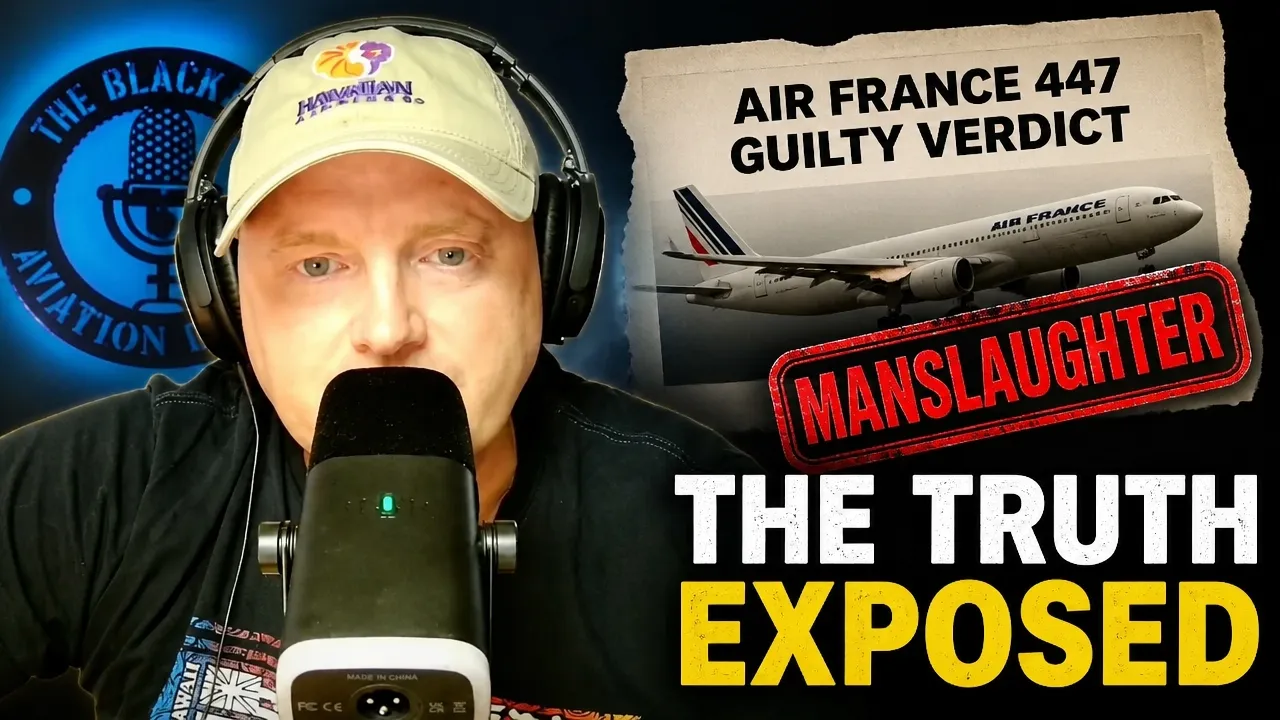
Air France 447: Lessons Learned from the Landmark Manslaughter Verdict
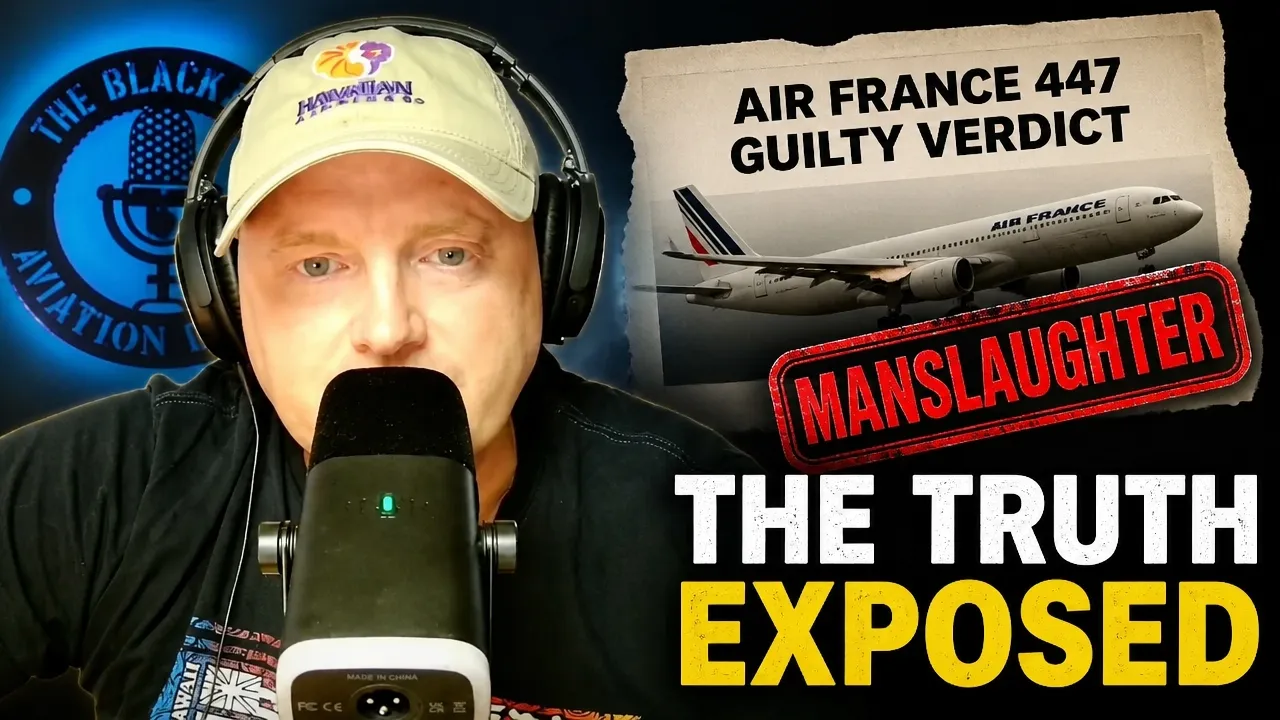
Welcome back to the blog for The Black Box Aviation Podcast! In our latest episode, we delved into a story that has resonated deeply within the aviation community for years: the tragic loss of Air France Flight 447 and the monumental legal developments that have followed. This blog post expands on those discussions, offering a deeper look into the intricacies of the case, the painstaking legal journey, and the profound implications of the recent corporate manslaughter verdict. If you haven't already, be sure to tune into our episode "Air France 447 Manslaughter Verdict & Southwest 1248: The Truth About Runway Braking Action" for the full audio experience.
The Long Road to Justice: Timeline of the Air France 447 Legal Battles
The story of Air France Flight 447 is one of immense tragedy and a testament to the enduring pursuit of justice. On June 1st, 2009, an Airbus A330 en route from Rio de Janeiro to Paris vanished over the Atlantic Ocean. The aircraft, carrying 228 passengers and crew, was lost without a trace for nearly two years. The subsequent recovery of the flight recorders was a monumental undertaking, crucial for piecing together the events of that fateful night. The initial investigations pointed towards a complex interplay of factors, including unreliable airspeed indications due to frozen pitot tubes in the high-altitude environment, pilot disorientation, and an incorrect response to the stall warnings. What followed was a protracted and often agonizing legal battle for the victims' families, who sought accountability from both Air France and Airbus.
The legal proceedings have been characterized by delays, appeals, and intense scrutiny. For years, the families faced resistance in their pursuit of criminal charges. In 2011, French prosecutors initially sought to dismiss the manslaughter charges against both airlines, a decision that was met with fierce opposition from the victims' families. However, legal challenges and appeals kept the case alive. In 2014, a French court ordered a retrial, reinstating charges of involuntary manslaughter against Air France and Airbus. This marked a significant turning point, indicating that the companies would indeed face judicial scrutiny for their alleged roles in the tragedy. The legal path has been a marathon, not a sprint, reflecting the complexities of international aviation law, corporate responsibility, and the immense emotional toll on those who lost loved ones.
The families' relentless pursuit of justice highlights a critical aspect of aviation safety: the importance of holding corporations accountable when negligence leads to loss of life. Their advocacy ensured that the investigation and subsequent legal proceedings did not fade into obscurity. The sheer length of this legal journey underscores the challenges faced by victims' families in seeking redress, especially in cases involving large, multinational corporations and intricate accident investigations. It's a narrative of perseverance against a system that can often feel designed to protect established entities.
The Verdict: What the Corporate Manslaughter Ruling Means for Air France and Airbus
After years of legal wrangling and mounting pressure from victims' families, a French court delivered a landmark verdict. In a decision that sent ripples through the global aviation industry, Air France and Airbus were cleared of criminal responsibility for the crash of Flight 447. This ruling, while not a conviction for manslaughter, was a significant moment, marking the end of a long and arduous legal chapter. The court found that while errors were made by the flight crew and there were issues with the aircraft's design and maintenance that contributed to the accident, the prosecution had failed to establish a direct causal link of criminal negligence on the part of the corporations. This verdict underscores the high burden of proof required to establish corporate criminal liability.
However, the absence of a criminal conviction does not diminish the gravity of the loss or the importance of the lessons learned. The court’s decision highlighted the complex interplay of human error, technological failures, and organizational oversight that can contribute to aviation accidents. While direct criminal culpability was not found, the lengthy legal process and the extensive scrutiny brought to light critical areas for improvement within both Air France and Airbus. The families, though perhaps disappointed with the outcome of the criminal proceedings, ultimately played a crucial role in bringing these issues to the forefront and pushing for greater transparency and accountability in the aviation sector.
The implications of this verdict are far-reaching. It signifies that simply being involved in an accident, even a catastrophic one, does not automatically equate to corporate criminal liability. The legal framework requires a clear demonstration of gross negligence or a deliberate disregard for safety that directly led to the fatalities. This ruling may influence how future aviation accident investigations and legal challenges are approached, potentially shifting the focus towards civil litigation and compensation where criminal charges are difficult to prove. It also reinforces the ongoing debate about the effectiveness of existing legal frameworks in holding large corporations accountable for their actions, especially in complex technical fields like aviation.
Deeper Dive: Analyzing the Core Issues in the AF447 Case
The crash of Air France Flight 447 was not a simple, single-point failure. It was a tragic confluence of events, each contributing to the ultimate outcome. At the heart of the accident were the unreliable airspeed indications. The pitot tubes, crucial for measuring airspeed, became blocked by ice crystals at high altitude. This led to the autopilot disconnecting and the flight computers entering a "law" that was not designed for manual flight in such a scenario. The pilots were then presented with conflicting information and, critically, experienced a stall warning that they did not fully comprehend or respond to correctly.
One of the most debated aspects of the investigation and subsequent legal proceedings was the "Altimeter" or "PFD" failure. The flight crew was presented with erroneous airspeed data, and the plane eventually entered a deep stall. The pilots, disoriented and likely experiencing spatial disorientation, failed to recognize the stall and correct it. The fact that the stall warning sounded continuously for a significant period, yet was not adequately addressed, remains a stark reminder of the challenges in high-stress, low-information environments. The investigation also highlighted issues with pilot training and the need for crews to be adequately prepared for such unprecedented situations. While the pilots were experienced, the specific circumstances of AF447 were outside the typical operational envelope they were trained for.
Furthermore, the design of the aircraft's flight control system, specifically the "revert law" that engaged when the autopilot disconnected, came under intense scrutiny. This law, intended to provide a level of protection, may have inadvertently contributed to the pilots' confusion. The lack of clear, intuitive feedback from the aircraft's systems in such an abnormal scenario proved to be a critical factor. The AF447 case brought to the fore the intricate balance between automation and manual control, and the need for aircraft systems to provide clear and unambiguous information to pilots, especially during emergencies. The speed at which events unfolded, coupled with the lack of immediate understanding of the problem, meant that the crew had very little time to react and recover.
Broader Implications: Aviation Liability and Accountability Post-AF447
The AF447 case has undeniably pushed the boundaries of discussions surrounding aviation liability and accountability. The protracted legal battle and the eventual verdict, even without a criminal conviction, have forced a re-evaluation of how airlines and manufacturers are held responsible when their actions or inactions contribute to fatal accidents. The families' persistent efforts have shone a spotlight on the need for greater transparency in accident investigations and for robust legal avenues for victims to seek justice.
One of the most significant implications is the increased scrutiny on the entire chain of command and responsibility within aviation companies. It's not just about the actions of individuals on the flight deck, but also about the decisions made in the boardroom, in design departments, and in maintenance hangars. The AF447 tragedy emphasized that a culture of safety must permeate every level of an organization. This includes robust risk assessment, effective communication channels, and a willingness to address potential safety concerns proactively, even if they are rare or seem improbable.
Moreover, the case highlights the challenges of applying legal frameworks designed for more traditional industries to the highly technical and complex world of aviation. The burden of proof in establishing criminal negligence in aviation accidents is exceptionally high, often requiring a clear and direct causal link between a company's wrongdoing and the loss of life. This can leave families feeling that justice has not been fully served, even when systemic issues are identified. The AF447 verdict, therefore, could encourage a greater reliance on civil litigation for compensation, but it also underscores the ongoing debate about the adequacy of criminal sanctions in deterring future negligence and ensuring the highest standards of safety.
Looking Ahead: Future Legal Precedents and Airline Responsibilities
The Air France 447 case, despite its complex and arguably unsatisfying legal conclusion for some, will undoubtedly serve as a significant reference point for future aviation litigation and regulatory scrutiny. The sheer volume of evidence gathered, the depth of the technical analysis, and the duration of the legal proceedings have created a rich tapestry of information that will inform how similar cases are handled. Aviation authorities and legal professionals will continue to dissect the events of AF447 for years to come.
One key area that the AF447 case has reinforced is the importance of continuous improvement in pilot training and human factors. The disorientation experienced by the crew underscores the need for advanced training in recognizing and responding to abnormal situations, even those outside typical operational parameters. Airlines must invest in sophisticated simulator training that exposes pilots to a wider range of scenarios, including those involving sensor failures and unexpected system behavior. The focus must be on developing pilots' cognitive skills and their ability to manage stress and make sound decisions under extreme pressure.
Furthermore, the case emphasizes the evolving responsibility of aircraft manufacturers. The scrutiny on the A330's flight control laws and the clarity of system indications during abnormal operations suggests that manufacturers have a continuing duty to ensure their systems are not only technologically advanced but also intuitively understandable and safe for human interaction in all operational phases. The lessons learned from AF447 will likely lead to more rigorous testing and validation of flight control systems, with a greater emphasis on human-machine interface design and the potential for human error. The pursuit of aviation safety is a perpetual journey, and cases like AF447, while tragic, serve as critical catalysts for progress.
Conclusion: Remembering Flight 447 and the Pursuit of Aviation Safety
The loss of Air France Flight 447 remains a somber chapter in aviation history, a stark reminder of the inherent risks and the constant vigilance required to maintain the highest standards of safety. As we've explored in this post and our related podcast episode, "Air France 447 Manslaughter Verdict & Southwest 1248: The Truth About Runway Braking Action", the journey from the moment of the crash to the recent legal pronouncements has been long and emotionally charged. While the court's decision regarding criminal liability may not have provided closure for everyone, the case has undeniably spurred crucial discussions and improvements in aviation safety, pilot training, and corporate accountability. The relentless advocacy of the victims' families played an instrumental role in ensuring that the lessons from Flight 447 were not forgotten. Ultimately, the pursuit of aviation safety is a collective endeavor, requiring continuous learning, unwavering commitment from all stakeholders, and a profound respect for the lives entrusted to the skies.

Beyond the Blame Game: What Air Traffic Controllers REALLY Say About Flight Delays