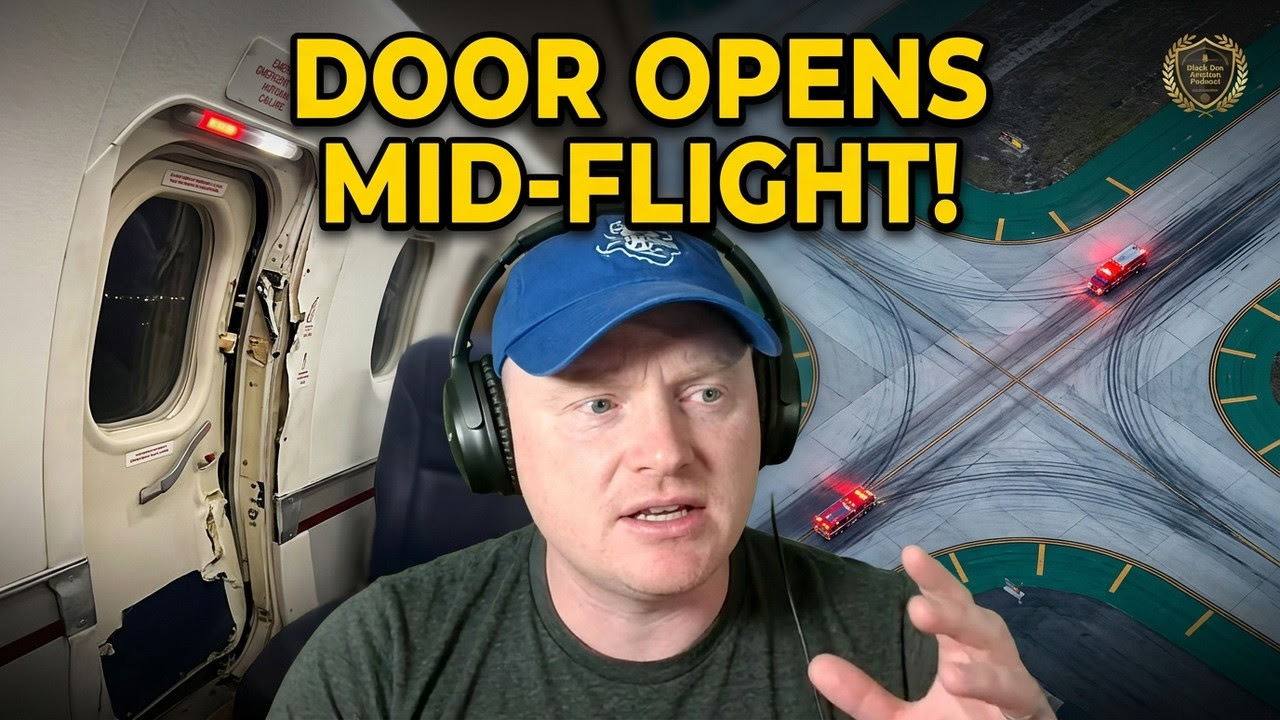
When the Cabin Door Opens: Lessons from the Cape Air In-Flight Incident
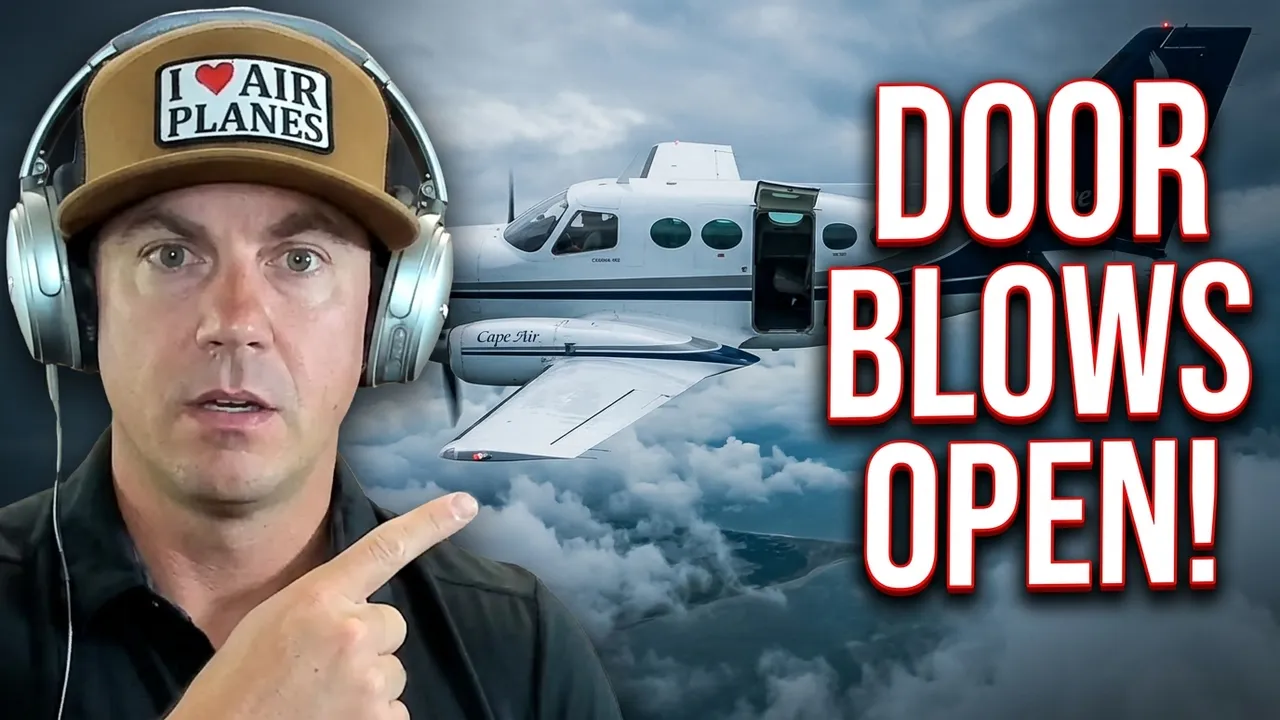
Welcome back to the blog, aviation enthusiasts! In our latest episode of The Black Box Aviation Podcast, we delved into a truly unnerving in-flight incident involving a Cape Air flight where a cabin door inexplicably opened shortly after takeoff. It’s the kind of scenario that sends a shiver down any pilot’s spine, and thankfully, thanks to the calm and professional actions of the flight crew, it ended without injury. In this post, we're going to unpack the specifics of this event, explore the aircraft involved, and most importantly, highlight the invaluable lessons it offers about pilot training and preparedness for the unexpected. You can listen to the full discussion of this and other gripping aviation stories in our episode, Doors Open & Close Calls: Surviving Unexpected In-Flight Emergencies.
Diving into the Aircraft: Understanding the Cessna 402's Role
The aircraft at the center of this incident was a Cessna 402 Businessliner. For those unfamiliar, the Cessna 402 is a twin-engine, propeller-driven aircraft that has been a workhorse in regional aviation for decades. It’s known for its versatility and reliability, often used for passenger and cargo transport in shorter-haul operations. Specifically, the Cessna 402 is a non-pressurized aircraft. This is a crucial detail when considering the cabin door incident. In a pressurized aircraft, a cabin door opening mid-flight would present an immediate and severe threat of explosive decompression, leading to a rapid and catastrophic loss of cabin pressure. The air inside the cabin is at a much higher pressure than the outside air at cruising altitude, and if a door seal fails or the door itself opens, that pressure differential can be devastating.
However, in a non-pressurized aircraft like the Cessna 402, the cabin pressure is essentially the same as the outside ambient air pressure. While still a serious situation, the immediate threat of explosive decompression is absent. This doesn't diminish the danger, but it fundamentally changes the nature of the emergency. The Cessna 402 is a robust aircraft, capable of carrying a modest number of passengers and baggage, making it ideal for connecting smaller communities or operating on thinner routes where larger airliners wouldn't be economically viable. Its design, however, is more akin to a traditional aircraft cabin where a secure closure of all doors and windows is paramount, but the immediate physical threat of pressure loss is not the primary concern in the way it would be for a jetliner.
The specific model used by Cape Air, often the Cessna 402C, is configured for commuter operations. These aircraft are known for their reliability and are generally very safe. They are, however, older designs that have been continually updated and maintained. The inherent nature of their operation, often in and out of smaller airports with varying weather conditions, means pilots are constantly managing complex flight profiles. Understanding that this was a non-pressurized aircraft provides essential context for how the situation could be managed and why the pilot's immediate actions were so critical.
The Incident Unfolds: A Cabin Door Opens Mid-Flight
The incident occurred shortly after departure from Nantucket Memorial Airport (ACK) in Massachusetts. Reports indicate the flight had only been airborne for approximately ten minutes when the cabin door began to open. Imagine the scene: the aircraft is climbing, the noise of the engines is significant, and suddenly, a part of the aircraft's structure that is meant to be sealed shut starts to move. For passengers, this would be an incredibly frightening and disorienting experience. The sound alone would be alarming, and the visual of a door ajar in a flying aircraft is not something anyone expects or wants to see.
The exact cause of the door opening is still under investigation and was not definitively stated in our initial reporting, but the implications are clear. It could be a mechanical failure of the latching mechanism, an issue with the door seal, or even a combination of factors including aerodynamic forces and improper closure prior to flight. Regardless of the precise cause, the immediate consequence is a significant disruption to the flight's normal operation. The cabin would likely experience an influx of cold air and noise, potentially causing discomfort and anxiety for the passengers. For the pilots in the cockpit, this unexpected event demands their immediate and undivided attention.
The fact that it happened so early in the flight, during the climb phase, adds another layer of complexity. The aircraft was still gaining altitude and speed, and the pilot's focus would have been on establishing a stable climb, managing the engine power, and navigating air traffic. To be confronted with a structural anomaly of this magnitude at such a critical juncture requires a rapid reassessment of priorities and an immediate response to ensure the safety of everyone on board. The sensation of a door opening in flight, even in a non-pressurized aircraft, would create turbulence and noise, and could potentially affect the aircraft's aerodynamics. This is not a minor inconvenience; it's a serious in-flight emergency that requires expert handling.
The Pilot's Response: "Fly the Airplane" in Action
This is where the true heroism and professionalism of the flight crew come into play. In the face of a terrifying and unexpected event, the pilot’s paramount instruction, drilled into them through countless hours of training, is to "fly the airplane." This mantra, seemingly simple, is the bedrock of aviation safety. It means prioritizing control of the aircraft above all else. In this Cape Air incident, the pilot immediately recognized the situation and, instead of panicking or becoming distracted by the passenger experience, focused on maintaining stable flight.
The immediate priorities would have been to assess the situation without compromising aircraft control. This likely involved checking airspeed, altitude, and heading to ensure the aircraft remained stable. The pilot would have then made a decision to either continue the climb to a safe altitude or initiate a descent if it was deemed more prudent. In this case, the pilot opted to maintain control and assess. The decision to return to Nantucket for a precautionary landing was the correct and safest course of action. Returning to a familiar airport with well-trained ground personnel and emergency services on standby provided the best environment to resolve the issue.
The pilot's ability to remain calm, assess the unfolding emergency, and execute the appropriate procedures is a testament to their training. They would have followed emergency checklists, communicated with air traffic control to declare their intentions, and kept the passengers informed to the best of their ability. The fact that no one was injured is a direct result of the pilot’s expertise and adherence to fundamental aviation principles. It highlights that even with unforeseen mechanical issues, a well-trained pilot can manage the situation and bring the aircraft and its occupants to safety. The principle of "fly the airplane" is not just a catchphrase; it’s a sophisticated mental framework that guides pilots through the most chaotic of circumstances.
Why This Matters: The Criticality of Pilot Training in Emergencies
The Cape Air incident serves as a powerful reminder of why rigorous pilot training is non-negotiable in aviation. The skills honed through flight school, recurrent training, and simulator sessions are not just about learning to fly in good weather. They are about preparing pilots for the absolute worst-case scenarios, for the moments when everything goes wrong simultaneously. This incident, while thankfully not resulting in catastrophe, presented a significant challenge that required the pilot to draw upon their core competencies.
Pilot training encompasses a broad spectrum of skills: aerodynamics, meteorology, aircraft systems knowledge, navigation, communication, and crucially, human factors. Human factors training addresses how stress, fatigue, and unexpected events can impact decision-making. In this scenario, the pilot's ability to suppress any personal fear or surprise and instead engage their training protocols is what made the difference. They were able to systematically address the problem, rather than reacting emotionally.
The "fly the airplane" philosophy is deeply ingrained in pilot training. It emphasizes that maintaining control of the aircraft is the absolute first priority. Any distraction, any deviation from maintaining stable flight, can exacerbate an already dangerous situation. This incident demonstrates that when faced with an immediate and alarming problem like a cabin door opening, a pilot’s instinctual adherence to this principle, honed through years of practice, is what ensures a safe outcome. It’s about muscle memory, ingrained procedures, and the mental fortitude to execute them under pressure. The training doesn’t just teach pilots *what* to do, but *how* to do it when their lives and the lives of their passengers depend on it.
Broader Lessons: What We Can Learn from Unexpected In-Flight Events
Beyond the specific mechanics of the Cape Air incident, there are broader lessons that resonate throughout the aviation community and for anyone who travels by air. Firstly, it underscores the fact that aviation, while incredibly safe, is not immune to unexpected events. Mechanical failures, human error, and environmental factors can and do occur. The success of aviation safety lies not in preventing every single anomaly, but in building systems and training crews to manage them effectively when they arise.
Secondly, it highlights the importance of robust maintenance and pre-flight checks. While the investigation will undoubtedly uncover the precise cause, it serves as a reminder that diligence in these areas is paramount. Every component, every latch, every seal on an aircraft is critical to its safe operation. The aviation industry has an unwavering commitment to safety, and incidents like these, while concerning, lead to further scrutiny and improvements in procedures and aircraft design.
Furthermore, this event reinforces the trust we place in our pilots. They are highly trained professionals who are prepared to handle a wide array of emergencies. Their calm demeanor, technical skill, and adherence to protocol are the invisible shields that protect us in the air. It also speaks to the resilience of the aircraft itself. While the door issue was significant, the Cessna 402 was capable of maintaining flight, allowing the pilot to safely return to the ground. The strength and design integrity of aircraft are also key components of aviation safety.
Finally, these incidents serve as valuable learning opportunities for the entire aviation ecosystem. From manufacturers and airlines to regulatory bodies and training institutions, every event provides data that can lead to enhanced safety measures, improved training programs, and a deeper understanding of potential risks. The open sharing of information and analysis of these occurrences is what drives continuous improvement in aviation safety, making it the safest mode of transportation in the world.
Conclusion: Safety First, Always
The Cape Air in-flight door incident, as we discussed in our latest episode, Doors Open & Close Calls: Surviving Unexpected In-Flight Emergencies, serves as a potent reminder of the inherent unpredictability of flight operations and the critical importance of pilot training. While the sight of a cabin door opening mid-flight is enough to cause alarm, the pilot’s unwavering adherence to the principle of "fly the airplane" ensured a safe outcome for all onboard. This event, like many others we explore on the podcast, underscores that in aviation, preparation, professionalism, and a steadfast commitment to safety are paramount. By examining these real-world scenarios, we gain a deeper appreciation for the complexities of flight and the dedication of the individuals who keep us safe in the skies. Thank you for joining us on the blog, and we look forward to you tuning into our next episode!