Korean Air Pilots Reach a Tentative Deal Ahead of the Asiana Merger, but the Seniority Fight Isn't Over
Korean Air and its pilots union have a tentative contract, and it looks like the airline's first pilot strike in a decade is off the table, at least for now.
According to Korean reports published Monday, Nov. 16 (Seoul time), the airline and the Korean Air Pilots Union reached a tentative agreement on Friday, Nov. 13, settling three years of wage and collective bargaining talks covering 2024 through 2026 as one package. The union will hold a special general meeting from Nov. 19 to 23 so members can vote it up or down.
The timing is not an accident. Korean Air's merger with Asiana Airlines becomes official on Dec. 17, when the combined airline launches and Asiana flights start operating under Korean Air flight numbers.
What's in the deal
The headline items are a pay step and a bonus. Korean Air says it will give existing Korean Air pilots "a certain level" of pay grade recognition and pay a special bonus before the integration. "In recognition of the hard work of our flight crews, we plan to grant a certain level of pay grade and pay special bonuses before the integration," the company said, according to the Seoul Economic Daily.
Neither side has made the exact numbers public. If members ratify it, the agreement locks in Korean Air's pilot pay structure for the three years it covers.
It took a while to get here. The two sides held more than 30 rounds of negotiations starting in 2024 without a settlement, the Seoul Economic Daily reported.
The part they didn't settle: seniority
For pilots, the biggest issue in this whole story is seniority, and that piece is still open.
When two airlines merge, two pilot seniority lists have to become one. Where you land on that combined list decides almost everything about your career: when you upgrade to captain, what airplane you fly, which trips and days off you can hold, and whether you sit reserve.
Korean Air pilots and management have been fighting over how the Asiana pilots get folded in. The union argued that the ranking should be negotiated under the contract. Management's position, according to Maeil Business News, is that promotion rankings are its call as part of its personnel authority. The company says it built an objective and reasonable seniority plan with outside consultants that doesn't disadvantage Korean Air pilots. The union says the plan contains elements of reverse discrimination that favor Asiana pilots.
That dispute got serious this fall. On Sept. 7, the union filed for labor dispute mediation with the Seoul Regional Labor Relations Commission, its first mediation filing since 2015 according to Maeil Business. If mediation had failed, the union would have gained the legal right to strike, and Korean Air could have seen its first pilot strike since 2016. Instead, the commission recommended the two sides keep negotiating everything else and set seniority aside. The union withdrew its request in October, and a month later they had this tentative deal.
So the pay steps and bonuses look a lot like the company's answer to the seniority anger: keep its position that rankings are a management decision, and compensate the existing Korean Air pilots ahead of the merger. Both sides say they'll keep talking about seniority.
Why it matters
We both know this one personally. Like we talked about on our episode about how airline pilot scheduling works, everything you want at an airline comes down to your seniority number. Integrating two lists is the most emotional thing that happens in a merger, because one decision can move your upgrade or your schedule by years. In the U.S., the McCaskill-Bond law requires a fair and equitable seniority integration process when covered airlines merge, and those fights still get ugly. A pay step and a bonus can calm things down for a contract cycle, but they don't answer where an Asiana captain and a Korean Air first officer end up on the same list.
For passengers, the ratification vote is the near-term thing to watch. A yes vote would remove the strike threat heading into the Dec. 17 integration. If you're booked on Asiana for travel on or after Dec. 17, those flights will be operated by Korean Air under Korean Air flight numbers, and changes or refunds go through Korean Air from that date, according to Asiana's integration notice.
We'll be watching the Nov. 19–23 vote, and the seniority list after that.
Want the inside story on how seniority runs a pilot's life, from bidding to reserve? Listen to our episode: How Airline Pilot Scheduling Works: Seniority, Bidding, & Cockpit Secrets
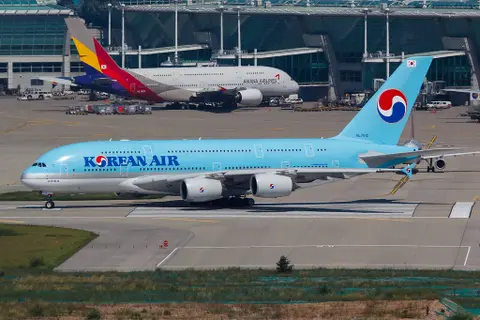
Featured photo: A Korean Air Airbus A380 (front) and an Asiana Airlines A380 at Seoul Incheon International Airport, 2014. Photo: Hyeonwoo Noh, CC BY-SA 4.0, via Wikimedia Commons.

Whose Fault Was the FAA Ground Stop? The Contractor, the Router Maker, and the Techs Who Say They Were Left Out