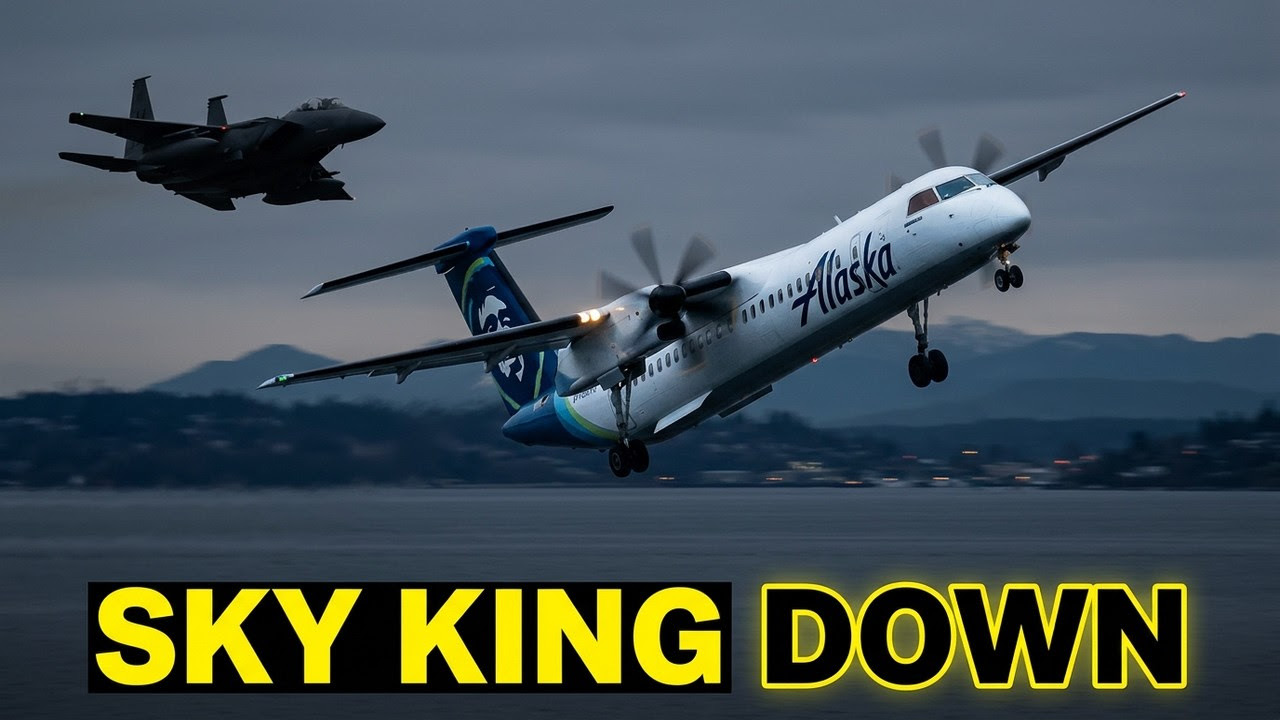
How Did a Ground Agent Steal a Q400? The Technical Breakdown of the Sky King Incident
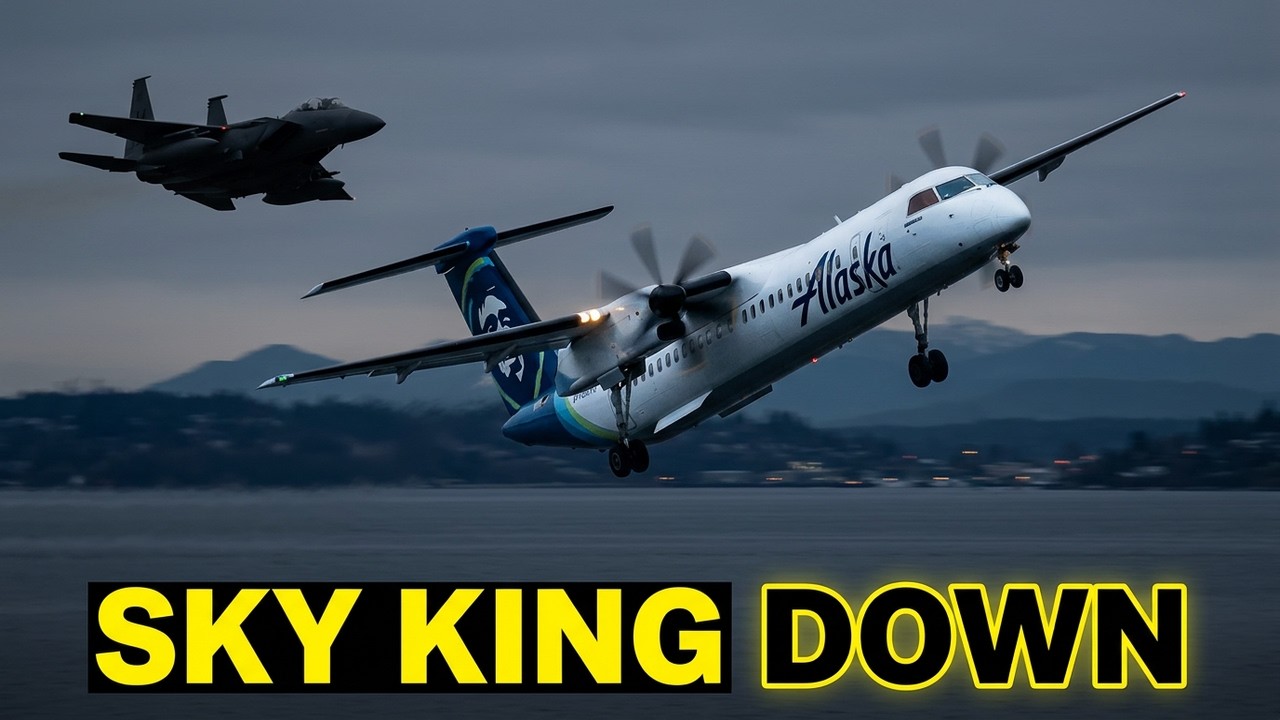
Welcome back to the blog, aviation enthusiasts! In our latest episode of The Black Box Aviation Podcast, we delved into a truly astonishing and deeply unsettling event in aviation history: the Sky King incident. The unauthorized flight of a Horizon Air Q400 by ground service agent Richard Russell at Seattle-Tacoma International Airport in 2018 sent shockwaves through the industry and captured global attention. How could someone with no flight training possibly take control of such a complex machine and even get it airborne? This blog post will expand on the technical details and security vulnerabilities that made this unthinkable event a reality. We'll break down the sequence of events, from gaining access to the aircraft to the dramatic aerial maneuvers and the eventual tragic end. For a comprehensive audio deep dive into this incident, be sure to listen to our Sky King: The 2018 Sea-Tac Stolen Q400 Incident | The Untold Story of Richard Russell episode.
Richard Russell: The Man Behind the Machine
Before we dissect the technical aspects, it's crucial to understand the individual at the center of this event. Richard "Rick" Russell was not a disgruntled pilot or a trained saboteur. He was a 29-year-old ground service agent for Horizon Air. His role involved towing aircraft, pushing them back from gates, and performing other ground-handling duties. This meant he had intimate knowledge of the airport's tarmac operations and, importantly, access to the aircraft parked on the apron. While he was not authorized to operate any aircraft, his job granted him a level of proximity and familiarity that proved tragically exploitative. Reports indicated he was struggling with personal issues, and while his mental state is not the focus of this technical breakdown, it's an undeniable aspect of the broader narrative of the incident, as discussed in our podcast episode.
Gaining Access: How a Ground Agent Took the Controls
The first major hurdle for Richard Russell was gaining access to the Bombardier Q400 aircraft itself. As a ground service agent, he would have possessed an airport badge and potentially keys or access codes for certain areas, including the ramp and the aircraft. The Q400, like most commercial airliners, has multiple entry points. However, for an unauthorized individual, the most likely and logical access point would have been through a main passenger door or a service door that might have been left unsecured or accessible with a master key common among ground crew. It's also plausible that he could have used a tow vehicle to gain access to the cockpit if a door was partially ajar or if he possessed a tool capable of bypassing a simple lock. The security protocols at the time, while in place, clearly had a vulnerability that allowed an authorized individual to exploit their access privileges. The concept of "two-man integrity" – requiring two authorized individuals for certain operations – is a crucial safety measure, and its absence or circumvention in this specific scenario allowed Russell to act alone.
The Q400's Cockpit and Systems
The Bombardier Q400 is a sophisticated twin-turboprop aircraft. Its cockpit is designed for two pilots, equipped with advanced avionics, flight management systems (FMS), and controls for engines, hydraulics, electrical systems, and flight surfaces. While Russell had extensive knowledge of ground operations, he would have had minimal to no experience with the complex array of switches, levers, and displays in the cockpit. However, the basic controls for taxiing and starting the engines are generally more intuitive, especially for someone familiar with mechanical systems. The key here is that the aircraft was powered on and, critically, not secured in a way that prevented him from initiating the engines. The parking brake would have been engaged, but the procedures for releasing it and steering the aircraft using the tiller (a steering wheel-like control for ground movement) are part of ground crew training.
Taxiing and Takeoff: The Technical Feats of the Unauthorized Flight
Once inside the cockpit, Russell's task shifted from gaining access to initiating movement. This involved several critical technical steps:
Engine Start-Up
Starting the Q400's Pratt & Whitney Canada PW150A turboprop engines involves a specific sequence of actions. This includes checking fuel levels, engaging the battery, selecting engine start on the overhead panel, and monitoring engine parameters like N1 (fan speed) and ITT (interstage turbine temperature) to ensure a smooth and safe start. While Russell wouldn't have had formal pilot training, ground crews are often present during engine starts for aircraft being prepared for departure or pushback. It's possible he observed these procedures or had a basic understanding from his role. The critical factor was that the aircraft was not chocked and secured with its main power off, which would have prevented him from even attempting an engine start.
Taxiing and Runway Crossing
The most daring and technically complex part of his initial actions was taxiing the aircraft across the active airport environment. Russell would have used the tiller to steer the aircraft. This requires coordination of rudder pedals and differential braking. The challenge is immense in a busy airport like Sea-Tac, with active runways and taxiways. He would have had to navigate complex intersections, avoid other aircraft and vehicles, and, most critically, cross active runways. This maneuver alone is a significant security breach. Ground crews are usually restricted to designated taxiways and require clearance from Air Traffic Control (ATC) to cross any active runway. The fact that he was able to do this without immediate detection suggests a gap in real-time ramp surveillance or a miscommunication within the airport's operational system.
The Takeoff Roll
Once on a runway (presumably one deemed less active or at a time of reduced traffic), Russell would have needed to perform the takeoff roll. This involves advancing the power levers to the takeoff setting, allowing the engines to generate maximum thrust. The Q400 has a relatively short takeoff roll for its size, but it still requires precise control of the aircraft to maintain a straight path down the runway. He would have had to steer using the tiller and then transition to rudder control as airspeed increased. Reaching rotation speed (Vr) and then pulling back on the control column to lift the nose and initiate takeoff is the final step. Without proper training, this process is inherently dangerous, relying on instinct and perhaps prior observations. The fact that he achieved a successful liftoff indicates a degree of luck combined with an unexpected aptitude for basic aircraft control under extreme pressure.
Airborne: The Q400 in the Hands of an Untrained Pilot
Once airborne, the true danger of the situation escalated exponentially. The Q400, while known for its reliability and performance, is a complex machine requiring trained pilots to manage its systems and navigate safely. Russell was not trained on the Q400's autopilot, its flight management system, or emergency procedures. His flight path would have been largely dictated by instinct and the basic principles of keeping the aircraft level and climbing. The limited ATC communications suggest he was disoriented and not following any established flight plan. The aircraft's Fuel Control Switches (FCS) would have been engaged, and the engines would have been running on their own, but maintaining altitude and heading without guidance is a monumental task for an untrained individual.
The Interception: NORAD and the F-15 Scramble
The appearance of an unauthorized aircraft in the airspace surrounding a major international airport quickly triggers a response from air defense agencies. In this case, the North American Aerospace Defense Command (NORAD) was alerted. Two F-15 Eagle fighter jets were scrambled from Joint Base Lewis-McChord. Their mission was to intercept the Q400, visually identify it, and attempt to make contact. The fighter pilots would have been under immense pressure to assess the situation without escalating it or endangering the public. They were trained to communicate with the pilot and try to de-escalate the situation, but they were also prepared for a potential threat. The speed and maneuverability of the F-15s contrasted sharply with the lumbering pace of the Q400, highlighting the vast difference in the capabilities of the aircraft and their respective pilots.
The Barrel Roll and the Q400's Capabilities
One of the most iconic and perplexing moments of the Sky King incident was Russell's barrel roll maneuver. The Q400 is a sturdy aircraft, but it is not designed for aerobatics. Its airframe has limits, and performing such a maneuver without proper training or understanding of the aircraft's structural integrity could have been catastrophic. The fact that the Q400 survived the barrel roll is a testament to its robust design. However, it also highlights Russell's unexpected ability to manipulate the aircraft's controls in a way that, while reckless, did not immediately break the airframe. This maneuver also served as a clear signal to the intercepting F-15s that this was not a standard flight operation, and the pilot was acting erratically.
ATC Communications: A Plea to 'Talk Him Off the Bridge'
The communication between Richard Russell and Air Traffic Control is perhaps the most poignant aspect of the incident. The controllers, despite the unprecedented nature of the event, remained remarkably calm and professional. They attempted to engage Russell in conversation, trying to understand his intentions and, crucially, "talk him off the bridge" – a common aviation idiom for persuading someone to abandon a dangerous course of action. Their dialogue, as heard in recordings, reveals a human effort to connect with Russell, to appeal to his sense of reason, and to guide him toward a safe landing. They asked him about his experience, offered guidance on landing, and tried to establish a rapport. These conversations underscore the immense psychological and operational pressure placed on ATC during such crises. The tragic conclusion, with Russell intentionally crashing the aircraft, was a devastating outcome that no amount of communication could prevent in the end.
The Aftermath: Security Reforms and Insider Threats
The Sky King incident served as a stark wake-up call for the aviation industry. It exposed critical vulnerabilities in airport security, particularly concerning insider threats. Following the event, there were widespread reviews and implementations of enhanced security measures:
Enhanced Access Control
Airport authorities and airlines revisited their protocols for granting access to aircraft and restricted areas. This likely involved stricter vetting of employees, more robust digital access control systems, and a re-evaluation of the "two-man integrity" rule for sensitive operations.
Ramp Surveillance and Monitoring
The incident highlighted the need for better real-time monitoring of ramp activity. This could include increased CCTV coverage, GPS tracking of ground equipment, and improved communication channels between ground crews and ATC to ensure unauthorized movements are detected immediately.
Insider Threat Mitigation
Airlines and airports have intensified their focus on identifying and mitigating insider threats. This involves behavioral analysis, employee assistance programs, and fostering a culture where employees feel comfortable reporting concerns about colleagues without fear of reprisal.
The technical breakdown of how a ground agent could steal a Q400 is not just about the mechanics of the aircraft; it's about the systemic failures that allowed such an event to unfold. It's a complex interplay of human factors, technological vulnerabilities, and procedural gaps.
Conclusion: Lessons Learned from the Sky King Incident
The Sky King incident remains a deeply complex and tragic chapter in aviation history. Richard Russell's unauthorized flight of a Horizon Air Q400 from Sea-Tac was a stark reminder that even in the highly regulated world of aviation, unforeseen threats can emerge. This blog post has attempted to dissect the technical capabilities of the Q400, the procedural vulnerabilities that allowed access and takeoff, and the dramatic events that unfolded in the air. It's a story that intertwines technical mastery with profound human tragedy. Our hope is that by breaking down the mechanics of this event, we can foster a greater understanding of the intricate systems in place to prevent such occurrences and the constant vigilance required to maintain aviation safety. For a more in-depth exploration of the human element, the ATC communications, and the lasting impact on the aviation industry, please revisit our podcast episode, Sky King: The 2018 Sea-Tac Stolen Q400 Incident | The Untold Story of Richard Russell. Thank you for joining us on the blog, and we look forward to continuing these aviation discussions with you.