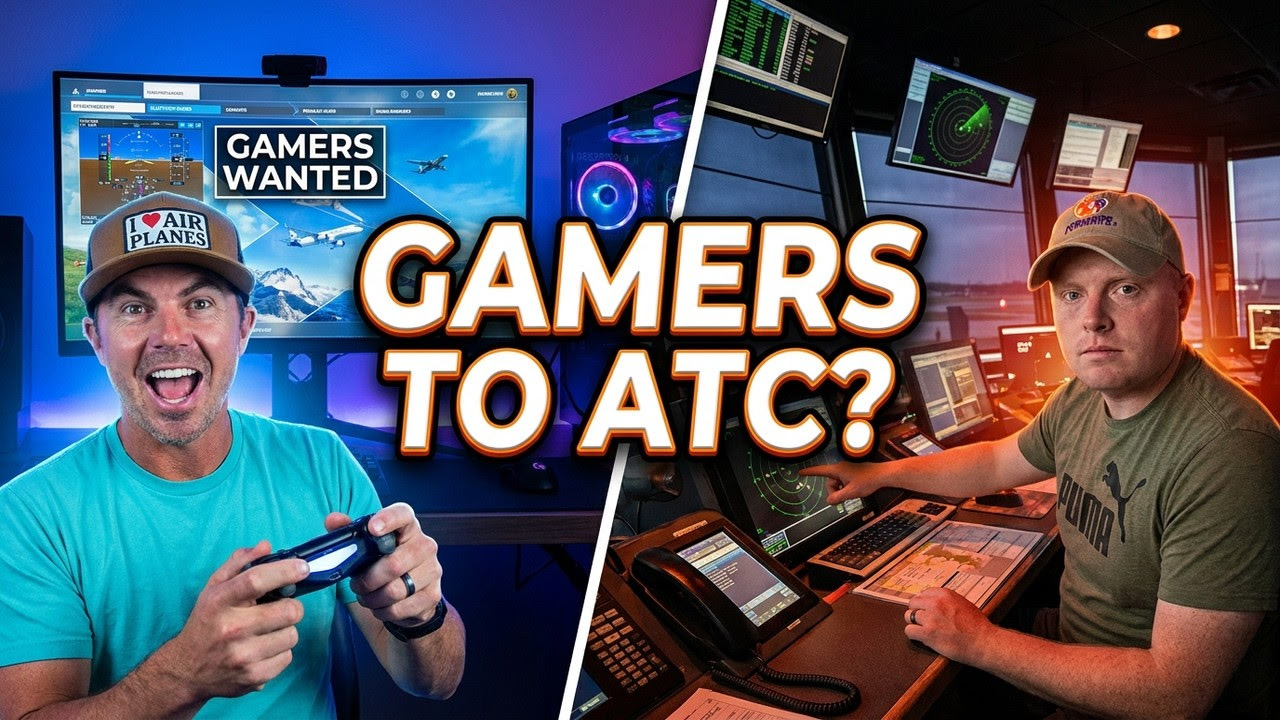
From Virtual Worlds to Real Skies: Why Gamers Make Great Air Traffic Controllers
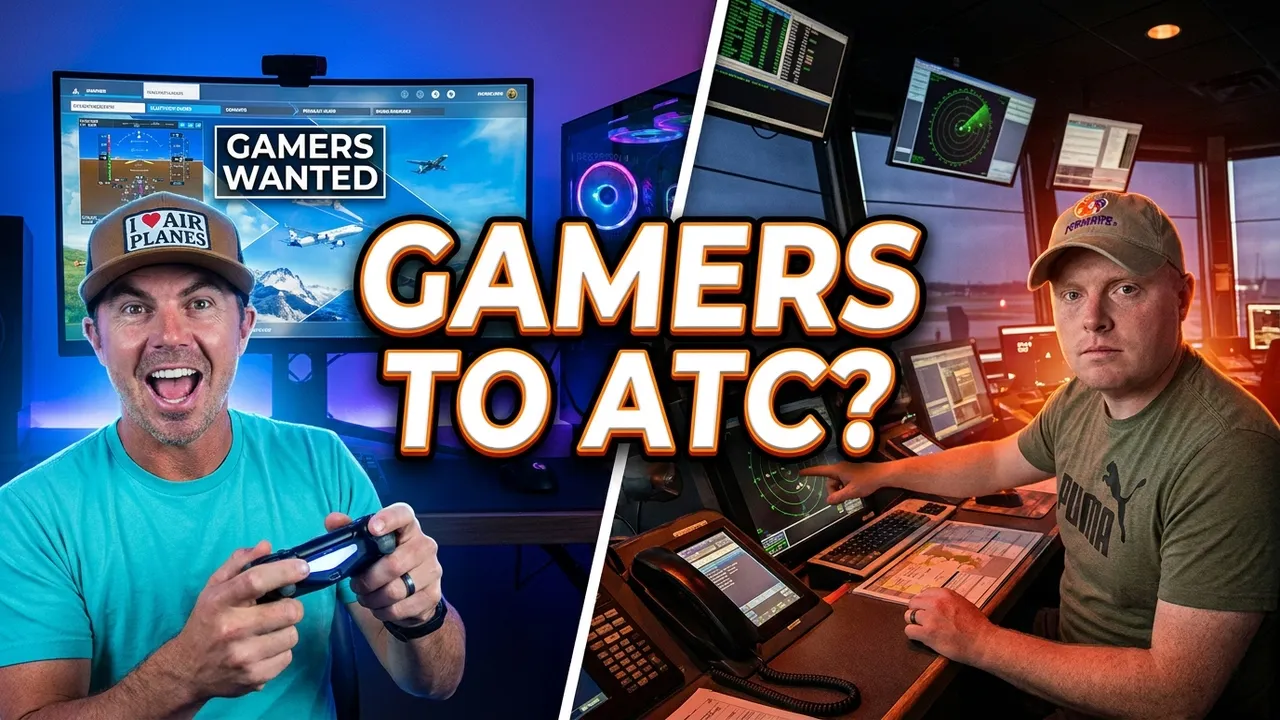
Introduction: The Skies Need a New Kind of Hero
Welcome back to the blog, fellow aviation enthusiasts and curious minds! In our latest episode of The Black Box Aviation Podcast, titled "Gamers to Air Traffic Control & The Hidden Truth of Aviation Insider Threats," we delved into some fascinating, and perhaps unexpected, intersections within the world of aviation. One of the most intriguing discussions centered around a bold recruitment strategy being employed by the Federal Aviation Administration (FAA): actively seeking out and recruiting gamers for Air Traffic Control (ATC) positions. This might sound like a leap from pixelated adventures to the high-stakes world of managing the skies, but as we'll explore in this post, the skills honed in virtual realms translate remarkably well to the demanding reality of ATC. It's a testament to how the modern world is shaping the next generation of professionals, and how the FAA is recognizing the untapped potential within a demographic often associated with leisure, not life-saving responsibility.
Why the FAA is Looking Beyond Traditional Paths
For decades, the path to becoming an Air Traffic Controller has often involved specific educational backgrounds or prior experience within the aviation or military sectors. While these traditional routes have undoubtedly produced skilled controllers, the FAA faces a significant challenge: a looming wave of retirements and a substantial demand for new personnel. They need to fill thousands of ATC positions, and relying solely on traditional recruitment pools simply isn't enough. This reality has forced the FAA to think outside the box, to cast a wider net and identify potential candidates with aptitude rather than just pre-existing, conventional experience. The shift in thinking is profound. Instead of solely looking for individuals who have spent years in cockpits or control towers, the FAA is now prioritizing transferable skills. They are looking for individuals who demonstrate an innate ability to process information quickly, manage multiple demands simultaneously, and maintain composure under pressure. This is where the modern gamer enters the picture. In an era where video games are more sophisticated and immersive than ever before, many gamers develop a sophisticated set of cognitive abilities that are surprisingly applicable to the complex environment of air traffic control. The FAA's willingness to consider this demographic signals a forward-thinking approach to talent acquisition, recognizing that the skills needed to guide virtual aircraft through intricate game worlds can be a strong indicator of success in guiding real aircraft through busy airspace.
The Gamer's Toolkit: Skills That Translate to the ATC Tower
The stereotype of a gamer being glued to a screen, detached from reality, couldn't be further from the truth when it comes to the demands of many modern video games. In fact, many popular games are complex, strategic simulations that require an extraordinary level of mental agility. These are not just games of reflexes; they are often intricate systems that demand foresight, quick analysis, and strategic planning. Let's break down some of the key skills gamers cultivate that are directly transferable to the ATC tower: * **Rapid Decision-Making Under Pressure:** In fast-paced games, players are constantly faced with situations that require split-second decisions. Whether it's evading an enemy, choosing a strategic objective, or reacting to an in-game event, there's no time for prolonged deliberation. This mirrors the environment of an air traffic controller who must make critical decisions in mere seconds to ensure the safety of aircraft. A gamer accustomed to making these rapid, high-stakes choices in a virtual world is likely to possess the mental fortitude to do the same in a real-world ATC scenario. They are trained to assess a situation, weigh potential outcomes, and act decisively, all while the clock is ticking. * **Exceptional Multitasking Abilities:** Modern games rarely involve a single objective. Players often have to manage multiple character actions, monitor resource levels, track enemy positions, communicate with teammates, and execute complex strategies simultaneously. This constant juggling of information and tasks is a hallmark of advanced gaming. Air Traffic Controllers face a similar, if not more intense, form of multitasking. They must track numerous aircraft, monitor their altitudes, speeds, and headings, communicate with pilots, and coordinate with other controllers, all while being aware of weather conditions and potential conflicts. The ability to seamlessly switch focus between these diverse inputs and manage them all efficiently is a direct parallel to the skills developed by dedicated gamers. * **Advanced Spatial Reasoning and Visualization:** Many video games, particularly those in genres like real-time strategy, first-person shooters, and flight simulators, demand a high degree of spatial awareness. Players need to understand the layout of environments, the trajectories of projectiles, the positioning of allies and enemies, and how to navigate complex three-dimensional spaces. This ability to mentally visualize and manipulate objects in space is crucial for an Air Traffic Controller. They must constantly picture the relative positions of multiple aircraft in three-dimensional space, predicting their paths and ensuring safe separation. Gamers who excel at understanding maps, judging distances, and visualizing movements within a game world have a significant advantage in developing this vital ATC skill. * **Problem-Solving and Adaptability:** Games are inherently about overcoming challenges. Players are constantly presented with new obstacles, unexpected events, and complex puzzles that require innovative solutions. The ability to analyze a problem, identify its root cause, and devise an effective strategy is a core component of successful gaming. Similarly, air traffic control is a dynamic field where unforeseen circumstances – unexpected weather, mechanical issues, or sudden traffic surges – can arise. Controllers must be able to adapt quickly, think critically, and devise solutions to maintain safety and efficiency. Gamers who have a proven track record of solving in-game problems are likely to possess the adaptability and problem-solving mindset needed to thrive in the unpredictable environment of ATC. * **Attention to Detail and Pattern Recognition:** In many games, missing a small detail or failing to recognize a recurring pattern can lead to failure. Players learn to meticulously observe their surroundings, identify subtle cues, and anticipate potential outcomes based on past experiences. This heightened sense of observation and the ability to discern patterns are invaluable in air traffic control. Controllers must be vigilant, noticing subtle shifts in aircraft behavior, identifying potential conflicts before they become critical, and recognizing patterns in traffic flow. The meticulous attention to detail that gamers develop can directly translate to the constant vigilance required to keep the skies safe.
From Virtual Worlds to Real Skies: Specific Skill Analysis
Let's zoom in on how these gaming-honed skills manifest in the concrete tasks of an Air Traffic Controller: Consider a high-stakes game of "StarCraft" or "League of Legends." Players are managing multiple units, each with different abilities and roles, across a vast map. They need to simultaneously defend their base, expand their territory, gather resources, and attack opponents. This requires an incredible capacity to process a deluge of information – unit statuses, map positions, resource counts, enemy movements – and make strategic decisions that impact the entire game. An Air Traffic Controller operates in a similar, albeit higher-stakes, environment. They might be monitoring dozens of aircraft at once, each with its own unique flight plan and immediate needs. They need to track their speed, altitude, direction, and proximity to other aircraft. The ability to rapidly parse this complex data, identify potential conflicts, and issue clearances to prevent them is directly analogous to the strategic decision-making required in a complex real-time strategy game. Think about flight simulation games like "Microsoft Flight Simulator" or even more arcade-style flying games. Players learn to manage complex aircraft systems, navigate using instruments, and react to various in-flight scenarios. While not as demanding as real-world flight, these games instill a basic understanding of aerodynamics, flight paths, and the importance of precise control. For someone aiming to become an Air Traffic Controller, prior exposure to the mechanics of flight, even in a simulated environment, can provide a valuable foundational understanding. They've already begun to internalize concepts of altitude, speed, and navigation, making the transition to the complexities of real-world air traffic management potentially smoother. Furthermore, many online multiplayer games foster strong communication skills. Players often need to coordinate with teammates, relay information clearly and concisely, and respond effectively to instructions. This is paramount in ATC, where clear and unambiguous communication with pilots and other controllers is non-negotiable. A gamer who has experience working collaboratively in a virtual team, relaying critical information under pressure, is already practicing many of the communication protocols essential for air traffic control. The ability to communicate effectively, to be understood the first time, can be the difference between a routine day and a critical incident.
The FAA's Recruitment Strategy: A Bold Move
The FAA's decision to specifically target gamers aged 18-30 for ATC positions is a strategic and forward-thinking initiative. This demographic is digitally native, accustomed to complex interfaces, and often possesses the very cognitive skills the FAA is seeking. By tapping into this pool, the FAA is not only addressing a critical staffing need but also embracing a new paradigm in recruitment. They are recognizing that talent can come from unexpected places and that traditional recruiting methods might be overlooking a significant segment of the population with immense potential. This strategy involves more than just placing advertisements in gaming forums. The FAA is developing assessments and training programs that can identify and nurture these gaming-related aptitudes. They are looking for individuals who demonstrate high levels of aptitude in areas like cognitive abilities, problem-solving, and multitasking, regardless of their previous career paths. The focus is on potential and the ability to learn and adapt, rather than solely on prior experience. This approach acknowledges that the world of air traffic control is constantly evolving, with new technologies and challenges emerging, and that a workforce with a strong capacity for learning and adaptation is essential. The benefits of this approach are multifaceted. For the FAA, it means access to a larger and potentially more diverse pool of qualified candidates. For gamers, it represents an opportunity for a challenging, rewarding, and stable career with significant earning potential and federal benefits – a stark contrast to the often precarious nature of professional gaming careers. It’s a win-win scenario that could significantly bolster the ranks of air traffic controllers and ensure the continued safety and efficiency of the national airspace system.
The Future of Air Traffic Control: A New Generation
The integration of gamers into the Air Traffic Control workforce signifies a shift towards a more technologically adept and cognitively diverse generation of controllers. As air traffic volume continues to grow and new technologies like drones and advanced air mobility become more prevalent, the demands on controllers will only increase. A workforce that is comfortable with complex digital interfaces, adept at multitasking, and capable of rapid decision-making will be crucial for navigating this evolving landscape. This initiative by the FAA is not just about filling immediate vacancies; it's about building the future of air traffic management. It's about recognizing that the skills developed through modern entertainment and hobbies can be foundational for critical public service roles. It’s about embracing innovation in recruitment and training to ensure that the skies remain safe and efficient for generations to come. The skills honed in virtual combat zones and intricate digital worlds are finding a new, vital application in the real world, guiding real planes carrying real people.
Conclusion: The Unseen Connection Between Gaming and Aviation
The conversation in our latest episode, "Gamers to Air Traffic Control & The Hidden Truth of Aviation Insider Threats," highlighted the ever-evolving nature of aviation and its unexpected connections. The FAA's innovative strategy of recruiting gamers for Air Traffic Control positions is a prime example of this. As we've explored, the skills cultivated through hours spent in virtual worlds—rapid decision-making, exceptional multitasking, advanced spatial reasoning, and keen problem-solving—are not just recreational pursuits; they are vital aptitudes that translate directly to the demanding responsibilities of guiding aircraft through our skies. This recruitment effort by the FAA is more than just a novel approach to filling vacancies; it's a testament to the adaptability of the aviation industry and its recognition of where to find the next generation of highly capable professionals. It’s a fascinating glimpse into how the skills of the digital age can be harnessed for critical real-world applications. If you're interested in diving deeper into this topic and other aspects of aviation safety and recruitment, be sure to check out the full episode of The Black Box Aviation Podcast. You can find it right here: Gamers to Air Traffic Control & The Hidden Truth of Aviation Insider Threats. The world of aviation is full of surprises, and this gamer-to-controller pipeline is certainly one of the most exciting.