

he Crash That Changed the Airline Industry Forever: Colgan Air 3407
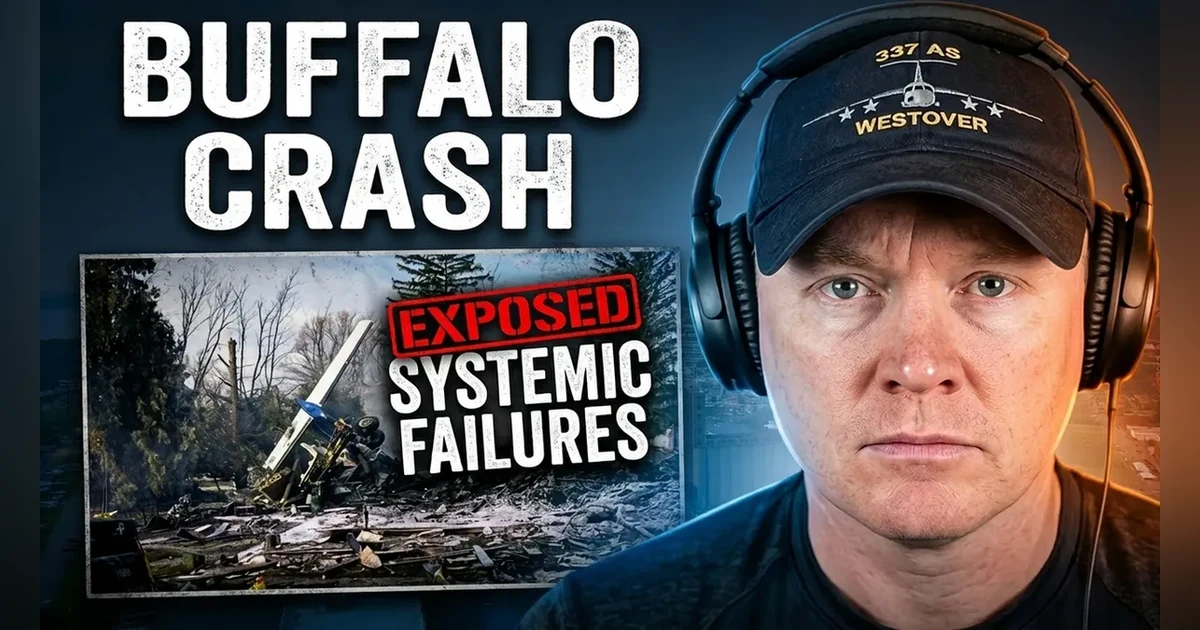


What really happened to Colgan Air Flight 3407? On February 12, 2009, a Bombardier Dash 8 Q400 operating as a Continental Connection flight crashed during an instrument approach to Buffalo Niagara International Airport, resulting in 50 tragic fatalities. In this episode of the Black Box Aviation Podcast, hosts Tom and Mike break down the complex chain of events that led to the devastating crash in Clarence Center, New York.
We peel back the layers of the NTSB investigation to analyze how severe lake-effect icing, pilot commuting habits, and systemic cockpit fatigue combined to create a worst-case scenario. Why didn't the crew recognize their bleeding airspeed on the ILS approach? How did the absence of autothrottles impact the captain’s situational awareness?
Tom and Mike leverage their real-world experience flying regional airliners in and out of Buffalo to give you a first-hand perspective on winter weather operations and the critical safety rules that came out of this disaster. We also examine the leaked cockpit voice recorder (CVR) transcripts, detailing the sterile cockpit violations, the crew's undisclosed training records, and the shocking reality of regional pilot pay that forced cross-country commuting.
This is the definitive deep dive into the accident that single-handedly transformed modern airline training, restricted ATP minimums, and changed aviation safety rules forever.
In This Episode We Discuss:
00:00 - Introduction to Colgan Air Flight 3407
01:30 - Flying the Q400 into Buffalo Winter Weather
04:30 - Autothrottles vs. Manual Power Management
06:00 - The Crew Profile: Flight Hours & Hidden Checkride Failures
12:00 - Commuting, Sleep Deprivation, and the Crew Room Reality
19:30 - Cockpit Voice Recorder (CVR) Breakdown & Sterile Cockpit Violations
25:30 - Flap Selections and the Final Approach Timeline
Follow & Support The Black Box Aviation Podcast:
-
Subscribe on Spotify and leave us a 5-star review if you love aviation safety deep dives!
-
Share this episode with fellow pilots, aviation geeks, and true crime fans.
-
Listen to Next: Go back and check out our episode on the "Sky King" Q400 Seattle hijacking mentioned in this show! https://open.spotify.com/episode/7MiSS9jAdV5OxJI7J7FqE8?si=kngkQGUbRVSPpT-HBR4WhA
#Aviation #Podcast #ColganAir3407 #AviationSafety #PilotFatigue #AirCrashInvestigation #NTSB #Dash8 #Q400 #PilotLife #AviationHistory #TrueCrimeAviation
Unknown Speaker (0:00): The twenty twenty six FIFA World Cup meal at McDonald's is underway with one of nine legendary cups in the lineup. Christian Pulisic, David Beckham, LaMigne Amal, Ronaldinho, Thierry Henry, Son Hyung Min, Alfonso Davies, Santee Jimenez. And between the posts, it's Grimace. Get one of nine collectible cups with a FIFA World Cup meal. At participating McDonald's for a limited time while supplies last.
Tom (0:27): All rights reserved. 2026 McDonald's at FIFA World Cup twenty twenty Engine spooled. Checklist complete. Welcome to the Black Box Aviation podcast, where the stories behind the headlines get unpacked by the people who actually fly the damn plane. Hosted by Tom, a former military pilot turned airline and cargo, and Mike, a lifelong civilian flyer now flying left seat as an airline captain.
Tom (0:50): It's aviation news, insider insight, and real pilot perspective. Strap in.
Unknown Speaker (0:57): Alright, everybody. Welcome to the Black Fox Aviation podcast. I'm on your coast, Tom, joined by Mike. What's happening? What's up, Tom?
Mike (1:03): Hey. Listen. We are gonna talk about the hot topic today, Colgan Flight thirty four zero seven. This accident is going to run the gamut of weather, fatigue, experience, competency as we examine all aspects of this flight, the crew, and the outcomes. Mike, this one is burned into my memory like you can't believe.
Unknown Speaker (1:25): I'm sure you kinda feel the same way.
Unknown Speaker (1:27): Yeah. Was getting furloughed from Conway right about the time this happened. So I I remember sitting at home in my house in Kentucky, Cincinnati. Cincinnati. Watching the news.
Unknown Speaker (1:36): I remember Cincinnati.
Unknown Speaker (1:38): Because the Cincinnati Airport is in Kentucky.
Mike (1:40): Yeah. That's weird. Yeah. So you're in working for regional and Colgan Air is a regional airline as well. So we'll talk about this here.
Mike (1:50): This is on 02/12/2009, about 10:15 Eastern Standard Time. Colgan Colgan Air flight 3407. It's a Bombardier dash 8400, which is a Q400. It's operating as continental connection Flight3407. It's on an instrument approach to Buffalo Niagara International Airport in Buffalo when it crashes into a residence in Clarence Center, New York about five miles northeast of the airport.
Mike (2:17): Two pilots, two flight attendants, and 45 passengers aboard the plane are killed. There's also a fatality on the ground as it impacts a house, and it's awful. Mike, we both have extensive experience operating in and out of Buffalo.
Unknown Speaker (2:31): Yeah. Guess where I fly tomorrow. Buffalo. One legged Buffalo, baby.
Mike (2:37): I'm I had a slap slap flat malfunction in the Embraer one ninety at the fixed clump, which is pretty much where this happened.
Unknown Speaker (2:44): It's exactly where this happened.
Mike (2:46): Yeah. On the ILS instrument landing system approach Runway 23 at Buffalo, and it's it's pretty bad now. Another side note to Colgan. So Colgan's a regional airline and they flew jeez. Did they have Saab's at one point?
Unknown Speaker (3:02): I think so. Yeah. Yeah.
Mike (3:05): So Colgan is founded by Charles j Colgan in 1965 in Manassas Airport in Virginia. That's also where where the Compass ticket came from.
Unknown Speaker (3:16): I don't
Mike (3:17): if you remember that. I do. It gets acquired by Presidential Airways and then reorganized again by Chuck Colgan and his son Mike Colgan in 1989 after presidential fire of bankruptcy. And then they started flying codeshare for Continental Connection, and they grew significantly. And they operated the q 400.
Mike (3:36): They did fly a sub three forty for Continental United and US Airways Express. They got acquired by Pinnacle in 2007. Mike and I were at Compass at that time, and the crash pad next to us, there were a bunch of, like, Colgan, Pinnacle guys and everything, and they kinda all got merged together. It was a lot of, like, to do about that and what was going on. So I actually got a call from Chuck Colgan in 2010 to interview for Colgan, and I had just started Encompass.
Mike (4:04): It was, like, the summer, and I turned it down. I didn't go interview. But he actually personally called me, which is kinda interesting.
Unknown Speaker (4:11): Colgan himself,
Unknown Speaker (4:12): Yeah. He called to offer me the interview, which was interesting. He was probably just running the show. They didn't they didn't have a lot of pilots. I mean, they couldn't have more than like two, three hundred maybe probably total pilots on the on the seniority list.
Unknown Speaker (4:24): So it was a small company. So was Compass. Like, Compass wasn't a big company either. What do we have?
Unknown Speaker (4:28): 400?
Unknown Speaker (4:29): Yeah. I don't think there was that many. Until they bought they got more of those airplanes, then we, like, doubled up or whatever, but I left by the time.
Unknown Speaker (4:36): Yeah. Exactly. We're gone.
Mike (4:38): That started happening. But look, Buffalo weather is always a fact there factor there. There's cold, there's ice and snow, and then in the summer, got cold front thunderstorms. There's strong winds off Lake Erie. Like, it's no joke.
Mike (4:52): Like, Buffalo brings all aspects of the thing, and it's kinda unassuming in its own right because it's
Unknown Speaker (4:58): not Anybody that's seen a Bills football game, they've seen it on TV, you know?
Mike (5:02): Yeah. Lake effect snow up there, and like you said, the the summertime weather. And we you could run, I mean, I'd fly like, you know, three flights a day back and forth at Buffalo and Boston, like, that was normal. I think that was one of JetBlue's first flights was like Buffalo to Kennedy or something. JetBlue one, I think, that flight operated forever Buffalo to Kennedy.
Mike (5:25): Maybe. But anyways, this is back to Colgan flight. So and it was curious about this too is this is a q 400. This is the same type of airplane that Sky King hijacked and took flying in Seattle. So if haven't listened to that episode, go back to listen to Sky King, and that's the same thing.
Mike (5:43): So there's two Pratt and Whitney turboprop engines on this. This is a pretty reliable airplane. It's got a modern avionics suite, but what it doesn't have is autothrottles. Mike, what are autothrottles?
Unknown Speaker (5:54): Exactly what they say. It's gonna move the thrust or the, you know, the the engine RPMs or whatever depending on what you got. Like, we have auto thrust in the Airbus, so it moves the thrust depending on what you need, like speed or if you're climbing or descending, and it does it automatically without you having to move the throttle quadrant.
Unknown Speaker (6:11): Yeah. And they're all kinda different. Like, why I
Unknown Speaker (6:12): flew All different. That's why it's hard to I don't know what the q 400 had exactly.
Mike (6:16): Yeah. I'm not sure either. It actually does not have autothrottles. There's no autothrottles in this airplane, and that's what's gonna come back to be a problem here. Now I flew the the BeachJet 400, the t one when I was in the navy.
Mike (6:27): It was an air force jet trainer jet, and that did not have autothrottles. And I would see this happen all the time. You'd be on, like, a GPS approach. The jet's fully coupled. It's flying the autopilot, and we'd level off at a fix when the student would never push the power in.
Mike (6:40): There's no auto throttle, so your airspeed just bleeds off. You know? And as an instructor, I'm just watching the speed tape come back, waiting for them to put the power in, waiting, wait. Okay. That's too close now.
Mike (6:50): And I'm now I become the autothrottles and I push the power in. So that that's gonna come into play in this accident. But let's talk about the crew right now. The captain, he's 47 years old. Colgan's flight records indicate that he had three thousand three hundred seventy nine hours total flying time, including three thousand hours in turbine airplane, a thousand hours as pilot in command, and a hundred eleven hours on the q 400.
Mike (7:13): So he doesn't have a lot of experience on the q 400. He had flown the Saab three forty for most of his time as a captain. He comes from Tampa, Florida that morning, and he commutes to Newark. So he he and I guess he would do this often. So he would come in the morning and that their the flight, like, it's a night flight, so you can make that commute if you leave, like, midday, you know, from Tampa to Newark.
Mike (7:38): And he lived in Tampa, so he had done this before. Now, what's kind of a highlight in his record is that he had had multiple checkride failures for instrument approaches, for instrument checkrides, and he did not disclose that to Colgan. And I was talking to Jovan today about some things, about training and about interviews and things like that. Like, eventually, like, it's gonna come out. Like, you can't hide this stuff forever.
Mike (8:08): And I think that's Yeah.
Unknown Speaker (8:09): I'm surprised. Yeah. It's it always comes out. Yeah. And You have access to all your records and everything.
Mike (8:15): Especially if there's a reason for someone to, like, dig for it. You know, if you did something at the company or that's when they start peeling back the layers of, like, what's your training records look like and things like that. So this is definitely a factor that's gonna come up in this accident as well. The first officer, she's a female. She was 24 years old.
Mike (8:35): She had a commercial certificate, FAA first class medical. She had dated 2009. No limitations. She had seven hundred seventy four hours in turbine airplanes, and they were all on the q 400. So that's kind of a low time to be that inexperienced in this airplane.
Mike (8:50): Now look, you gotta get your experience somewhere. Right, Mike? So Sure. You know, you can't say like, well, she shouldn't have been flying that airplane because she doesn't have it. Like, well, you gotta get your experience somehow.
Mike (9:01): But, you know, it's it's gonna kinda be an issue in this. So you I think this is one of these situations you put these two people together and the recipe kinda starts cooking itself and it's not a good thing. She received a type rating with second in command privileges only on the I two four
Unknown Speaker (9:20): saw that you put the second in command privileges only, that was completely normal back then. When I got my CRJ type rating, it was second in command privileges only. The PIC type rating, ATP stuff became mandatory after this accident. So the secondary so second in command privileges only don't look much into that. That was standard across the industry for an FO on a new airplane.
Unknown Speaker (9:46): This episode is brought to you by Google Chrome. You think you know a browser, but Gemini in Chrome, that's new. It can help you with practically anything on the web, like restoring a vintage motorcycle from a 50 page restoration block or finally break down that long article you've had open for weeks. Gemini and Chrome is here for it. Ready to make anything online make sense?
Unknown Speaker (10:04): There's no place like Chrome. Check responses, setup required, compatibility, and availability varies 18 plus.
Mike (10:11): Yeah. That's totally true. I don't remember if you remember Encompass. The big deal is that we were gonna get a PIC typewriting in that, so you had to do, like, a reject from the left seat, and you had to do something else, and that gave you the the privileges as PIC.
Unknown Speaker (10:25): Probably taxing and stuff.
Mike (10:27): And then the FAA, like, pulled a whole bunch of PIC type ratings. That was a whole fiasco at Compass. That's a whole different story. But so eleven months prior to the accident, she pretty much gained all her experience. So she previous experience she had in some pipers, maybe a couple twins, one fifty two, one seventy two, a diamond 40, I think that's a twin.
Mike (10:51): But she didn't have any turbine experience on her resume until she got employed at Colgan. And turbine experience, because it's just a little bit different. Again, the turbo prop we talked about is just a propeller attached to a jet engine. But again, you're gonna achieve a lot things happen faster because you're gonna go a lot faster. Airspeeds, the jets are more the airplanes are more complex.
Mike (11:15): There's a lot more things that are happening versus flying like a smaller piston. Again, you gotta get experience. Yeah. I mean,
Unknown Speaker (11:22): I look at I look at her situation and I could look at my situation in Comm Air and say, I was exactly where she was. Now Comm Air had captains that were super experienced and super senior. Right? They'd been there forever. So I wasn't flying with necessarily the captain she was flying with.
Unknown Speaker (11:38): But I look at my experience level versus her experience level when I was 24. It was very similar.
Unknown Speaker (11:45): Which time did you have when you were flying at Great Lakes?
Unknown Speaker (11:48): When I was flying at Great Lakes? Yeah. By then, I had a probably close to three thousand hours because I've been at Com a couple years.
Unknown Speaker (11:55): Oh, so you went to Com first.
Unknown Speaker (11:56): Okay. Was furloughed from Great Lakes or furloughed from Com Air and that's why I went to Great Lakes.
Unknown Speaker (12:01): I see. That's right. Yeah. Yeah.
Unknown Speaker (12:02): But when I got hired at Commer, probably had maybe eleven hundred hours? Twelve hundred hours? I can't remember.
Unknown Speaker (12:08): Most of that's like instructing and pistons and things like that?
Unknown Speaker (12:11): Yeah. All pistons. I didn't fly any turbinates till I was until I was in the seat of a sea archer.
Mike (12:15): Yeah. And I think that, Mike, that's a great point because, like, that's where you're getting your experience.
Unknown Speaker (12:20): That's where I'm like, I'm not gonna put these people down for that because that was the standard, and that and it's honestly, to some degree, it still is.
Unknown Speaker (12:27): I would agree with that, yeah.
Unknown Speaker (12:29): So they've made some tweaks and we can talk about that, but I mean you typically don't fly your first turbine airplane or your first jet airplane till there's people on the back of it. But you're supposed to be with a captain that's experienced. Yeah. And competent and doesn't have a bunch of checkride failures.
Mike (12:44): Yeah. That's the and that's kinda like this recipe starts cooking itself. She had had eighty six hours simulated instrument time before her employment. Colgan Colgan, that's not a lot of instrument time, and she did have a CFI check ride failure as well. So that's for your certified flight instructor, which is a very I wouldn't say how would you say that?
Unknown Speaker (13:06): It's a
Unknown Speaker (13:07): It's in-depth. I I heard oral exams for that being like eight hours long. So I mean, it stink that she failed it? Sure. Would I say that's the reason for the this crash?
Unknown Speaker (13:16): 100% no.
Mike (13:18): Yeah. It's a high failure event for people because it's a big thing that the FAA is not gonna sign you off if you're not ready for it. And like you said, Mike, it can get pretty in-depth. I'm not a CFI. You did it.
Mike (13:30): Not me. I I don't have any CFI ratings from the civilian side. So, yeah, that's that's definitely but it's in a record as a failure. So a captain who flown with the first officer numerous times indicated she was average to above average for her level experience. Captain further indicated the first officer as pilot monitoring was always ahead of the airplane.
Mike (13:49): Being ahead of the airplane is, like, thinking about what things are happening before they happen. Hey. What do I need? What are we gonna do next? Do I need to get the weather?
Mike (13:57): You know, things like that. So that that's a good thing. That's a very good thing. She cross checked her actions. Other captains indicated because her abilities, the first officer could have upgraded to captain.
Mike (14:10): That's kind of an interesting statement to make, but they're complimenting her on her abilities in the airplane, which is really good. So on 02/08/2009, the first officer completed a five day trip that ended at Newark at 02:55PM. The specifics of the first officer trip from Newark to her home are not known, but she did go home and she lived in Seattle. So her husband described her activities in the days leading up to the accident as routine. So she went to Seattle at 05:30PM Pacific time.
Mike (14:44): She boarded this is before the accident flight. She boarded a cargo flight as a jump seat passenger that departed for Memphis at about 07:51, and the captain of that flight spoke with the first officer. The plane was being loaded. The captain stated she seemed to be alert, well rested, good mood, and she did not show any symptoms of being sick. And another passenger from the cargo carrier said that the first officer slept for ninety minutes during the flight.
Mike (15:09): They arrived in Memphis. Wink, wink, nudge, nudge, hint, hint. And then she continued on to Memphis to New
Unknown Speaker (15:16): this, Tom.
Unknown Speaker (15:17): Yeah.
Unknown Speaker (15:17): When you have a jump seater, do you time it when they fall asleep? I don't.
Unknown Speaker (15:22): I'm trying to not the heck they how
Unknown Speaker (15:25): do they know that she slept for ninety minutes?
Mike (15:28): I don't know. That's kinda interesting. Right? Like I've never heard
Unknown Speaker (15:30): that till you just read that. That sounds Yeah.
Unknown Speaker (15:32): Like, why? I I don't know. Or even if I sat next
Unknown Speaker (15:35): to you Especially on a cargo, because usually they're gonna be, like, in the back, like, in the galley area, right, in a seat. Yeah. So how would you even know?
Unknown Speaker (15:42): I don't know. And if you if I was sitting next to you, Mike, and I knew that you and I were to do that jump seat, like, I I wouldn't pay attention to how much you slept or not. I would might ask you, but that if I was sitting next to a female jump seater from Colgan, I wouldn't
Unknown Speaker (15:54): ask her. Don't anything
Unknown Speaker (15:55): of it. Did you sleep? Yeah. That's kinda odd.
Unknown Speaker (15:58): I think that's that what you just when you said that, I was like, Interesting.
Mike (16:05): Well, what happens too, so you get on that flight from Seattle to Memphis, and I mean, it's a long flight. It's like two and a half, three hours, and then you you transfer off that flight at, like, two in the morning, 01:30 in the morning, you go into what's called the jump seat room, and you check-in for your next flight from
Unknown Speaker (16:21): Memphis. Yeah.
Mike (16:23): It's not I mean, it's a it's a bright room that there's TVs on, there's people are talking, there's coffee and stuff available, But you kinda just sit in your chair and try not to fall asleep until they call your next flight because if you Yeah. Don't hear your flight call
Unknown Speaker (16:38): You're miss it.
Mike (16:39): You they're not gonna come get you. Yeah. So and when they call you, you have to get your bags and then you walk out to the buses and then you'll meet the the crew that's gonna fly you to wherever your next stop is. And you say hi to them and then you get on a bus and everybody rides out there and you get on the plane. But again, that happens at, like, four, two, three, four in the morning, and so you're you're essentially alert all night.
Mike (17:02): You're not getting like a full rest sleep. And I think with this thing, you know, kind of somebody asked her to, what are you gonna do until your report time? Because the report time is not till later in the afternoon in Newark and she says there's a couch in the crew room that has her name on it. So her plan to get rest is to sleep in the crew room before her flight.
Unknown Speaker (17:26): Which I've done it, but it's tough to do.
Unknown Speaker (17:31): Yeah. It's not it looks really bad and it's from like if you were if Tom Lammas was reading this on the nightly news, like, you'd be
Unknown Speaker (17:39): like, oh my god.
Unknown Speaker (17:40): And you you'd be clutching your pearls, oh, how'd they do this? But this is kinda normal.
Unknown Speaker (17:44): I haven't done like the overnight commute on cargo, sleep in the crew room before a trip. I've done that going home, right? And you know, I have taken snoozes in the crew room before a trip, but not after a red eye commute either, you know.
Unknown Speaker (17:59): Can't remember in Compass if they had like like a blackout recliner sleep room or not. Do you remember that?
Unknown Speaker (18:10): I think they did.
Mike (18:12): I I just can't remember or not. I know that the other company I worked for, they had those available to you, so you could go into a room and it was super dark and there were recliners that you could go sleep in. At my company, there's actually sleep rooms that you can go, and you you check out the room and you go in there and there's a bed and there's like a chair and you put like your suitcase on the chair and then there's sheets and blankets and then you set a call time. They call you to wake you up from this phone so you can sleep, you know, if say you had one of these upturn flights, you could sleep for an hour or two and it's totally worth it. You go for that.
Mike (18:50): You're gonna get as much sleep as possible. Now some guys will say, oh, I feel like I don't feel that well when I take a nap like that. So then you can go into the blackout room and sleep in those. And those are like it's a really big room. It's not like there's six chairs.
Mike (19:05): Like, you'd see that at the other airline. There'd be like six or eight. No. This this is like 30 chairs. And you write your name down like on a board, and then you go down and sit you you can go in there and and take a nap.
Mike (19:16): But no one's gonna wake you up, so you have to wake yourself up with alarms and whatnot. And they might come looking for you because your name's on the wall, but anyway so different companies have different ways of offering places to rest, like, I've seen flight attendants make like tent city, you know, in the cruise. Have you ever seen that before?
Unknown Speaker (19:34): I remember when I was at Calmer, you'd have some of them living down in the crew room and I remember They live there. I remember a flight attendant being on the phone with scheduling because this is before we had cell phones. So there was like phones in the crew room that you actually call scheduling from And I remember her just begging, will you please give me a trip? I need to go to the hotel to wash my hair. She lives in the
Unknown Speaker (19:53): wanna go to the hotel.
Unknown Speaker (19:54): She's probably not $15 an hour, you know, which sounds great except you only get paid for the flight time. So for the twenty hours she's sitting in the crew room, she's not getting paid. Right.
Mike (20:05): So both so the so the captain's coming from Tampa into Newark, he had done a trip before that, a two day trip, and then he had gone home and then come back as well. So again, like we talked about, like, is commuting from the West Coast into your base that day to fly a trip is definitely a fatiguing event because you did not get a full night sleep before. Is it that unusual like Mike and I are saying? No. You yeah.
Mike (20:32): Need to It's common and you need to know your limits. Like, if that was your plan and you executed it and it didn't go well, like say you didn't get any sleep, then at that point, you gotta cry uncle because you well, you have to decide for yourself if you're fit to fly the airplane.
Unknown Speaker (20:47): That's Yes.
Mike (20:48): And that's kind of what comes into this and but where it gets a little bit weirder with this is that and then that's a red flag for this this event as well. When the tapes are pulled, so the cockpit voice recorders get pulled. The the there's conversations between the two of them that the first officer states, I'm ready to be in a hotel room, to which the Catherine replied, I feel bad for you. And she continued and she said, this is one of those times that if I felt like it's when I was home, there's no way I would have come all the way out here. She also stated, if I call in sick now, I have to put myself in a hotel until I feel better.
Mike (21:27): We'll see how it feels flying. If the pressure's too much, I could always call in tomorrow at least. I'm in a hotel the company's paid for. She says, I'm the company's buck, but we'll see I'm pretty tough. The cop captain responds by stating the first officer could try an over the counter herbal supplement, drink orange juice, or take vitamin c.
Mike (21:46): So she's actually saying that she doesn't feel well as well. Now, what she brings into the conversation on the tapes is that she doesn't wanna pay for a hotel room. And dude, this this comes up and it came up when I was flying for Compass.
Unknown Speaker (22:00): I mean she's 24 year old FO at Colgan, she's probably making 30,000? Maybe, yeah. Maybe. Yep. So she's probably got student loans, hotels a lot of money in New York, New Jersey.
Mike (22:14): Totally. And I I remember being at Compass and I was in Minneapolis, They canceled the leg to Vancouver and it was like 8PM and I called the chief pilot and said, well, can you get me a hotel room here? And he was like, no. I was like, okay. So I got on the the the last flight from Minneapolis to Hartford and then I came right back again at like five in the morning.
Mike (22:39): So, like, because a hotel room was gonna be like $80 and I'm like, I make 24 an hour that that's not happening.
Unknown Speaker (22:47): I'm not pay. Doing
Mike (22:48): Yeah. So and you make decisions like that. You say, oh, he's just a cheap pilot, you know. How do they make copper wire? They they put pennies on the ground and watch two pilots pull them apart and then that's how you get copy.
Mike (22:59): You know, like, that's I mean, we get a bad rap for that, but at the same time, like, you you start make you can justify making, you know, decisions like that. So anyways, during the flight, the the the cockpit voice recorder also picks up more discussions from the crew. The first officer making a sound similar to what would sound like a yawn, so there's audible yawning on the the cockpit voice recorder. The approach controller cleared the aircraft to descend from 5,000 to 4,000 feet, and the first officer acknowledged clearance, and then after the captain asked first officer about her ears, she indicated they were stuffy and popping. So again, more indications that she doesn't feel well, which on top of being tired, these things are not good.
Mike (23:42): Everybody's been
Unknown Speaker (23:43): tired for cold symptoms, once you're tired, those symptoms get ramped up, right, especially in the night, and that's when you always feel your worst.
Mike (23:51): Yeah. Absolutely. Especially for a double long day. At about 10:10PM, so about eight minutes before the accident, the first officer asked whether ice had been accumulating on the windshield. The captain replied that ice was present on his side of the windshield and asked whether ice was present on her side of the windshield.
Mike (24:10): The first officer responded, lots of ice. The captain then stated, that's the most I've seen. The most ice I've seen on the leading edges in a long time, in a while anyway, I should say. But ten seconds later, the conversation continued that was unrelated to flying duties. Now, Mike, they're at 5,000 to 4,000 feet.
Mike (24:30): So we have sterile cockpit rules where you should not be discussing anything unrelated to flying below 10,000 feet. They're they're violating their company's procedures. Now does this happen again as a common occurrence?
Unknown Speaker (24:46): Yes. It is. It is and it's our role to step up and and and try to fight against those temptations and things like that, right? Set the example, especially when you're in the left seat. But when you're in the right seat, should be setting the example too.
Unknown Speaker (25:00): Usually, if the captain starts talking and the fo doesn't respond, the captain usually catches a hint.
Mike (25:06): Yes. And you could things techniques to bring yourself back in is to discuss something else that's relative to the flight, you know, a concern that you're having, and suddenly the the attention goes away from, you know, who's winning the PGA Championship to what's going on with the icing system, you know. Yeah. So the first officer also talked about how she wouldn't mind have gone through a full winter in the Northeast before upgrading to captain because she had never seen icing conditions before and never had de iced. She had never experienced any of that.
Mike (25:41): Oh, yeah. You're flying in the Northeast. I mean, I don't know, Mike. You're gonna run into that. Right?
Mike (25:49): Like, there's a ton of ice out there. I remember I made a call on the radio one time in Minneapolis. I was like, we picked up some ice and I was like, I think I should report that. And the captain was like, oh, yeah. And so I called out, like, the icing over the radio and then, like, everybody started goofing at me like, never seen ice before in Minneapolis.
Unknown Speaker (26:06): I was like, well Yeah.
Unknown Speaker (26:08): But when you get into it, you're actually you're supposed to report it.
Unknown Speaker (26:10): Yeah. Right.
Unknown Speaker (26:11): Like, that's that's, I don't know. Can't believe people goofed on you for that.
Unknown Speaker (26:15): Yeah. They're goofing on me about that on the radio. I was pissed.
Unknown Speaker (26:19): They wanna know the type of icing and temperature.
Unknown Speaker (26:22): Oh, right. Exactly.
Unknown Speaker (26:23): They'll put that standard pyro.
Mike (26:25): Yeah. And if you go on to anything like the n the National Weather Service, you can see, like, pyrops and they'll put your thing in a category and you can see, like, the little design where it happened and everything. And you're like, oh,
Unknown Speaker (26:37): that's very scared tone in your voice when you reported it. I don't know why I don't know why people will be goofing on you for something that's kind of You think I sounded
Unknown Speaker (26:44): like a mini a big mini when I called it in?
Unknown Speaker (26:46): I don't know, maybe.
Unknown Speaker (26:48): Well, I probably did. That's probably why they they picked up on it. Oh, he's scared of the ice.
Unknown Speaker (26:54): You guys just stayed VFR in the military. Right?
Unknown Speaker (26:57): That's right. I didn't go in any clouds. Are you kidding me? Who said that? Didn't you say somebody that was like, they don't go in the clouds?
Unknown Speaker (27:05): We had a Czech airman at Great Lakes. They called him captain VFR. So you just cancel if it was cloudy outside. Alright.
Mike (27:15): So their their the accident crew is about a minute and a half from having the incident, and the the first officer told the captain the gears down. At that time, she noted the airspeed was a 145 knots. At that time, the flight data recorder indicates the airplane was being trimmed in a nose up direction, and that was applied by the autopilot, and also the ice detected message was appearing on the engine display in the cockpit. At that same time, the captain called for the flaps of 15 and the before landing checklist. The CVR recorded the sound similar to a flat panel movement.
Mike (27:50): The flight data recorded the flaps that selected 10 selected to 10, so they didn't go to 15. The flight data recorded the airspeed at the time was a 135 knots. And you could see like that this is an error by the first officer. So he called for flaps of 15, she selected 10. Mike, has that ever happened to you?
Unknown Speaker (28:09): Sure. I mean, I guess. Not it's not normal. It's not
Unknown Speaker (28:11): It's just an error. Yeah. So if I call for a flap setting and And I
Unknown Speaker (28:18): I don't know how the how the q 400 works. I mean, we go down and flaps one notch at a time, so it's kinda hard. It's much harder to mess that up, I guess, where they obviously could go more than one if there's ten and fifteen and he asked for 15 straight from, you know. And maybe that's not their normal sequence pattern. I I honestly don't know.
Unknown Speaker (28:40): So maybe she put him in the normal sequence and he was going out of sequence. I don't know.
Mike (28:44): Like the the m d 11, the triple seven, I think the the triple seven is like there's eight d tens. It goes out to flaps 40 and there's multiple d tens. Some of them have, like, gates and you can skip them based on, like, takeoff settings and landing settings. But like you're saying, like, there's very few settings in the Airbus, so it's different. So the queue, I didn't look this up, but it must have had multiple gates for the flap settings.
Mike (29:08): But at the same time, if you call for a if you ask for, you know, whatever is flaps five in the Airbus and, you know, the the first officer doesn't do it or puts them to a different position, like, you're scanning the instruments to be like, I just commanded something, like, did it happen? So I'm gonna double check, like, did it actually go in that position? And you don't you don't have to watch the first officer's hand to see where they put the flats. You look at the the instruments and it's gonna tell you what it's indicating. Like, on your airplane, it shows you the actual, like, graphic depictions of where where everything is.
Mike (29:38): So that's an error that maybe could have been caught by the captain. However, they immediately get into the stick shaker. So the the power's been back at idle as they start deselling the aircraft they're configuring, which is normal. You're slowing down. You're putting the landing gear down.
Mike (29:53): You're putting the flats out. This airplane doesn't have autothrottles. They're picking up ice, so they're adding more drag to the airplane. The nose in the autopilot is trimming to stay at a level flight situation, and then they get into stick shaker. The stick shaker is telling you that you're approaching a stall condition and it vibrates the column just like it says.
Mike (30:14): It, like, shakes everything and it scares the crap out of you. Mike, you do it in the sim. Right? There's shaker
Unknown Speaker (30:19): We don't have a stick shaker in the airbus.
Unknown Speaker (30:22): What does it do?
Unknown Speaker (30:23): It's an airbus. I forget. It doesn't stall.
Unknown Speaker (30:25): There's some people that might disagree with that.
Unknown Speaker (30:29): I mean, but there there's really no in normal law. There is no I mean, it could stall. It is an airfoil if you get like a wind shear or something and it could break the critical angle attack. Yes, it could stall. But there's the protections where it's automatically gonna pitch down for you.
Unknown Speaker (30:42): Like, it's not gonna it should not stall a normal law. Would I would I just close my eyes and go to sleep and say, my airplane's no. I would never of course, I would not do that. I'm still gonna fly. I'm still gonna be a pilot.
Unknown Speaker (30:55): But, yeah, we do not have a stick shaker.
Unknown Speaker (30:57): What does it say? Does it say like stall stall or anything like that?
Unknown Speaker (31:00): Yeah. Will. But they're off yeah. Was Is that in a different reason? No.
Unknown Speaker (31:06): Has yeah. Stall But technically it's off the angle of attack probe. If you get close to the critical angle attack, it'll kick the stall warning on. If you're a normal law, you shouldn't get to that point. Yeah.
Unknown Speaker (31:18): But like I said, it is an airfoil. It would take like a mountain wave or something that lifted your nose up high and, you know, fast enough that it could trigger, I guess. But, I mean, yeah, if you were an alternate law because of some sort of system failure, then a 100% it could stall on you.
Unknown Speaker (31:34): So good. So good. So good.
Unknown Speaker (31:37): New markdowns up to 70% off are at Nordstrom Rack stores now. Stock up and save big on shoes, tops, dresses, accessories, and more must haves for summer. Join the Nordy Club to unlock exclusive discounts, shop new arrivals first, and more. Plus, buy online and pick up at your favorite Rack store for free. Great brands, great prices.
Unknown Speaker (31:58): That's why you Rack.
Mike (32:01): Yeah. And I think the Air France accident where they actually stalled the plane, they the icing probes were, like, so good alternate law. Yeah. Yeah. They were not in normal law at that point.
Mike (32:12): And then you have, like, thrust lock and things like that. Like, it's gonna push and like Mike says, like, their autothrottle system, like, the throttles don't move. The throttles the the engine just put the power in automatically because the computer's like, you don't wanna do this. It's like, hell, you don't wanna do this, Dave. And it it takes over.
Unknown Speaker (32:31): And I have flown other airplanes that have stick shakers.
Mike (32:34): Yeah. Yeah. The MD 11 has a horrible stick shaker. It scares the crap out of you. So this was and this was going off while they're getting into into the stall.
Mike (32:46): So then the the copy of voice recorder records the sound similar to the autopilot being disconnected, and then that sound repeats till the end of the recording. Now when the autopilot gets disconnected, it makes another horrible noise. Yours makes like a chirp, chirp, chirp noise. Right? Do you have to cancel that?
Unknown Speaker (33:04): You do. If you this depends on how you turn the autopilot off. If you turn it off the normal way with the stick, you know, button on the stick, it'll cancel itself. If it gets turned off inadvertently or you turn it off on the flight control unit or you push the stick to turn it off, you it would continuously go off until you cancel it, if that makes sense.
Unknown Speaker (33:26): No. It does.
Unknown Speaker (33:27): It wants to know that you know the autopilot's off.
Mike (33:29): Yes. You have to make another input to be like, yeah.
Unknown Speaker (33:32): That's the that's from the eastern crash. Right? Yes, right? That's when that came into effect because those guys knocked the autopilot off and put it into the Everglades and never knew the autopilot was off.
Mike (33:42): Yeah, see all these things are tied together. This is fantastic.
Unknown Speaker (33:45): Yeah. Like you said, I think the first episode we ever did, how everything's written in blood.
Mike (33:50): It's written in blood. Yep. The warning is written in blood. The MD 11, it would it just keeps going autopilot, autopilot.
Unknown Speaker (33:58): Until you get audio.
Unknown Speaker (33:58): Going. Yeah. And I'll I'll be I'll click it off and I'm clicking the button like click click click click and And I'm going shut up. And the guy next to me is like, it doesn't hear you. And I'm like, oh, yeah.
Mike (34:07): I know. Yeah. So the control column moves aft. The engine power levers finally go advance about 70 degrees. The max rating detents 80 degrees.
Mike (34:19): And one second later, the CVR records the engine engine increase. So the power's coming in and then still the engine power is increasing. The airplane continues to pitch up. It finally stalls. It rolls to the left.
Mike (34:35): They get into a 45 degree left wing down. The plane rolls to the right, and the this plane had a stick pusher, and it was finally kicking in to push the plane forward, but the captain for some reasons continued to hold back pressure throughout the stall. So it's I don't think the stick pusher could have overridden him holding the yoke back. And then you gotta
Unknown Speaker (34:58): kinda go back to how we used to teach stall recovery. Stall recovery has been changed because of this accident where we don't care about how much you lose an altitude now. If you saw the airplane, just recover. If you lose a thousand feet, you lose a thousand feet. Before you were to recover and not lose altitude.
Unknown Speaker (35:17): I don't remember what the limits were but like within a 100 feet or so.
Unknown Speaker (35:20): It was tight. Yeah.
Unknown Speaker (35:22): So you would hold back and give power and just try to ride it out. Right? Which is totally backwards for the aerodynamics of a stall because why is it stalling? It's not because of your airspeed, it's because of your angle of attack. That's just the angle of, you know, the the wing to the relative wind.
Unknown Speaker (35:38): Right? So when you increase the critical angle attack, you're gonna stall regardless of airspeed. So holding back just puts you closer to critical angle attack. So it's totally asked backwards for what you should be doing. So had he lowered the nose, who knows what happened?
Mike (35:54): Yeah. And if he lowers the nose because the the the flight data recorder CVR is reporting that the engines are fired up, like the engines are spooling and producing lift, but the nose is still up. Like you said, you're not gonna break. But if you push the nose down, you're gonna start recovering that. This is a bad
Unknown Speaker (36:11): spot to stall, obviously. Right? Because what were they, like, 2,500 feet from the ground? 2,000 So feet from the you can only lower the nose so much. You can only lose so much altitude because yeah, even though they don't care FAA wise like how much altitude do you lose now, you still can't hit the ground or a TV antenna, right?
Unknown Speaker (36:29): Yes. But you do need to lower the nose and break that critical angle of attack. That is like the first immediate action item of stall recovery.
Mike (36:37): And that's totally what they teach now. You teach it every day, I'm sure. And maybe that's in their mind that they don't they they don't they think they're close to the ground. I mean, I I don't know. That's speculation.
Mike (36:49): When I went
Unknown Speaker (36:49): to private pilots, you know, in Cessnas, you know, when we practiced stall recoveries back in the day. I mean, I don't know what they teach in general aviation now, but, like, we weren't supposed to lose altitude. Like, had to maintain altitude and, you know, like, it was like so you it's ingrained to just stay on the horizon and power out of it until you can't until you can't power out of it because you have icing all over your wings.
Mike (37:11): Yeah. He's got there's multiple factors and what kinda really dooms this at this point, the first officer says that she told the captain that she put the flaps up Which and that's not good. The airspeed was a 100 knots when that
Unknown Speaker (37:25): purpose of flaps, right, is to give the airplane more lift at lower airspeed to increase the size of the wing. So I don't know if she just panicked and thought she should do something. You know how like when you do something, if you push a button or you move a switch in an airplane and you don't get the response that you want, you usually go ahead and push it back, right? So I don't know if she like moved the flaps, got the stall horns like, crap, I shouldn't do that and put it back. I don't know.
Unknown Speaker (37:50): Moving the flap retract. I'm just trying to think of what rationale because retracting the flaps and stall is the last thing that you want to do. The last thing. All you're doing is reducing the area of the wing. You you yeah.
Unknown Speaker (38:07): I mean, it's the last thing you wanna
Mike (38:09): And that's what we're trained to, like, in a like a windshield escape maneuver. You don't change anything with the configuration because you have to essentially break out of that potential stall situation. Again, like Mike saying, we don't know why she did that. There's nothing indicating the CVR, like voice tapes of at all that says why that happened. We just don't know.
Mike (38:27): And actually, Mike, I think that's a pretty valid point. Like, the last thing that she did was move the flaps down, so that was bad. So moving it
Unknown Speaker (38:34): back mean, if I push a button in an airplane and I don't get the response or or you push something and all of a sudden something bad happens, usually you reset it and you push it back. Right? Don't do that with the flap handle, like. Right.
Mike (38:48): Yeah. I I don't know why that happened. At that point, the CVR records that the captain struggling with the airplane, and then he calls gear up. He says a couple expletives as well, but by this point, he's wrestling an airplane that's just not flying, and he's fighting it up and down. Again, at this point, I don't know if they could have broken it, but the captain states we're down, and then the the data stops recording.
Mike (39:19): Then NTSP investigates this and the outcome is that the captain's inappropriate response to the activation of the stick recorder which led to an aerodynamic stall which the airplane did not recover. Contributing accident to the accident where the crew's failure to monitor airspeed in relation to the rising position and the low speed the low speed cue and failure failure to adhere to sterile cockpit procedures, the captain's failure to effectively manage the flight, Colgan's inaccurate procedures for airspeed selection and management during approaches in icing conditions. So
Unknown Speaker (39:54): I think the q 400, I'm not positive about this. There's an icing, like, switch where if you flip it, it changes your airspeed, like it bumps your airspeed up like 10 knots or your approach speed five or 10 knots or something. And I don't know if they selected that.
Mike (40:08): Remember, the the Embraer would do that too. Remember that? If you had icing, you had to do the speed? Yep. And it was kinda dumb because, like, if you picked up
Unknown Speaker (40:17): flying into Florida, and you know you're landing in 90 degrees, and you picked up and the icing indication came on flying out of Boston, right? Yeah. But it never went away, so it stayed on the whole flight. So you had to land with icing speeds in Florida even though you know damn well you didn't have icing on the wings.
Unknown Speaker (40:33): Yeah. There's no way
Unknown Speaker (40:35): So I think I think the Q had a similar thing. It was different but similar, if that makes sense.
Unknown Speaker (40:41): Yeah. No, I agree. I know what you're saying.
Unknown Speaker (40:43): That's what makes me think I of wanna say it was on the overhead panel for them, but I'm not positive. I'm I'm really going back here. But yeah, and I and I don't I think that's when you said Colgan had to rewrite their rules for using this, and I think that's why, because I don't think they turned it on. Which 10 knots would have been a lot for them.
Unknown Speaker (41:03): It's a big difference.
Unknown Speaker (41:05): You said they got down to like a 100 knots when you're talking about 10% of your speed. So it's a lot.
Mike (41:09): Yep. They also improved the low air speed system alert systems and the low speed q and the stick shaker on the q four q 400. They re they created like a trend vector and a low speed queue and to help they built it into the software and added that to the q 400. Colgan also implemented a new leadership training or the captain upgrade to give a one day training course on duties and responsibilities. Have you ever done
Unknown Speaker (41:41): any of those captain training things? I think I did that at the previous Those raw raw things?
Unknown Speaker (41:47): Yeah.
Unknown Speaker (41:48): So Not to knock the FAA, they're well intended for these leadership things. The people that need the leadership classes, like that would that are crappy leaders, these leadership classes aren't gonna help them, in my opinion. Would you agree with that?
Mike (42:05): I was gonna kinda say the same thing that they I don't know how effective they are. It's nice to say it, talk about it,
Unknown Speaker (42:12): but Because the ones that actually need it, because they're crappy leaders, they're crappy captains, they don't wanna go to this. They're gonna go there, they're gonna be angry, they're gonna be miserable. They're not gonna listen to what you say. If you tell them to do something, they're probably gonna do the opposite. They're that person.
Unknown Speaker (42:28): So I don't wanna say they're waste of time. The ones I've been to have been good, but I just don't think they're reaching the people that they need to reach.
Unknown Speaker (42:35): No. I agree. I don't I don't know how much how effective those are, I've been to them and been like, jeez, I feel like nobody nobody It's like you're checking
Unknown Speaker (42:41): a box. When's the dinner? Yeah. Like, are they giving me are they feeding me at this thing? Like, that's that's what it's about.
Mike (42:46): Where's the sandwiches? They also improved Colgan's pilot monitoring procedures and I mean, that makes sense, right, to kinda like we talked about if the captain calls for whatever it is or, you know, following procedures and and making sure, like, the action that's called for is still happening. So they also talked about they found that there's a culture of not adhering to the sterile cockpit below 10,000 feet. Now I'm gonna tell you, sterile cockpit lift if you start talking about your kid's birthday party at 4,000, 5,000 feet, that's not gonna cause the airplane to crash. Right?
Mike (43:22): But if you have completely disregarded this, maybe we should only talk about flying when we, you know, get below 10,000 feet, then, yeah, that you can reinforce that. I think that's worth going through. Is that an end all be all for this accident? No.
Unknown Speaker (43:37): No. It's a contributing factor. Right? Especially when you're landing into weather and it's icy conditions and an IFR, you're shooting an approach. Right?
Unknown Speaker (43:44): Like, you need to be on your game. You you don't need to be talking about the birthday party. You know, VFR daytime, you know, let's apply let's go with our company procedures and the FAA procedures and adhere to sterile cockpit. But like you said, five, six thousand feet, it's not as but they're that's not where they were at. They're in a, you know, getting ready to shoot an approach at night in IFR icing conditions.
Unknown Speaker (44:09): Absolutely.
Mike (44:12): The big thing that comes out of this accident though, Mike, is what?
Unknown Speaker (44:15): Well, one seventeen is the new rest rules that came out because they, you know, they gave fatigue as a contributing factor, right, because they both commuted in. Me and you have both commuted day of trips before. It's not an unusual thing. It happens every day at every airline. The red eye commute for an evening show, that's a pretty big stretch that I don't think I would have done.
Unknown Speaker (44:37): I've commuted on red eyes, usually going home. Going to work, I was always a little more conservative. I would go up the day of a trip, but usually if I had like her her late show, I would go up the morning of, not the middle of the night, the night before. So that's a contributing factor. Rest requirements, part of one seventeen because one seventeen is the regulation that they came out with.
Unknown Speaker (44:58): They came out with a whole new regulation because of this. Rest requirements before this accident were slim to none. You're talking I remember, you know, especially in the regional days, you know, you'd be reduced to eight hours of rest or whatever, and that's not eight hours in bed, that's eight hours from the time you blocked in to when you blocked out, to when you left again. So like, if I got in, I still have to wait, you know, thirty minutes for everybody to get off the plane. I have to wait thirty minutes for the hotel van.
Unknown Speaker (45:26): I gotta get to the hotel for thirty minutes, and who walks into a hotel and just drops dead and goes to sleep? And then you gotta wake mean, so you your sleep opportunity is probably five hours at best.
Mike (45:35): Especially if you're hungry. I remember going downstairs to the, like, the hotel restaurant and getting, like, a burger in the hotel and and looking at my watch being, wow. Have to be back Yeah. At the Like but and you ate food then because you flew, like, four legs before that and there was no chance
Unknown Speaker (45:53): for anything rest, they've gone to an eight hour minimum sleep opportunity. Meaning, I have to be not just on the ground for eight hours. I gotta be in my hotel room for eight hours with the door closed. So then it's my choice to be a mature adult or not, you know, and that's you can debate that all you want. But I mean, at least the opportunity is there for you because some people can get off good on five hours or six hours or seven, but nobody's flying four legs a day and sleeping three hours and and doing okay.
Unknown Speaker (46:24): It's just not it's you're not.
Mike (46:25): No. You like you said, you can't just go behind that. Say you walked into your hotel, like, told and you got eight hours. You can't just close your eyes and magically you're asleep.
Unknown Speaker (46:33): You can have the best intentions in the world and you
Unknown Speaker (46:35): lay there and you look
Unknown Speaker (46:36): at the clock and like, if I fall asleep right now, I can get six hours of sleep an hour later. If I fall asleep right now, I can get five hours of sleep. You've done it. I mean, that's I mean, like, if I fall asleep right now, I can get three hours sleep. Well, hell, at this point, I might as just get up and start taking a shower, you know, like
Unknown Speaker (46:53): That's right. Yeah. That's what it turns into. Yeah. It sucks.
Mike (46:58): I I remember we were just talking about this, Mike. Another thing that was under the old system was like, if you were legal to start the day, you were legal to finish it. So that means, like, if you started that day, like, you you could just keep going. Sixteen hours, you could be on duty for. And that's brutal.
Mike (47:15): And then they could reduce your rest from that to eight hours, you know, like, they could the the old rules were really really bad.
Unknown Speaker (47:22): There was no look back. Like, remember now, they do like a thirty hour look back to see what your duty time and stuff has been. There was no look back. You were just looking at what was currently happening. You didn't care about what you did the day before, you know, because the day before is over even though you're completely fatigued from the day before.
Unknown Speaker (47:39): But at the that's, you know, and I'm glad they changed it. It's made my life a lot easier. It's been helped our seniority because the airlines had to hire. It's it's been good for us. But I just don't think that was a contributing factor to this crash because, not the rest requirements, because they commuted in that day.
Unknown Speaker (47:53): Like, it wasn't a company issued rest assignment. You know?
Unknown Speaker (47:56): Hey. I just Venmoed you for rent.
Speaker 6 (47:58): Nice. Now I can instantly spend it whether I'm checking out online with Venmo or using a Venmo debit card.
Unknown Speaker (48:04): Say more.
Speaker 6 (48:05): More exactly. Because the more you do with Venmo, the more you get it. Like earning up to five percent cash back with Venmo Stash on a bundle of brands.
Unknown Speaker (48:13): So order more pizza. The math demands it.
Unknown Speaker (48:16): Get the Venmo debit card.
Speaker 6 (48:18): Venmo Stash bundle terms and exclusions apply. See terms at venmo.me/stash Terms. Venmo checkout not available at all merchants. Venmo Mastercard is issued by the Bancorp Bank NA.
Mike (48:27): Yeah. I think the the NTSB had a long standing concern about the need to mitigate the effects of fatigue for a long time in the evening.
Unknown Speaker (48:34): They knew this was a problem, and they were waiting for someone to die to do something about it.
Mike (48:38): And this was pretty much the catalyst to to take advantage of that because the FAA is gonna, you know, is is got a lot of politics on its side and the airlines don't really want a new change that's gonna They hire had
Unknown Speaker (48:51): hundreds of pilots at every airline to cover this, thousands of pilots. So the cost of doing business went up, right? The time it took to implement these changes, to train these pilots took time, right? So you do have the lobbyists in there fighting against it and everything else and it was a big it was a big to do, I remember.
Mike (49:11): But just like I said before, like when, you know, Tom Llamas reads the the events leading up to this accident on the nightly news, like, everybody gasps and they're like, how can that be? So this was definitely the opportunity for them to do this. And another thing that came out of this is kind of something that we use a lot today is the fatigue reporting system where you can cry uncle and say, I'm fatigued, like I didn't sleep last night and I can't do this flight. And the company really doesn't they can't penalize you for that. There's no punitive action with it, and they can decide, like, not to pay you because they found out that you you were at the casino and that's why you didn't sleep, but there's a
Unknown Speaker (49:56): lot If more we call out fatigued, we have to fill out a fatigue report. We have to say like, why are we fatigued? What are our symptoms? How much rest did we have the night before? How was our sleep the night before?
Unknown Speaker (50:09): Explain all this stuff and you just type in why and it could be oh, I had multiple delays. The hotel desk lady called me at 3AM because she got the room wrong and called me and woke me up and lost the side of your control. In which case, my company will approve it and pay for you. Pay it. You'll still get paid for the flight that you called out on.
Unknown Speaker (50:25): So there really is, you know, you're not encouraged to do it, but if you're fatigued, you're fatigued. You know, don't put yourself in an unsafe situation.
Mike (50:33): And a lot of times it gets lost in the the world of the airlines. Like, you can you could have flown, like, through, like, horrible thunderstorms and frontal boundaries the night before after, like, terrible delays, and you accepted some, you know, extension that you approved, and you saved the day, and you get to your hotel room, and you finally get to sleep and you've got like nine hours rest till the next day or ten hours, whatever it is, the minimum rest. And, you know, in the middle of the night, the fire alarm goes off and then you get up in the morning and you call the crew services line. And this is the same number you called the night before to after you saved the day. Well, it's a whole different shift on the phone.
Mike (51:15): And they don't care that your fire alarm went off. They don't care that you saved the day the the night before. They got problems that they gotta solve in front of them right now. And you saying you're fatigued now is messing up their world. And when you hear that push back on the phone about like why you're fatigued, like Once you
Unknown Speaker (51:34): see fatigue go, especially after this Colgan crash, I've never received I'm not a big fatigue caller. I've done it two or three times in the last ten years. I've never got pushed back. Once you drop the f word, it's done. Like there's no like they're just like, okay, get some rest.
Unknown Speaker (51:51): Because they know they can't push back. They'll get in trouble if they push back.
Unknown Speaker (51:54): Totally. And they'll say that.
Unknown Speaker (51:56): For Colgan, it was a little bit now if you beat around the bush, well, is gonna make me tired. This is gonna then they'll push back. Right? They'll fight. But once you drop the f word and you're like, I'm fatigued, game over.
Unknown Speaker (52:07): Done. Right? Have to stay
Unknown Speaker (52:10): up for yourself. Right? Yes. And don't take advantage of it. Be honest.
Unknown Speaker (52:14): But only you know how you feel. Only you know your symptoms. Only you know what you're thinking. Only you know if you're fit enough to sit in that seat and occupy that mission and do that mission.
Mike (52:24): Yeah. I mean and and that's the thing. Like, I've had flights swapped. It was like a morning go and then suddenly they
Tom (52:31): You've been listening to the Black Box Aviation Podcast. Real pilots, real stories, and aviation news the way it's actually talked about in the cockpit. If you like what you heard, make sure to like, subscribe, and follow so you don't miss an episode. Until next time, keep the blue sign up, and we'll see you at Al
Unknown Speaker (52:51): Your package says delivered, but delivered where exactly? The hallway? The lobby? Your neighbor's apartment? Instead of playing detective with your deliveries, get a mailbox at the UPS store.
Unknown Speaker (53:03): We'll sign for your packages, text you when they arrive, and keep your deliveries low key under lock and key. Get three months free mailbox services with a new annual agreement at the UPS Store. For full details and to get your coupon, visit the upsstore.com/offer.
Unknown Speaker (53:20): Dude.