The White House Asks Congress for $30.1 Billion More to Fix Air Traffic Control and Airports
The bill for fixing America's air traffic control system just got a lot bigger, and now Washington is racing the calendar to pay it.
On Friday morning, November 13, the White House and the Department of Transportation asked Congress for another $30.1 billion to upgrade the country's aging air traffic control system and airports, Reuters reported. The request came in a letter to lawmakers from Office of Management and Budget Director Russell Vought and Transportation Secretary Sean Duffy.
What's in the request
According to Reuters, the $30.1 billion breaks down like this:
- $10.1 billion for air traffic control modernization. That includes $7.2 billion for a common automation platform and new controller workstations, plus $2 billion for cloud computing.
- $2 billion to replace and improve FAA air traffic control towers.
- $18 billion for airport projects, including $10 billion to modernize or replace aging terminals.
This would be on top of the $12.5 billion over five years Congress approved in July 2025 for air traffic control upgrades and controller hiring.
In the letter, Duffy and Vought called the money "critical to complete the modernization of our national airspace," including "a resilient telecommunications backbone for air traffic controllers, modern hardware and software, state-of-the-art control towers, and world-class airport infrastructure." Reuters reports that American, Delta, United and Southwest have all said they support the request.
Why now
Timing is the story. The administration wants the Republican-led Congress to pass the money in the last weeks of the year, before Democrats take control of Congress in January. Politico reported earlier this week that Duffy and the White House were getting ready for a lobbying push on the request.
Duffy has been talking about roughly $30 billion more since September. Reuters reported on September 22 that he raised the number at a speech in Washington, one day after a major telecom failure stopped traffic along the East Coast for hours and disrupted thousands of flights.
Why it matters to pilots
From the flight deck, you don't see the workstations, the copper wire or the servers. You see what happens when they fail: a frequency that goes quiet, a ground stop, a reroute, a long hold, a controller working twice the traffic because a neighboring facility went down.
The numbers in the letter show how old this system is. Reuters notes the FAA still relies on decades-old computers and has bought replacement parts on auction websites. Last week the FAA said it would replace, by the end of 2028, the floppy disks still used for weather and other critical information at more than 400 air traffic control facilities. In their letter, Vought and Duffy said the FAA has now replaced 68% of its legacy copper telecom network with fiber.
The people working the scopes matter as much as the hardware. We sat down with a working controller on the show to talk about overtime rules, staffing and how it all shows up as flight delays. Listen to An Air Traffic Controller Tells All. New consoles only help if there are enough trained people sitting at them.
Why it matters to travelers
Most of the $30.1 billion is aimed at things passengers feel directly. The $18 billion airport share, including $10 billion for terminals, is the part you'd notice walking to the gate. The ATC money is what affects whether your flight leaves on time, especially at busy airports where one outage can back up the whole system.
Safety is the backdrop too. Reuters points to a string of disruptions and close calls in recent years, and to the January 2025 midair collision at Reagan Washington National Airport that killed 67 people.
The bottom line
This is a request, not a law. Congress still has to approve it, and the clock is short. If it passes, it would add more than twice the $12.5 billion Congress approved in July 2025. If it doesn't, the fight starts over in January with a new majority. Either way, we'll be watching, because the people on both ends of the radio deserve a system that matches the traffic.
Sources
- Reuters, "White House urges Congress to provide $30.1 billion for aviation reform," Nov 13, 2026 (via Investing.com, published 5:02 AM, updated 6:13 AM site time; also on U.S. News): https://www.investing.com/news/stock-market-news/white-house-urges-congress-to-provide-301-billion-for-aviation-reform-5024655 and https://money.usnews.com/investing/news/articles/2026-11-13/white-house-urges-congress-to-provide-30-1-billion-for-aviation-reform
- Politico Live Updates, "Duffy, White House, ready lobbying blitz on $30B air traffic control request," Nov 11, 2026: https://www.politico.com/live-updates/2026/11/11/congress/duffy-white-house-30b-atc-01161474
- Reuters, "US wants another $30 billion for aviation system upgrades," Sept 22, 2026 (background): https://www.investing.com/news/stock-market-news/us-wants-another-30-billion-for-aviation-system-upgrades-4911372
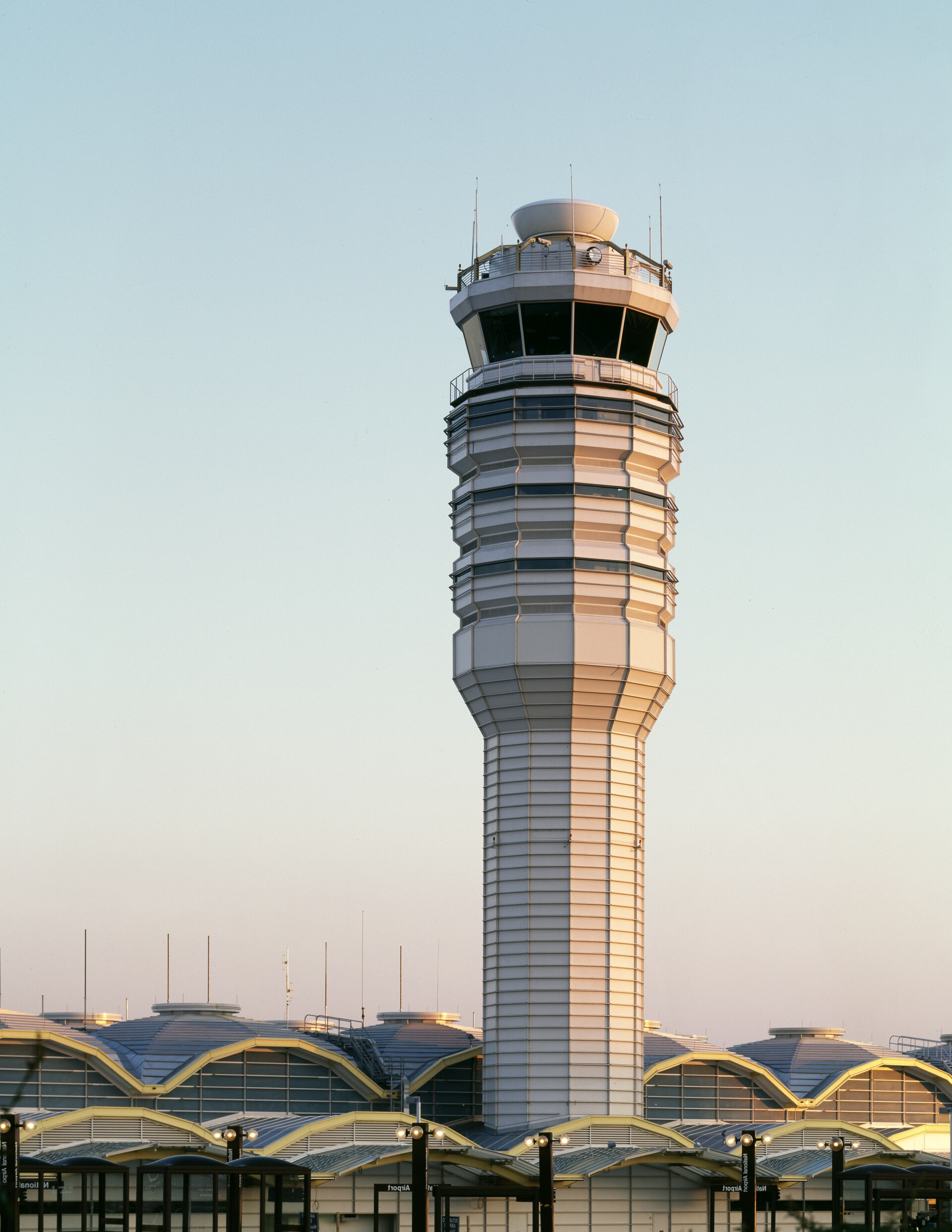
Photo: Carol M. Highsmith, Library of Congress, via Wikimedia Commons (public domain).
A British Airways A321neo Appeared to Strike Its Tail Twice at Heathrow. The Crew Went Around and Landed Safely.