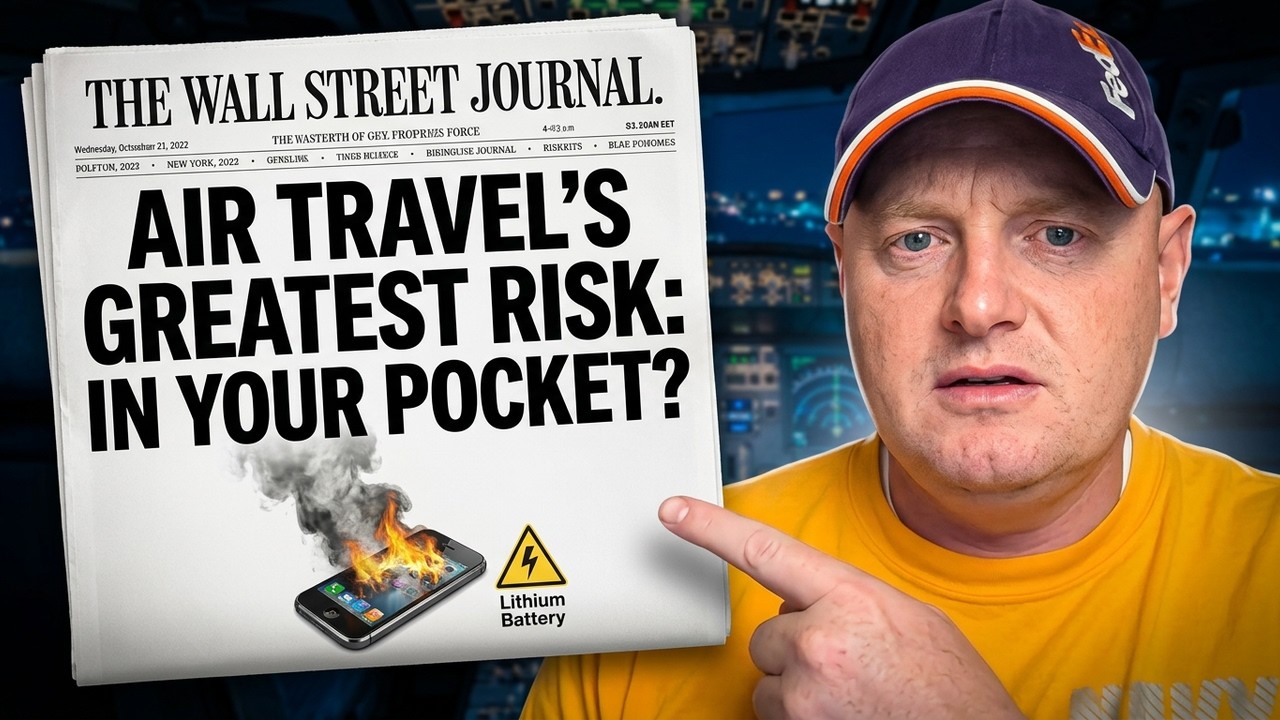
Thermal Runaway at 35,000 Feet: The Danger of Lithium-Ion Batteries in Flight
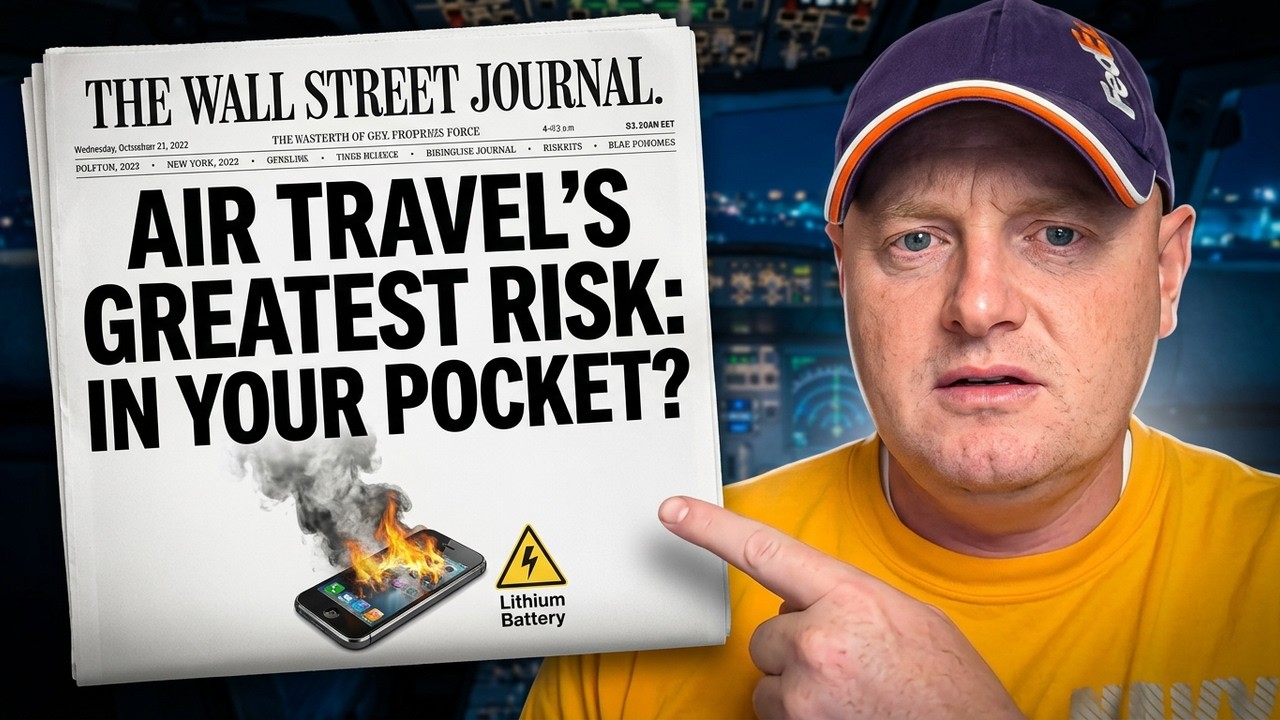
Welcome back to the digital hangar, where we expand on the critical, fascinating, and sometimes terrifying topics we discuss on the air. If you are a regular listener of the show, you know we recently sat down to break down a hazard that is keeping safety officers, airline executives, and flight crews up at night: lithium-ion battery fires in flight. To dive even deeper into this pressing issue, make sure you listen to our full discussion in Lithium Battery Fires in Flight, Summer Delays & Airline Ground Stops. In this post, we are going to pull back the curtain on what actually happens when energy storage goes rogue at cruising altitude, how cargo and passenger aircraft are engineered to fight back, and the high-stakes procedures pilots rely on when seconds count.
Introduction: Lithium-Ion Dangers at 35,000 Feet
Lithium-ion batteries are the invisible lifeblood of modern society. They power our smartphones, our laptops, our tablets, our vapes, and increasingly, our automobiles. We carry them in our pockets, stow them in our carry-on bags, and pile them by the pallet-load into the bellies of commercial cargo freighters. They are marvels of chemical engineering, packing an incredible amount of energy into a remarkably small footprint. But that very efficiency is precisely what makes them such a formidable hazard in aviation.
When you take a device powered by a lithium-ion battery and introduce it to the unique environment of an airliner—pressurized cabins, changing temperatures, vibration, and the potential for physical damage—the risk profile changes dramatically. A single compromised cell can initiate a catastrophic chain reaction known as thermal runaway. At 35,000 feet, away from the immediate assistance of municipal firefighters, a battery fire is not just an inconvenience; it is an existential emergency. In this blog post, we will explore the mechanics of this phenomenon, examine the evolving safety protocols for cargo and passenger flights, look at the specialized equipment keeping crews alive, and discuss why this issue is dominating safety reports across the global aviation industry.
Understanding Thermal Runaway in Aviation
To understand why aviation regulators and flight crews treat lithium-ion batteries with such profound respect, you have to understand the physics of thermal runaway. Unlike a standard wood or paper fire, which requires oxygen, heat, and fuel to sustain itself, a lithium-ion battery fire creates its own internal chemical environment. It brings its own oxygen to the party.
Thermal runaway begins when a single cell within a battery experiences an internal short circuit. This can be caused by manufacturing defects, physical crushing, overcharging, or external heat exposure. Once that short circuit occurs, the temperature inside the cell begins to rise rapidly. As the heat increases, it breaks down the internal separators within the cell, triggering an exothermic reaction—meaning the reaction itself generates even more heat.
This escalating heat spreads rapidly to adjacent cells in the battery pack. Within seconds, temperatures can skyrocket past 1,000 degrees Fahrenheit. As the cells fail sequentially, they vent toxic, flammable gases such as carbon monoxide, hydrogen, and methane. If these gases accumulate in a confined space—like an overhead bin, a baggage container, or the main deck of a cargo freighter—they can reach their lower explosive limit and ignite violently, creating a jet-flame effect that can easily breach surrounding packaging and ignite nearby materials. That is the nightmare scenario for an airline crew: a fire that cannot be easily smothered because it is chemically self-sustaining and intensely hot.
Cargo Flight Safety Protocols and EVAS
While passengers bring countless personal electronic devices onto commercial airliners every single day, the volume of lithium batteries transported as cargo on dedicated freighters is on an entirely different scale. Millions of pounds of consumer electronics, replacement batteries, and electric vehicle components move through the global supply chain via air freight. This reality has forced a radical rethinking of cargo flight safety protocols.
In the cargo environment, pilots do not have the luxury of cabin crew members running down the aisle with a water pitcher or a specialized containment bag. If a fire starts in the main deck cargo hold of a Boeing 777 freighter, the pilots are physically separated from the fire by a bulkhead door. They must rely entirely on remote systems, checklists, and specialized survival gear.
One of the most critical pieces of safety equipment utilized on cargo flights dealing with smoke and toxic fumes is the EVAS, or Emergency Vision Assurance System. Imagine experiencing an intense electrical or battery-induced smoke event in the cockpit. The cabin fills with thick, acrid, blinding white smoke so dense that you cannot see your own flight instruments, the primary flight display, or the center console switches. In the past, pilots had to rely solely on smoke goggles and memory items while flying blind.
EVAS changes the game. It is a self-contained, inflatable visor system that mounts directly over the pilot's instrument panel. When activated, it inflates a clear optical viewing port that sits at eye level, displacing the smoke and creating a clean, filtered channel of air through which the pilot can clearly view the primary flight displays and autopilot controls. It allows the captain and first officer to continue flying the aircraft manually or managing the flight management system even when the cockpit itself is completely obscured by dense, toxic smoke.
Automated Fire Suppression Systems Onboard
Beyond personal protective equipment like EVAS, modern aircraft—particularly widebody freighters designed to haul heavy industrial cargo—are equipped with sophisticated automated fire suppression systems. Traditional aircraft cargo holds utilize Halon gas or modern equivalent extinguishing agents designed to knock down surface fires. However, standard Halon systems struggle with lithium-ion battery fires because, as we established earlier, the batteries generate their own oxygen.
To combat this, aerospace engineers and airlines have implemented advanced containment strategies and multi-layered suppression protocols. Main deck cargo compartments on modern freighters are divided into Class E cargo compartments, which are designed to completely contain a fire by cutting off the ventilation supply, or equipped with suppression systems capable of maintaining a high concentration of extinguishing agent over an extended period. Furthermore, airlines are increasingly utilizing specialized fire-resistant containers, known as fire containment ULDs (Unit Load Devices), designed to withstand the intense thermal output of a multi-cell lithium battery fire and prevent it from spreading to adjacent cargo pallets.
On the passenger side of the operation, flight attendants are now extensively trained in the identification and mitigation of lithium-ion battery incidents. Every major airline equips its aircraft with thermal runaway mitigation kits. These kits typically include heavy-duty fire-resistant containment bags, specialized gloves, and most importantly, an abundance of water. Contrary to popular belief, water is actually the best extinguishing agent for a lithium battery fire because it provides rapid cooling, halting the thermal chain reaction before it can jump from cell to cell.
Emergency Procedures: What Pilots Do When Fire Strikes
When an in-flight fire occurs, time is measured in heartbeats. The cockpit crew operates under a strict, time-tested philosophy: Avitate, Navigate, Communicate, and then mitigate the emergency. But when a lithium battery fire breaks out, the immediate non-normal checklist requires swift, decisive action.
First, the crew must identify the source. If the fire is in the passenger cabin, the flight attendants coordinate with the flight deck, immediately deploying water or specialized cooling agents, and transferring the burning device into a thermal containment bag. If the fire is located in an inaccessible area, such as a main deck cargo hold or an avionics bay, the pilots immediately execute emergency descent procedures if necessary, or activate built-in cargo fire suppression bottles.
Communication with Air Traffic Control (ATC) is established instantly. The crew declares an emergency—often stating "Mayday, Mayday, Mayday"—which immediately clears the airspace around them and commands the undivided attention of controllers. The priority shifts from maintaining schedule efficiency to getting the aircraft safely on the ground at the nearest suitable airport. Every checklist item is cross-verified by both pilots to ensure that no critical steps are missed under extreme adrenaline and pressure.
Pilots must also monitor the environmental control systems. If toxic smoke is infiltrating the flight deck, crew members don their oxygen masks and smoke goggles, establish 100% oxygen flow, and configure the flight deck ventilation system to isolate the cabin air and prevent further smoke accumulation in the workspace. It is a masterclass in crew resource management (CRM), where clear communication, calmness, and adherence to standard operating procedures mean the difference between a safe landing and a catastrophe.
Real-World Industry Concerns and Recent Reports
The danger posed by lithium-ion batteries is not a theoretical exercise discussed in backroom safety seminars; it is an escalating operational reality. Recent reports from aviation authorities, safety boards, and prominent industry publications like the Wall Street Journal have highlighted a dramatic uptick in reported thermal runaway events on commercial aircraft.
Part of this increase is driven by the sheer volume of devices in circulation. Passengers travel with multiple power banks, laptops, e-cigarettes, and portable gaming systems, often stowing them carelessly in checked baggage or tightly packed overhead bins where they can be crushed or short-circuited. In the cargo sector, the rush to move consumer electronics rapidly across the globe has sometimes strained packaging compliance and screening protocols.
Regulatory bodies such as the Federal Aviation Administration (FAA) and the International Civil Aviation Organization (ICAO) have repeatedly issued safety alerts and instituted stricter bans on bulk shipments of lithium-ion batteries on passenger aircraft. However, enforcement across international supply chains remains a formidable challenge. Industry leaders and safety advocates continue to push for more robust testing standards, improved battery chemistry mandates, and better public awareness campaigns to educate travelers on the proper handling and stowing of personal electronic devices.
Conclusion: Staying Safe in the Skies
As aviation professionals and enthusiasts, we marvel at the technological advancements that make global travel faster, more efficient, and more connected than ever before. But with every leap in technology comes a new set of risks that must be understood, managed, and mitigated. Lithium-ion batteries have revolutionized our daily lives, but they demand our utmost respect when brought into the demanding environment of commercial aviation.
From the meticulous training of flight crews and the deployment of life-saving tools like EVAS and thermal containment bags, to the rigorous engineering of cargo freighters and automated fire suppression systems, the aviation industry is constantly evolving to stay ahead of the threat. Safety in the skies is never an accident; it is the result of continuous vigilance, thorough preparation, and open conversations about the challenges we face.
To hear our full, unfiltered breakdown of this critical safety issue, along with our discussions on summer weather delays, air traffic control staffing challenges, and life on the road flying long-haul heavy iron, be sure to check out the full episode: Lithium Battery Fires in Flight, Summer Delays & Airline Ground Stops. Thank you for reading, stay safe, and we will catch you on the next flight!

Anatomy of a Tragedy: The Fuel Exhaustion Factors Behind the 1977 Lynyrd Skynyrd Crash