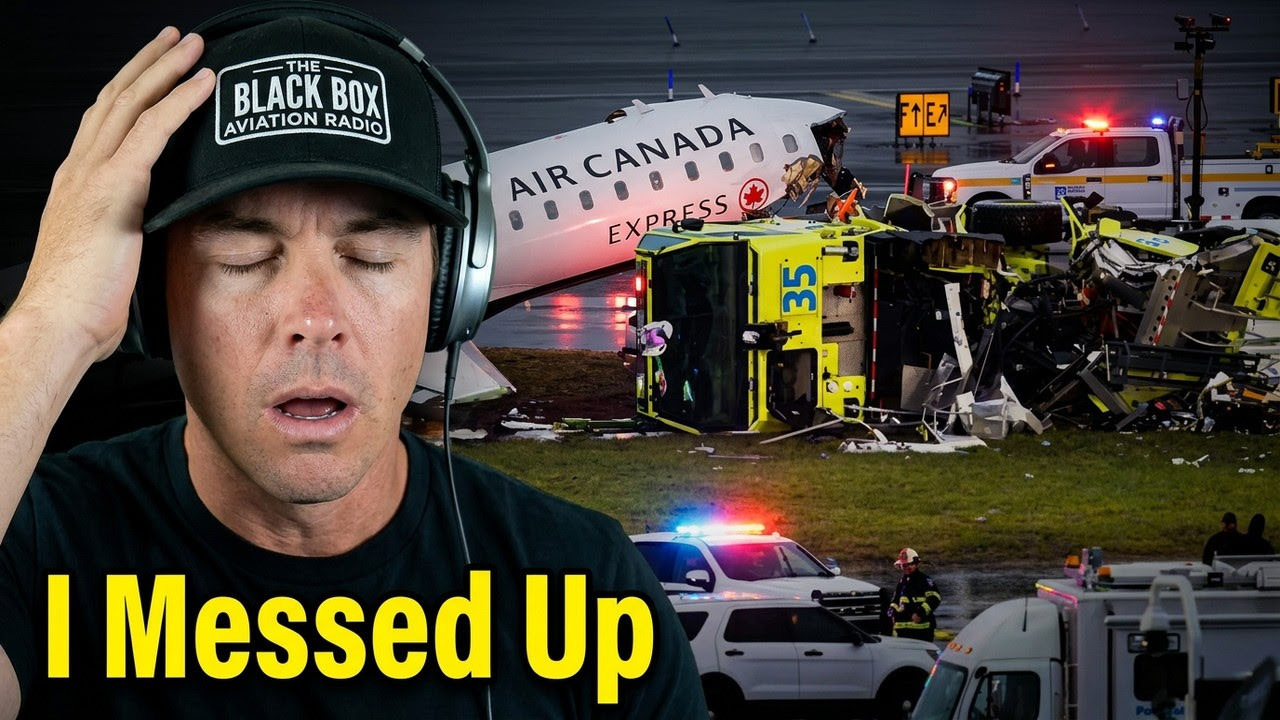
Beyond the Headlines: Deconstructing the LGA Air Canada Collision
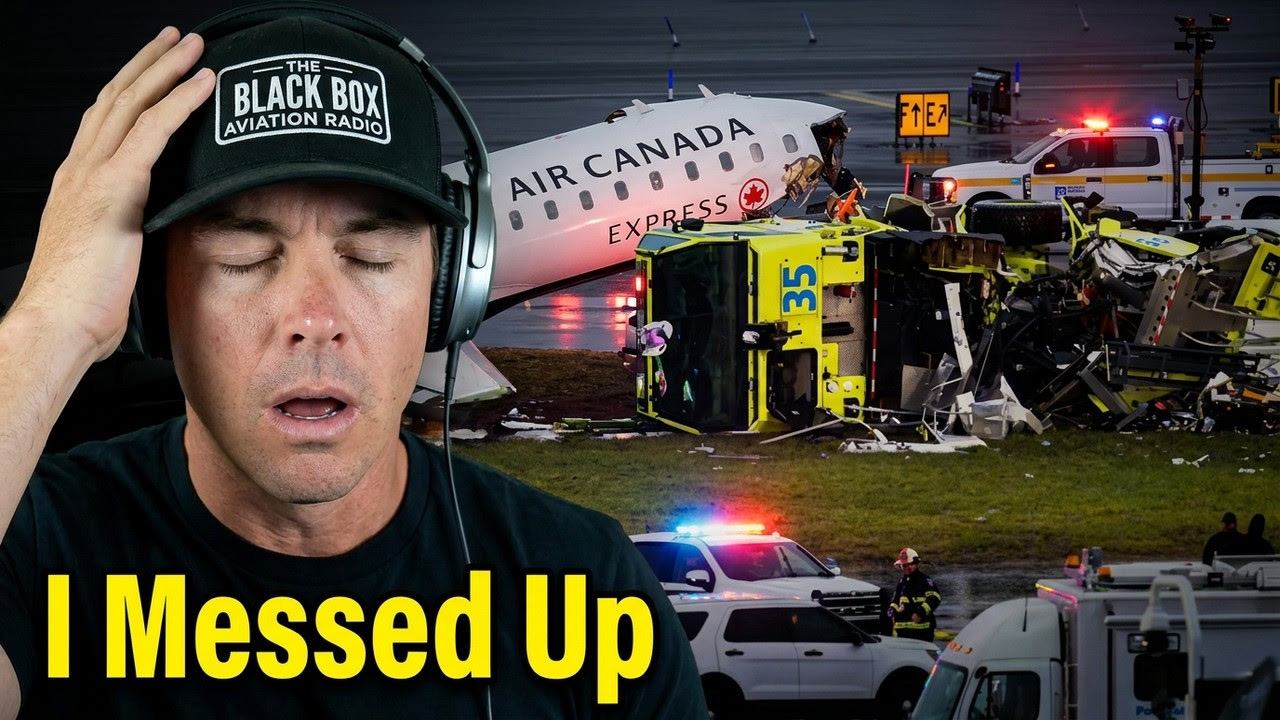
Welcome back to the Black Box Aviation Podcast blog! In our latest episode, "LGA Runway Collision: The Air Canada CRJ-900 & Fire Truck ATC Analysis," we delved into the harrowing incident at LaGuardia Airport where an Air Canada CRJ-900 collided with an airport fire truck. As pilots Tom and Mike often say, the news headlines only tell part of the story. Today, we're going to unpack the intricate details of this near-disaster, dissecting the Air Traffic Control (ATC) audio, the sequence of events, and the confluence of factors that almost led to a far worse outcome. This post aims to go even deeper than the episode, providing a comprehensive look at the elements that contributed to the collision, offering valuable insights into aviation safety and the human element in the cockpit and the tower.
The Incident at LaGuardia
The events at LaGuardia on that day were a stark reminder of the inherent risks in aviation, even in a seemingly routine operation. An Air Canada CRJ-900, en route from Toronto, was cleared to land on Runway 22. Simultaneously, an airport fire truck was operating on the airfield, and in a tragic miscommunication and misjudgment, the two came into contact on an active runway. The chilling words from the tower controller, "I messed up," uttered in the immediate aftermath, underscore the gravity of the situation and the profound impact such incidents have on the individuals involved and the broader aviation community. This wasn't a catastrophic failure of a single system; rather, it was a complex interplay of human error, environmental factors, and infrastructural challenges that converged to create a dangerous situation.
The ATC Audio: "I messed up."
The release of the ATC audio tapes was a pivotal moment in understanding the LaGuardia runway collision. These recordings offer an unfiltered glimpse into the high-pressure environment of air traffic control and the human reactions to unexpected and critical events. The controller's admission, "I messed up," is more than just a confession; it's a testament to the immense responsibility placed on air traffic controllers. Their job is to orchestrate the complex ballet of aircraft movements, ensuring separation and safety at all times. When this orchestration falters, even for a moment, the consequences can be severe. The audio likely reveals a cascade of events, perhaps a momentary lapse in concentration, a misinterpretation of an instruction, or an overload of information. These tapes are invaluable for analysis, allowing aviation safety experts and enthusiasts alike to trace the critical moments leading up to the collision and to identify precisely where and why communication or situational awareness broke down.
Listening to ATC audio, especially in the context of an incident, can be a profound experience. It humanizes the controllers, reminding us that they are individuals facing immense mental demands. The stress of managing multiple aircraft, coordinating with other controllers, and dealing with unexpected situations can lead to cognitive fatigue. In this specific instance, the audio would likely paint a picture of a controller juggling numerous tasks, perhaps dealing with another aircraft in distress elsewhere on the airfield, which may have contributed to the distraction that ultimately led to the collision. The raw emotion in the controller's voice after the event also highlights the psychological toll that such near-misses can take.
Deconstructing the Sequence of Events
To truly understand the LaGuardia incident, we must meticulously reconstruct the sequence of events. This involves piecing together information from ATC communications, pilot reports, aircraft data, and witness accounts. It's a forensic investigation, aiming to establish a precise timeline of what happened and in what order. At LaGuardia, this likely involved the Air Canada flight being cleared for landing, while the fire truck was crossing an active runway. The crucial question is why these two elements, which should never intersect on an active runway, did so. Was the clearance to land issued without full awareness of the fire truck's position? Was the fire truck's crossing authorized, and if so, was its movement properly communicated to ATC and the landing aircraft? Or was there a breakdown in communication, leading to the fire truck entering the runway without proper clearance, or the aircraft being cleared to land while the fire truck was already present?
The sequence might look something like this: The Air Canada CRJ-900 is on its final approach, receiving routine landing clearances. At the same time, an emergency or operational need arises for the fire truck to cross an active runway. This could be in response to an incident elsewhere on the airport, or perhaps routine repositioning. The critical juncture is the handoff of information (or lack thereof) between ATC and the fire truck, and between ATC and the arriving aircraft. If the fire truck entered the runway without a specific clearance, or if its presence was not relayed to the tower controller responsible for landing traffic, a collision becomes a real possibility. Conversely, if the fire truck was authorized to cross, but the tower controller was unaware of the arriving aircraft's proximity, or if the pilot of the arriving aircraft was not adequately warned of the potential hazard, the same dangerous outcome could occur.
Furthermore, understanding the specific runway configuration and taxiway layout at LaGuardia is crucial. Identifying the intersection where the collision occurred – likely the Delta intersection as mentioned in the episode's show notes – helps to visualize the spatial relationships and potential points of confusion. Were there any visual obstructions at that intersection? Was the lighting adequate? These are all pieces of the puzzle that contribute to the overall narrative of the incident.
The Distraction Factor: A High-Workload Perfect Storm
One of the most significant contributing factors identified in our podcast episode is the "distraction factor," exacerbated by a high-workload environment. Air Traffic Control is a profession that demands constant vigilance and multitasking. However, when additional pressures are introduced, the risk of error increases. The show notes specifically mention an emergency involving another aircraft, United 2384, on another part of the airfield. This likely created a significant diversion of the controller's attention and resources. In a situation where a controller's focus is split between managing a routine landing and responding to an unfolding emergency, even a brief lapse in concentration on the primary task can have dire consequences. This is where the concept of a "perfect storm" comes into play – a confluence of routine operations and unexpected, high-priority events that overwhelm the system's capacity to manage them safely.
Consider the cognitive load on an air traffic controller. They are not only responsible for issuing clearances but also for monitoring aircraft positions, weather conditions, and communication with other controllers and ground personnel. When an emergency situation arises, such as a potential aircraft issue elsewhere on the field, the controller's mental bandwidth is suddenly taxed to its limits. This can lead to tunnel vision, where the controller becomes so focused on the emergency that other critical tasks are deprioritized or overlooked. In the case of the LaGuardia incident, it's plausible that the controller's attention was heavily focused on United 2384, making them less attentive to the movements of the fire truck or the final approach of the Air Canada flight. This is a classic example of how situational awareness can degrade under extreme pressure.
The term "high-workload perfect storm" accurately captures this scenario. It wasn't just one thing that went wrong; it was a combination of factors. The routine landing was occurring, but then an unexpected, higher-priority event demanded immediate attention. This surge in workload, coupled with the inherent complexities of managing airport traffic, created a perfect storm where a critical oversight was more likely to occur.
Visibility and Weather: The Impact of Mist and Rain
Aviation is inherently sensitive to weather conditions, and the LaGuardia incident was no exception. The show notes highlight that the METAR data indicated 4 miles of mist and rain. While this might not be considered severe weather by all aviation standards, it is significant enough to impact visibility and potentially influence pilot and controller decision-making. Reduced visibility can make it more difficult for pilots to visually acquire runway markings or other aircraft on the ground, and it can also affect the controller's ability to visually confirm the position of ground vehicles. Furthermore, mist and rain can affect the performance of aircraft on landing and takeoff, requiring pilots to adjust their approach and landing techniques.
In this case, the mist and rain likely contributed to a reduced visual environment on the airfield. For the arriving Air Canada flight, it would have been more challenging to spot the fire truck on the runway, especially if it was encountered at a relatively low altitude during the final stages of landing. Similarly, for the fire truck crew, visibility might have been reduced, potentially impacting their awareness of the approaching aircraft. Weather conditions can also influence the urgency of certain operations. For instance, if the fire truck was responding to an incident, the urgency of its movement might have been heightened by the weather, perhaps leading to less adherence to standard procedures or a less cautious approach to crossing active runways.
The 4-mile visibility is a critical data point. It means that while the runway was not obscured, the broader airfield environment and any potential hazards might have been less visible than in clear conditions. This reinforces the importance of relying on robust communication protocols and accurate information from ATC, rather than solely on visual cues, when visibility is compromised. It underscores the interconnectedness of all safety layers, where a slight degradation in one area can amplify the risks associated with other factors.
The "Swiss Cheese" Model: When Safety Layers Fail
The "Swiss Cheese" model of accident causation, popularized by James Reason, is a powerful framework for understanding how complex incidents occur. It posits that safety is achieved through multiple layers of defense, much like slices of Swiss cheese, each with its own "holes" or weaknesses. An accident only occurs when these holes align, allowing a hazard to penetrate all the defenses and reach the active failure. In the LaGuardia runway collision, the Swiss Cheese model is particularly relevant. The incident suggests that multiple layers of safety that are designed to prevent such an occurrence failed to do so.
These layers can include: ATC procedures, pilot training and procedures, aircraft systems, airport design, and regulatory oversight. In this scenario, the integrity of the "holes" in each of these layers contributed to the final outcome. For instance, a hole in ATC procedures might be a gap in communication protocols for ground vehicles crossing active runways. A hole in pilot training could be a reliance on visual cues in low visibility without sufficient cross-checking with ATC. A hole in airport infrastructure might be a lack of clear signage or visual aids at critical intersections. The fact that the collision happened indicates that the alignment of these individual weaknesses created a pathway for the accident.
The "Delta intersection" mentioned in the show notes becomes a critical point where these holes may have aligned. This intersection is where the fire truck was present and the Air Canada CRJ-900 was landing. The layers of defense that were supposed to prevent a collision at this specific location, such as clear communication from ATC about the fire truck's position to the landing aircraft, or a robust system for authorizing ground vehicle movements, clearly failed. The Swiss Cheese model reminds us that we should not focus on a single point of failure but rather on the systemic weaknesses that allowed the hazard to manifest. It encourages a holistic approach to safety analysis, looking at all contributing factors and how they interacted.
LGA Infrastructure: Navigating a Century-Old Design
LaGuardia Airport, like many older airports, faces the challenge of operating within an infrastructure that was designed many decades ago. The show notes highlight the "inherent risks of 100-year-old airport designs in a high-density, modern environment." Airports are constantly evolving, but some fundamental layouts remain. This can lead to complex taxiway systems, numerous intersections, and sometimes less-than-ideal configurations for modern, high-volume air traffic. At LaGuardia, the proximity of taxiways and runways, and the intricate network of intersections, can create an environment where precise communication and vigilant situational awareness are absolutely paramount. The Delta intersection, where the collision occurred, might be a prime example of such a complex area within the airport's layout.
Older airport designs may not have been built with the sheer volume of traffic that modern airports handle. They might also predate some of the sophisticated technologies and procedures that are now standard for ensuring ground safety. This means that air traffic controllers and pilots must work harder to maintain separation and awareness in these complex environments. The layout itself can contribute to confusion, especially in reduced visibility or high-workload situations. For example, a taxiway might cross a runway at an unusual angle, or there might be multiple points where ground vehicles and aircraft could potentially conflict. The aging infrastructure at LGA, while constantly being upgraded, presents inherent challenges that must be managed with extreme diligence by all parties involved.
The design of the airport can also influence visibility. Intersections, buildings, and parked aircraft can create blind spots, making it harder for pilots to see ground vehicles and vice-versa. This necessitates a strong reliance on ATC clearances and the assumption that all parties are operating with accurate, up-to-date information. The fact that LGA has undergone significant modernization efforts does not erase the fundamental challenges posed by its historical layout, especially in busy periods and challenging weather.
Pilot and Human Factors: The Last Line of Defense
Ultimately, despite all the procedures, technology, and infrastructure, aviation safety relies heavily on the human element. Pilots and air traffic controllers are the last line of defense against accidents. They are trained to make critical decisions under pressure, to identify potential hazards, and to take corrective action. In the LaGuardia incident, the human factors are central to the analysis. The controller's momentary lapse in situational awareness, the potential for miscommunication, and the pilots' actions during the final approach all play a critical role. Even with advanced technology, human vigilance, judgment, and communication remain indispensable.
The concept of "complacency" is a significant human factor that can creep into even the most routine operations. When pilots and controllers perform their duties day in and day out without incident, there can be a subconscious tendency to relax vigilance. However, aviation demands constant alertness. The human factors analysis of this incident would examine not just the immediate actions but also the underlying psychological and physiological states that may have contributed to the errors. Factors like fatigue, stress, and distraction are all part of the human equation in aviation safety.
The pilots of the Air Canada CRJ-900 were undoubtedly performing a standard landing. However, their training would have equipped them to scan for hazards and to query ATC if they had any doubt about their clearances or the safety of their approach. Similarly, the fire truck crew would have been trained on procedures for crossing active runways. The failure of these individual human factors to prevent the collision points to a breakdown in the system that was intended to support their vigilance. It highlights the need for continuous training, robust crew resource management (CRM) and air traffic management (ATM) programs, and a strong safety culture that encourages reporting of near misses and potential hazards without fear of reprisal.
Conclusion: Lessons Learned for Aviation Safety
The LaGuardia runway collision, while thankfully not resulting in fatalities, serves as a potent reminder of the complex and delicate nature of aviation operations. As we've explored in this blog post and our related episode, "LGA Runway Collision: The Air Canada CRJ-900 & Fire Truck ATC Analysis," this incident was not the result of a single failure but rather a confluence of factors: a demanding workload for ATC, potential distractions arising from another emergency, compromised visibility due to weather, the inherent complexities of legacy airport infrastructure, and the critical role of human factors and communication. The chilling admission, "I messed up," from the controller encapsulates the human element at the heart of this near-disaster, underscoring the immense responsibility borne by those who manage our skies and airports.
The lessons learned from the LaGuardia incident are invaluable for the advancement of aviation safety. They reinforce the importance of continuous training and adherence to procedures for both pilots and air traffic controllers. They highlight the need for robust communication protocols that leave no room for ambiguity, especially in challenging weather or high-workload environments. The "Swiss Cheese" model serves as a powerful reminder that safety is a layered defense, and a failure in any single layer can have cascading consequences. Airport infrastructure, even when aged, must be carefully managed and adapted to modern operational demands. By meticulously analyzing events like the LaGuardia runway collision, the aviation industry can identify vulnerabilities, refine procedures, and ultimately, further strengthen the safety nets that protect passengers and crew worldwide. We encourage you to revisit our podcast episode for a pilot's perspective on this critical event and to join us in continually striving for a safer future in aviation.
The 'Scrub' is Real: What Major Airlines Look For in Pilot Candidates for 2026