Iranian Air Power: From F-14s to Modern Threats
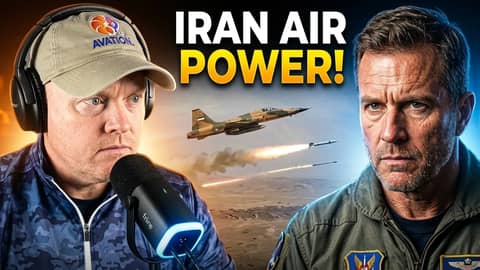
Welcome back to the blog for The Black Box Aviation Podcast! In our latest episode, "Incoming: Iranian Intercepts, Jet Fuel Jolts, and the Evacuation Dilemma," we delved deep into the complexities of air power in the Middle East. While the episode touches on a variety of fascinating topics, from the challenges of skyrocketing jet fuel prices to critical aviation safety decisions, a significant portion of our discussion focused on the evolving air power of Iran. This blog post aims to expand on those themes, exploring Iran's historical air capabilities, its present-day challenges, and the potent threat its air power continues to pose in a volatile region. From the iconic F-14 Tomcat to the unseen, modern capabilities, we'll unpack the factors shaping Iran's aerial might and its implications for regional stability and global security.
The Legacy of the F-14 Tomcat in Iranian Service
When discussing Iranian air power, it's impossible to avoid the legendary F-14 Tomcat. For many aviation enthusiasts, Iran's acquisition of this formidable interceptor in the pre-revolution era represents a high point of its air force's technical prowess. The Shah's regime, keen on projecting regional dominance and deterring potential adversaries, invested heavily in advanced U.S. military hardware. The F-14, with its long-range Phoenix missiles and sophisticated radar, was a state-of-the-art weapon system, unmatched by most air forces in the world at the time. It was designed to defend vast expanses of airspace and counter aerial threats from great distances.
Following the 1979 Islamic Revolution and the subsequent imposition of international sanctions, Iran found itself in a unique and challenging position. The U.S. military support that had been instrumental in maintaining their fleet of F-14s abruptly ceased. This meant that a cutting-edge, complex aircraft faced the daunting reality of operating with severely limited access to spare parts, technical expertise, and upgrades. Yet, remarkably, the Islamic Republic of Iran Air Force (IRIAF) managed to keep a significant portion of its F-14 fleet operational for decades. This feat is a testament to the ingenuity, dedication, and often desperate resourcefulness of Iranian engineers and maintenance crews.
The methods employed to keep these aging Tomcats flying have been a subject of much speculation and analysis. It's widely believed that Iran engaged in a combination of reverse-engineering Soviet-era components, cannibalizing aircraft for parts, and potentially acquiring parts through clandestine channels. The sheer persistence of the F-14 in Iranian service, despite overwhelming odds, speaks volumes about its robust design and the determined efforts to sustain it. In the context of our podcast episode, the continued presence of these aging but still potentially dangerous F-14s, even if their operational effectiveness is debated, represents a tangible reminder of a bygone era of military cooperation and the enduring challenges of technological sustainment under duress. They are a symbol of what Iran *once* possessed and what it has strived, against all odds, to maintain.
Iranian Air Force Capabilities: Beyond the F-14
While the F-14 Tomcat often dominates discussions about Iran's air power, it's crucial to understand that the IRIAF is a much more diverse and complex entity. The sanctions that crippled their access to Western advanced aircraft also forced Iran to seek alternative sources and develop indigenous capabilities. This has resulted in a mix of aging Soviet-era aircraft, some Chinese imports, and a growing, albeit often unproven, domestic defense industry.
The backbone of the IRIAF, beyond the F-14s, has traditionally included aircraft like the F-4 Phantom II (another U.S.-supplied legacy platform), MiG-29 Fulcrums, and Su-24 Fencers, primarily sourced from Russia and the former Soviet Union. These aircraft, while capable in their own right, are generally not on par with the latest generation of Western or Russian fighters. However, their sheer numbers, when operational, still present a significant challenge in terms of quantity.
In recent years, Iran has made efforts to modernize its air force through domestic production and potential covert acquisitions. This includes upgrades to existing aircraft, such as the HESA Kowsar, an indigenously developed fighter that bears a striking resemblance to the F-5 Tiger II. While the true capabilities and production numbers of these domestic programs are often opaque, they signal Iran's intent to reduce its reliance on foreign suppliers and develop a more self-sufficient air defense network. Furthermore, Iran has also explored the acquisition of more modern Russian platforms, though sanctions and geopolitical considerations often complicate such procurements.
Beyond fighter jets, Iran's air power also encompasses a significant rotary-wing fleet, including attack helicopters like the AH-1 Cobra, and a variety of transport and utility helicopters. While many of these are also legacy platforms, their presence adds to the overall operational capability, particularly in roles supporting ground forces or conducting reconnaissance missions. The development and deployment of unmanned aerial vehicles (UAVs) have also become a significant component of Iran's air power strategy. Iranian drones have been observed in various configurations and capabilities, ranging from reconnaissance and surveillance to offensive strike roles. Their proliferation and alleged use by Iranian proxies in regional conflicts underscore their growing importance in Iran's military doctrine. In essence, Iran's air force is a testament to adaptation and resilience, a blend of legacy platforms, indigenous efforts, and a determined focus on asymmetric capabilities, particularly in the realm of drones.
Modern Threats and Challenges Posed by Iranian Air Power
Understanding Iranian air power in the modern context requires looking beyond the specific aircraft and focusing on the broader strategic implications. The primary threat posed by Iran's air force, particularly in the context of its regional ambitions, is not necessarily its ability to engage in large-scale, high-intensity aerial combat with technologically superior adversaries like the United States or its allies. Instead, the challenge lies in its ability to disrupt, harass, and inflict damage through a combination of asymmetric tactics, advanced missile technology, and its drone program.
One of the most significant threats emanates from Iran's extensive ballistic and cruise missile arsenal. While not strictly "air power" in the traditional sense of manned aircraft, these weapons are often launched from land-based platforms and are designed to strike targets deep within enemy territory. Iran has invested heavily in developing and diversifying its missile capabilities, creating a credible deterrent and offensive option. These missiles can overwhelm conventional air defenses and pose a serious threat to critical infrastructure, military bases, and even population centers.
Furthermore, as highlighted in our podcast episode, Iran's integrated air defense system, which combines radar, surface-to-air missiles (SAMs), and fighter aircraft, presents a significant challenge to any adversary operating in its airspace. Tom's personal experience flying a P-3 Orion and being "lit up" by an Iranian Hawk missile site vividly illustrates the real-world dangers of operating in proximity to these integrated defensive networks. The sophistication of these systems, while not always top-tier in terms of global standards, is more than capable of posing a serious threat to less advanced aircraft or those operating without robust electronic countermeasures. The density of these SAM sites, particularly around key strategic areas and critical infrastructure, creates a layered defense that can be difficult to penetrate.
The proliferation of Iranian-supplied drones to various proxy groups in the region further amplifies this threat. These drones, often relatively inexpensive and easy to deploy, can be used for reconnaissance, targeted attacks, and even kamikaze missions. They have been used to attack oil tankers, disrupt military operations, and sow instability across the Middle East, presenting a persistent and often deniable challenge to regional security. The ability of these drones to bypass traditional air defense systems and their widespread application make them a particularly vexing problem for military planners. The challenge for Iran's adversaries is not just confronting the IRIAF's fighter fleet, but also navigating a complex web of air and missile threats, increasingly augmented by the widespread deployment of UAVs.
The Role of Iranian Air Power in Regional Conflicts
Iranian air power, in its various forms, plays a critical and often destabilizing role in regional conflicts across the Middle East. While direct large-scale air-to-air combat involving the IRIAF is rare, its capabilities are employed in more insidious and indirect ways, often through proxy forces and as a tool of coercion and deterrence.
One of the most prominent aspects of Iranian air power's regional involvement is its support for allied militias and non-state actors. This support often involves the provision of drones, missile technology, and, in some cases, training and expertise. Groups like Hezbollah in Lebanon, the Houthis in Yemen, and various Shi'a militias in Iraq and Syria have all benefited from Iran's advancements in drone and missile technology. These weapons are used to project Iranian influence, harass adversaries, and exert pressure on regional rivals and international powers. The ability of the Houthis, for instance, to launch sophisticated drone and missile attacks against Saudi Arabia and the UAE, despite facing a technologically superior military, highlights the effectiveness of Iranian-supplied asymmetric capabilities.
Beyond direct support to proxies, Iran's own air force and missile units are frequently employed in a show of force or as a deterrent. This can involve conducting patrols in contested airspace, launching missile drills, or responding to perceived threats with retaliatory strikes. The seizure of vessels in the Persian Gulf and the harassment of international shipping, sometimes involving aircraft or drones, are examples of how Iran uses its air and missile capabilities to assert its presence and exert leverage. The ongoing tensions in the Strait of Hormuz, a vital chokepoint for global oil supplies, are often exacerbated by Iran's willingness to demonstrate its military power, including its air and missile capabilities.
Furthermore, Iran's air power is intrinsically linked to its broader geopolitical strategy, which seeks to counter the influence of its regional rivals, primarily Saudi Arabia and Israel, and to resist perceived Western hegemony. The narrative of Iran's military strength, including its perceived ability to strike at distant targets with missiles and to defend its airspace with integrated air defenses, serves as a crucial element of its national security doctrine. In essence, Iranian air power, while perhaps not possessing the cutting edge of Western air forces, is a potent instrument of regional policy, employed to deter aggression, project influence, and shape the geopolitical landscape through a combination of direct action and the proliferation of advanced weaponry to allied non-state actors.
Lessons from the Persian Gulf: Personal Experiences and Air Defense
The Persian Gulf, a region of immense strategic and economic importance, has long been a theater where air power, and the challenges it presents, are acutely felt. Tom's experience in our podcast episode, flying a P-3 Orion and being targeted by an Iranian Hawk missile site, offers a visceral and invaluable insight into the realities of operating in this environment. This personal account underscores the ever-present threat posed by integrated air defense systems, even those that might be considered legacy in a global context.
Operating in the Persian Gulf requires a constant awareness of potential threats. The extensive coastline, numerous islands, and the strategic waterways create a complex operational picture. For maritime patrol aircraft like the P-3 Orion, the mission often involves extensive flights at lower altitudes over water, which can make them vulnerable to detection and engagement by sophisticated surface-to-air missile systems. The Hawk missile system, though an older design, is capable of posing a serious threat when deployed effectively and integrated into a broader air defense network. Tom's experience highlights the importance of robust electronic warfare capabilities, crew training, and tactical maneuvering in surviving such encounters.
The incident also serves as a stark reminder of the importance of accurate intelligence and situational awareness. Understanding the disposition of Iranian air defense assets, their readiness status, and their operational parameters is crucial for mission planning and execution. The ability to identify and evade missile threats, or to suppress them through coordinated air and electronic warfare operations, is paramount for ensuring the safety of aircrews and the success of their missions. The Persian Gulf is a region where the lines between civilian and military aviation can become blurred, and where the stakes are exceptionally high. The lessons learned from such close calls are invaluable, not only for the individuals involved but for the broader understanding of the operational challenges faced by air forces in contested environments.
The Intersection of Air Power and Geopolitics: Oil, Sanctions, and Technology
The development and projection of Iranian air power are inextricably linked to a complex interplay of geopolitical factors, primarily revolving around its vast oil reserves, the crippling effect of international sanctions, and its pursuit of technological self-sufficiency. These elements create a unique dynamic that shapes Iran's military capabilities and its regional posture.
Iran's strategic location and its role as a major oil producer have always made it a focal point of international attention and geopolitical competition. Control over oil transit routes, particularly the Strait of Hormuz, is a key element of Iran's strategic calculus. Its air power, including its missile and drone capabilities, serves as a deterrent against any attempts to interfere with its oil exports or to exert undue pressure on its regime. The threat of disrupting oil flow has been a potent tool in Iran's arsenal, and its air power capabilities are designed to make such a threat credible.
The imposition of extensive international sanctions, particularly following the 1979 revolution and in response to its nuclear program, has had a profound impact on Iran's ability to acquire and maintain advanced military technology. This has forced Iran to become highly innovative and resourceful in developing indigenous defense industries. While sanctions have hindered Iran's access to Western and even some Russian advanced military hardware, they have also spurred a determined effort to build domestic capabilities. This includes the development of advanced drone technology, missile systems, and upgrades to existing aircraft. The narrative of self-reliance has become a central tenet of Iran's defense policy, driven by necessity.
The technological gap between Iran and some of its regional adversaries, particularly those with access to the latest Western military hardware, remains significant. However, Iran's focus on asymmetric warfare, particularly through its drone program and its extensive missile arsenal, allows it to present a potent challenge despite these limitations. The ability to field relatively inexpensive, yet effective, platforms that can penetrate sophisticated defenses or disrupt critical infrastructure is a key aspect of its strategy. The intersection of these factors – its strategic importance due to oil, the constraints imposed by sanctions, and its relentless pursuit of technological solutions – creates a unique and continuously evolving landscape of Iranian air power that demands constant vigilance and careful analysis from the international community.
Conclusion: Future Outlook for Iranian Air Power and Regional Stability
As we wrap up this exploration of Iranian air power, it's clear that its trajectory is one of continuous adaptation and strategic maneuvering. The legacy of the F-14 Tomcat serves as a powerful symbol of past ambitions and the enduring challenges of technological sustainment. Yet, the true picture of Iran's air power lies in its modern, often asymmetric, capabilities – its advanced missile programs, its burgeoning drone fleet, and its integrated air defense systems. These elements, combined with its geopolitical imperatives tied to oil, sanctions, and regional influence, create a complex and often volatile security environment.
The future outlook for Iranian air power suggests a continued emphasis on indigenous development, particularly in the drone and missile sectors, where it has demonstrated significant progress. While achieving parity with the most advanced air forces remains a distant prospect, Iran's ability to project power and pose a credible threat through asymmetric means is likely to grow. This presents ongoing challenges for regional stability and for international efforts to de-escalate tensions. As discussed in our podcast episode, "Incoming: Iranian Intercepts, Jet Fuel Jolts, and the Evacuation Dilemma," the interconnectedness of military capabilities, geopolitical maneuvering, and economic factors, such as fuel prices, are all critical components of the intricate global aviation landscape. Understanding Iran's air power is not just about tracking aircraft; it's about comprehending the broader strategic currents that shape its actions and its impact on regional and global security. The lessons from the Persian Gulf, the ingenuity born from sanctions, and the relentless pursuit of strategic advantage all contribute to a narrative of Iranian air power that will undoubtedly continue to unfold in the years to come.

Balancing Act: Airline Career, Social Media, and a Healthy Lifestyle