Anatomy of a Tragedy: The Fuel Exhaustion Factors Behind the 1977 Lynyrd Skynyrd Crash
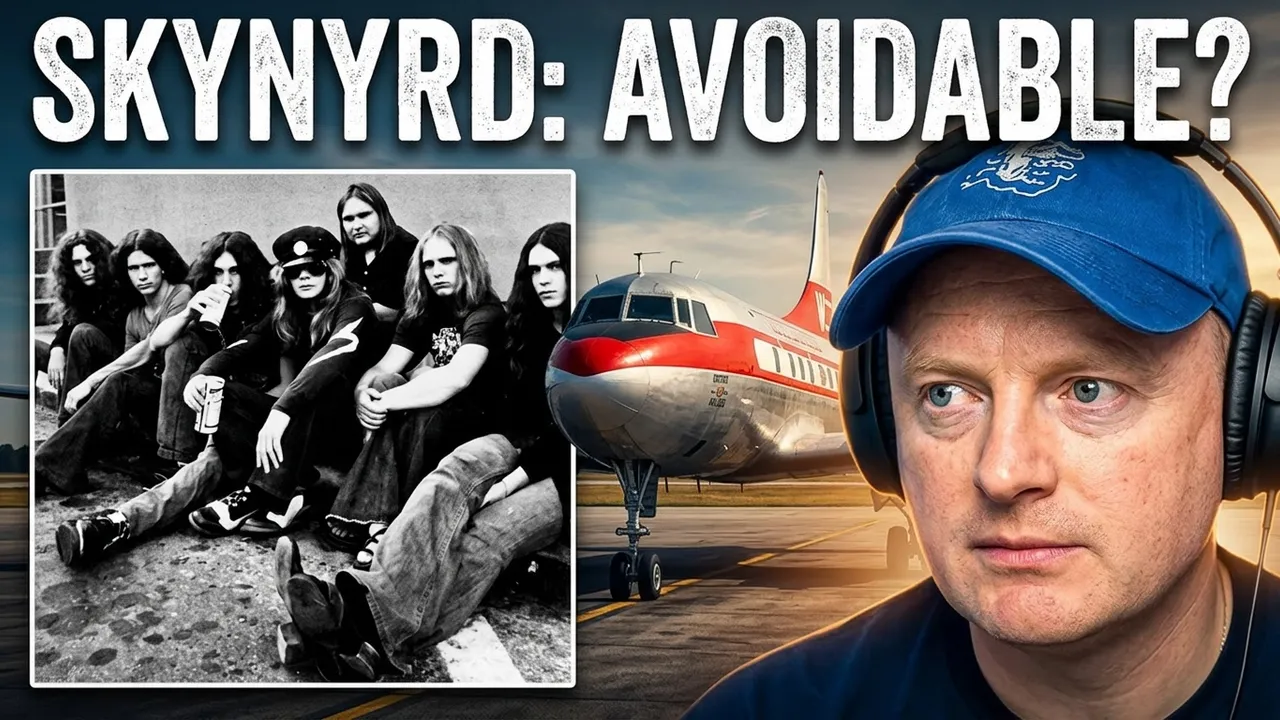
Welcome back to the blog here at the Black Box Aviation Podcast! If you are a regular listener, you know we love to bridge the gap between riveting music history and serious aviation safety analysis. On October 20, 1977, the music world lost several icons when a chartered Convair CV-240 went down in a swampy forest in Gillsburg, Mississippi. On board was the legendary southern rock band Lynyrd Skynyrd, traveling between shows from Greenville, South Carolina, to Baton Rouge, Louisiana. While the pop culture narrative often focuses strictly on the tragic loss of artists like Ronnie Van Zant and Steve Gaines, the official National Transportation Safety Board investigation reveals a chilling chain of technical failures, operational lapses, and catastrophic fuel exhaustion. In this post, we are expanding far beyond the audio waves to break down the mechanics, the human factors, and the hard-earned safety lessons of this dark day in aviation history. To hear us discuss these topics in-depth alongside modern pilot lifestyle realities, make sure to listen to our dedicated podcast episode, The Tragedy of the Lynyrd Skynyrd Plane Crash: Fuel Exhaustion & Pilot Reserve Realities.
Introduction: Rock and Roll Meets Aviation History
The intersection of rock and roll and aviation has produced a hauntingly long list of tragedies. From Buddy Holly's "Day the Music Died" in 1959 to Stevie Ray Vaughan, Otis Redding, and John Denver, the touring lifestyle inherently demands heavy reliance on general and charter aviation. However, the Lynyrd Skynyrd crash of 1977 stands out not just because of the cultural magnitude of the band, but because of the sheer preventability of the disaster. It was not a sudden act of mother nature or an unpreventable structural failure in mid-air. Instead, it was an insidious convergence of mechanical anomalies, poor pre-flight fuel planning, and compounding decision-making errors that ultimately starved both engines of the aircraft of their lifeblood: aviation fuel.
The Aircraft: Inside the Convair CV-240 Workhorse
To truly understand how this flight went wrong, we have to look at the aircraft itself. The Convair CV-240 was a twin-engine piston airliner developed in the late 1940s to replace older Douglas DC-3s. Powered by two Pratt & Whitney R-2800 Double Wasp radial engines, the CV-240 was a reliable, pressurized workhorse of the post-war commercial aviation boom. It represented the transition era of aviation—blending old-school radial engine technology with the burgeoning demand for faster, more comfortable passenger transport. However, like all complex machines of its era, it required meticulous maintenance, constant engine monitoring, and rigorous fuel management. Operating a vintage airframe on a tight rock-and-roll touring schedule placed immense pressure on both the aircraft and the crew.
Anatomy of the Flight: The 1977 Lynyrd Skynyrd Tragedy
Flight 246 departed Greenville-Spartanburg Airport in South Carolina on the afternoon of October 20, 1977, bound for Baton Rouge Metropolitan Airport. On board were 26 passengers and 2 crew members, along with the band's equipment and road crew. The flight proceeded routinely for the first portion of the journey. However, beneath the calm exterior of a standard charter flight, problems were brewing. The aircraft was already dealing with known mechanical issues that had manifested on previous legs, and the fuel burn rate was proving to be significantly higher than anticipated. As the flight progressed toward Louisiana, the weather deteriorated, and fuel levels plummeted toward critical margins.
The NTSB Findings: Fuel Exhaustion and Planning Discrepancies
When the NTSB released its final report on the accident, the primary finding was stark: total fuel exhaustion. Both engines flamed out in mid-air due to a complete lack of fuel. But how does a commercial charter flight run completely out of gas? The investigation uncovered glaring discrepancies in fuel planning. The flight crew failed to properly calculate fuel consumption rates for the specific flight profile, and they neglected to top off the tanks adequately prior to departure, despite knowing the aircraft had a history of high fuel consumption. Compounding this, the crew did not recognize the severity of the fuel imbalance and consumption until it was far too late to reach an alternate airfield or safely glide to a paved runway.
Mechanical Failures: The Faulty Right Engine Carburetor
Fuel planning wasn't the only culprit; mechanical gremlins played a massive supporting role in the tragedy. Specifically, investigators discovered that the right engine's magneto and carburetor were experiencing operational anomalies. The right engine was suffering from a fuel leak and was burning fuel at an abnormally high rate. Instead of addressing this mechanical discrepancy with the seriousness it demanded—such as grounding the aircraft for proper maintenance—the crew attempted to manage the symptom rather than the root cause. This excessive, unmonitored fuel burn quickly devoured the safety margins that normally protect a flight from the unexpected.
Human Factors: Crew Currency, Complacency, and Operational Decisions
As is the case with the vast majority of aviation accidents, human factors were deeply woven into the chain of events. The flight crew—Captain Walter John McCreary and First Officer William John Gray—were operating under immense pressure from the charter company and the touring environment. Furthermore, questions were raised regarding crew currency and operational oversight. The transition away from dedicated flight engineers on smaller transport aircraft placed a heavier cognitive workload on the two-man cockpit. Complacency on a seemingly routine domestic route can dull a pilot's situational awareness, causing them to miss subtle cues like dropping fuel gauges until the engines sputter and die.
Survival Against the Odds: How Dry Tanks Impacted the Crash Dynamics
One of the most morbidly fascinating ironies of the Gillsburg crash is how the complete absence of fuel paradoxically saved lives. When the pilot realized the engines were dead, he attempted an emergency forced landing in a heavily wooded, swampy area. Because the fuel tanks were completely dry upon impact, there was no catastrophic post-crash fire—the primary killer in many otherwise survivable aviation accidents. While the structural breakup of the fuselage against massive trees caused horrific fatalities and severe injuries, the lack of ignition fuel prevented the inferno that often accompanies high-speed forced landings in dense terrain.
Modern Parallels: Pilot Reserves, Scheduling Chaos, and Aviation Safety Today
When we look back at 1977 through the lens of modern commercial aviation, the parallels to contemporary pilot struggles are striking. Today's pilots still grapple with the exhausting realities of reserve scheduling, fatigue, rushing through pre-flight checklists, and the systemic pressures of keeping an operation on time. The aviation industry has evolved drastically since the Convair days, introducing stricter CRM (Crew Resource Management), advanced fuel planning software, and zero-tolerance policies for mechanical discrepancies. Yet, the core psychological traps—complacency, rushing, and mission-itis—remain as dangerous today as they were forty years ago.
Conclusion: Lessons Learned from the Skynyrd Crash
The 1977 Convair CV-240 crash remains a sobering reminder that aviation does not forgive shortcuts. From inadequate fuel planning and unaddressed carburetor anomalies to the subtle creep of human complacency, the tragedy that claimed the lives of members of Lynyrd Skynyrd was a cascade of preventable errors. By studying these historical events, modern pilots and aviation enthusiasts alike honor the memories of those lost by ensuring these hard-won safety lessons are never forgotten. To hear our full breakdown of this historic accident, along with our candid discussion on airline pilot lifestyles, reserve stress, and ramp safety, be sure to check out the related episode: The Tragedy of the Lynyrd Skynyrd Plane Crash: Fuel Exhaustion & Pilot Reserve Realities. Fly safe, stay vigilant, and we will see you on the next flight level!

Thermal Runaway at 35,000 Feet: The Danger of Lithium-Ion Batteries in Flight